
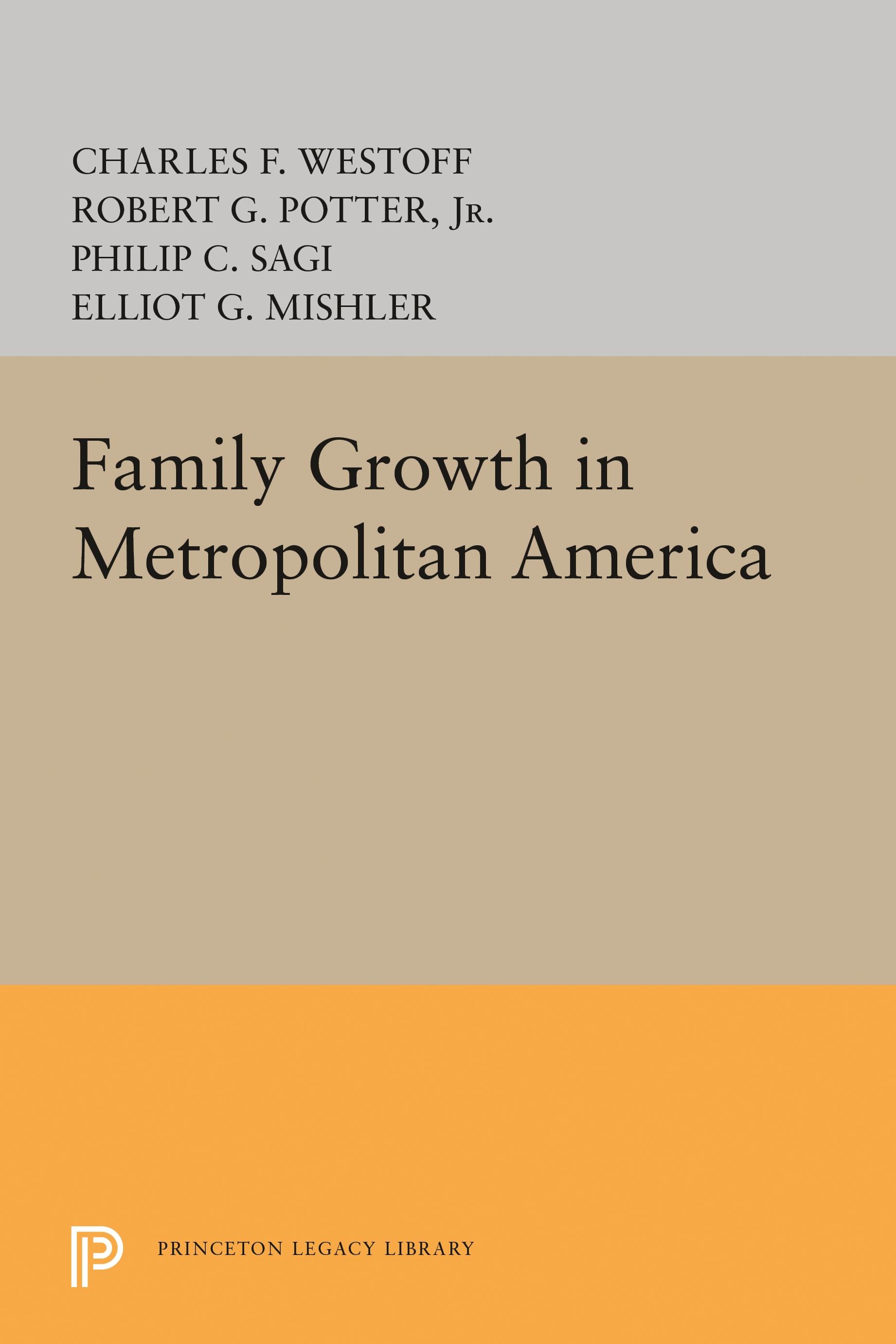
This analysis is based upon a study of 1,165 couples, all of whom had two children by the time of the interviews and lived in one of the Standard Metropolitan Areas. Its findings shed new light on the relationship between fertility-planning behavior and such variables as socio-economic status, social mobility aspirations, adherence to traditional values, interest in religion, marital adjustment, amount of education, and feelings of personal adequacy. A resurvey is planned for three years later, to analyze subsequent attitudes and behavior.
Originally published in 1961.
The Princeton Legacy Library uses the latest print-on-demand technology to again make available previously out-of-print books from the distinguished backlist of Princeton University Press. These editions preserve the original texts of these important books while presenting them in durable paperback and hardcover editions. The goal of the Princeton Legacy Library is to vastly increase access to the rich scholarly heritage found in the thousands of books published by Princeton University Press since its founding in 1905.
Pay easily by card, Klarna, Apple Pay or Google Pay. Not happy? You always have a 14-day money-back guarantee. Read more in our terms. If you have any questions, email us at hello@memmo.org.
Memmo makes studying easier – wherever you are in the world. We bring your course books and smart study tools together in one place: summaries, quizzes, podcasts and flashcards. Plus Ted, your study buddy who answers anything you wonder. Over 50,000 students already study here – built to help you learn faster and stress less.