
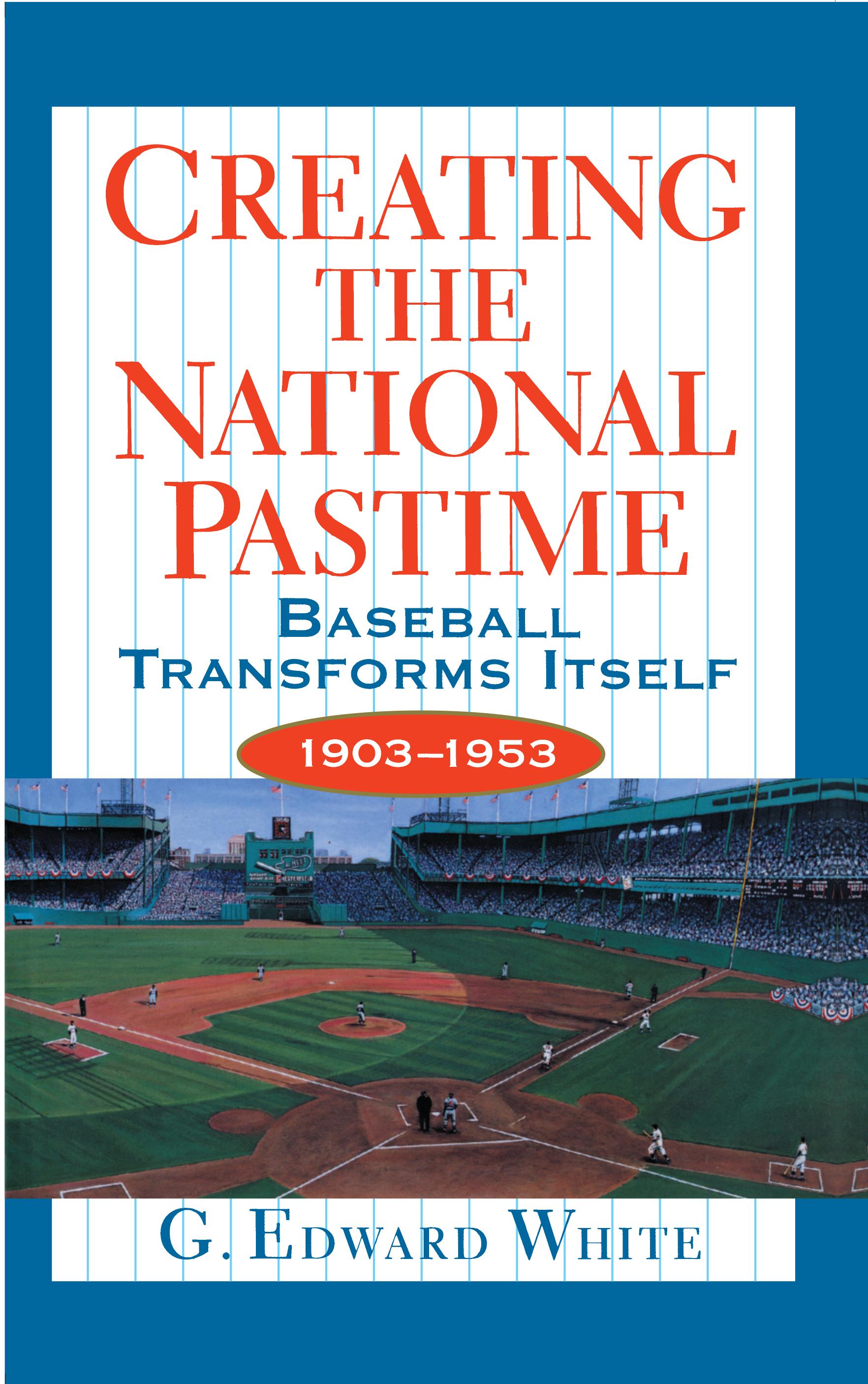
At a time when many baseball fans wish for the game to return to a purer past, G. Edward White shows how seemingly irrational business decisions, inspired in part by the self-interest of the owners but also by their nostalgia for the game, transformed baseball into the national pastime. Not simply a professional sport, baseball has been treated as a focus of childhood rituals and an emblem of American individuality and fair play throughout much of the twentieth century. It started out, however, as a marginal urban sport associated with drinking and gambling. White describes its progression to an almost mythic status as an idyllic game, popular among people of all ages and classes. He then recounts the owner's efforts, often supported by the legal system, to preserve this image.
Baseball grew up in the midst of urban industrialization during the Progressive Era, and the emerging steel and concrete baseball parks encapsulated feelings of neighborliness and associations with the rural leisure of bygone times. According to White, these nostalgic themes, together with personal financial concerns, guided owners toward practices that in retrospect appear unfair to players and detrimental to the progress of the game. Reserve clauses, blacklisting, and limiting franchise territories, for example, were meant to keep a consistent roster of players on a team, build fan loyalty, and maintain the game's local flavor. These practices also violated anti-trust laws and significantly restricted the economic power of the players. Owners vigorously fought against innovations, ranging from the night games and radio broadcasts to the inclusion of African-American players. Nonetheless, the image of baseball as a spirited civic endeavor persisted, even in the face of outright corruption, as witnessed in the courts' leniency toward the participants in the Black Sox scandal of 1919.
White's story of baseball is intertwined with changes in technology and business in America and with changing attitudes toward race and ethnicity. The time is fast approaching, he concludes, when we must consider whether baseball is still regarded as the national pastime and whether protecting its image is worth the effort.
Pay easily by card, Klarna, Apple Pay or Google Pay. Not happy? You always have a 14-day money-back guarantee. Read more in our terms. If you have any questions, email us at hello@memmo.org.
Memmo makes studying easier – wherever you are in the world. We bring your course books and smart study tools together in one place: summaries, quizzes, podcasts and flashcards. Plus Ted, your study buddy who answers anything you wonder. Over 75,000 students already study here – built to help you learn faster and stress less.