
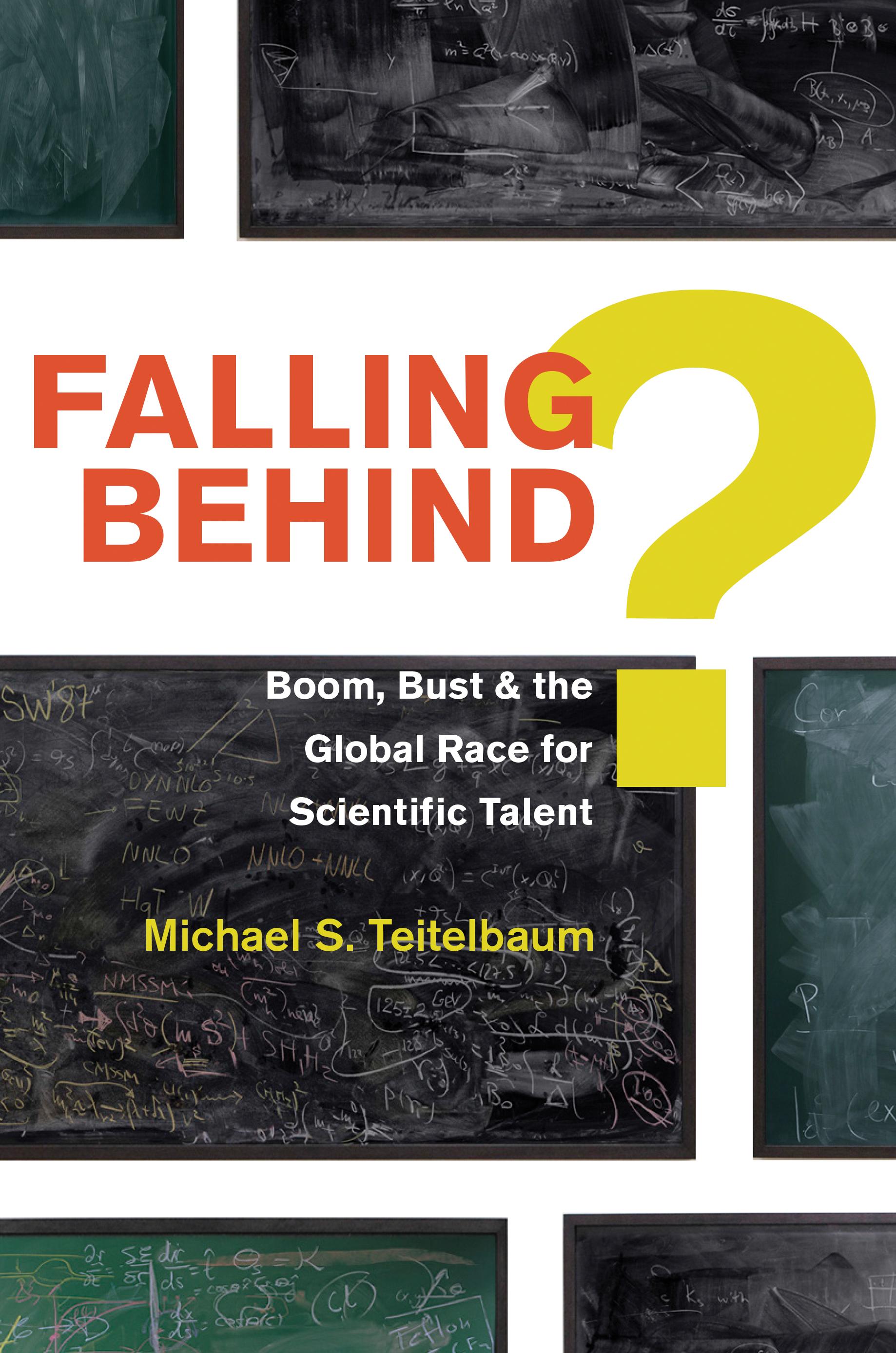
How the fear of a shortage in American science talent fuels cycles in the technical labor market
Is the United States falling behind in the global race for scientific and engineering talent? Are U.S. employers facing shortages of the skilled workers that they need to compete in a globalized world? Such claims from some employers and educators have been widely embraced by mainstream media and political leaders, and have figured prominently in recent policy debates about education, federal expenditures, tax policy, and immigration. Falling Behind? offers careful examinations of the existing evidence and of its use by those involved in these debates.
These concerns are by no means a recent phenomenon. Examining historical precedent, Michael Teitelbaum highlights five episodes of alarm about "falling behind" that go back nearly seventy years to the end of World War II. In each of these episodes the political system responded by rapidly expanding the supply of scientists and engineers, but only a few years later political enthusiasm or economic demand waned. Booms turned to busts, leaving many of those who had been encouraged to pursue science and engineering careers facing disheartening career prospects. Their experiences deterred younger and equally talented students from following in their footsteps—thereby sowing the seeds of the next cycle of alarm, boom, and bust.
Falling Behind? examines these repeated cycles up to the present, shedding new light on the adequacy of the science and engineering workforce for the current and future needs of the United States.
Pay easily by card, Klarna, Apple Pay or Google Pay. Not happy? You always have a 14-day money-back guarantee. Read more in our terms. If you have any questions, email us at hello@memmo.org.
Memmo makes studying easier – wherever you are in the world. We bring your course books and smart study tools together in one place: summaries, quizzes, podcasts and flashcards. Plus Ted, your study buddy who answers anything you wonder. Over 50,000 students already study here – built to help you learn faster and stress less.