
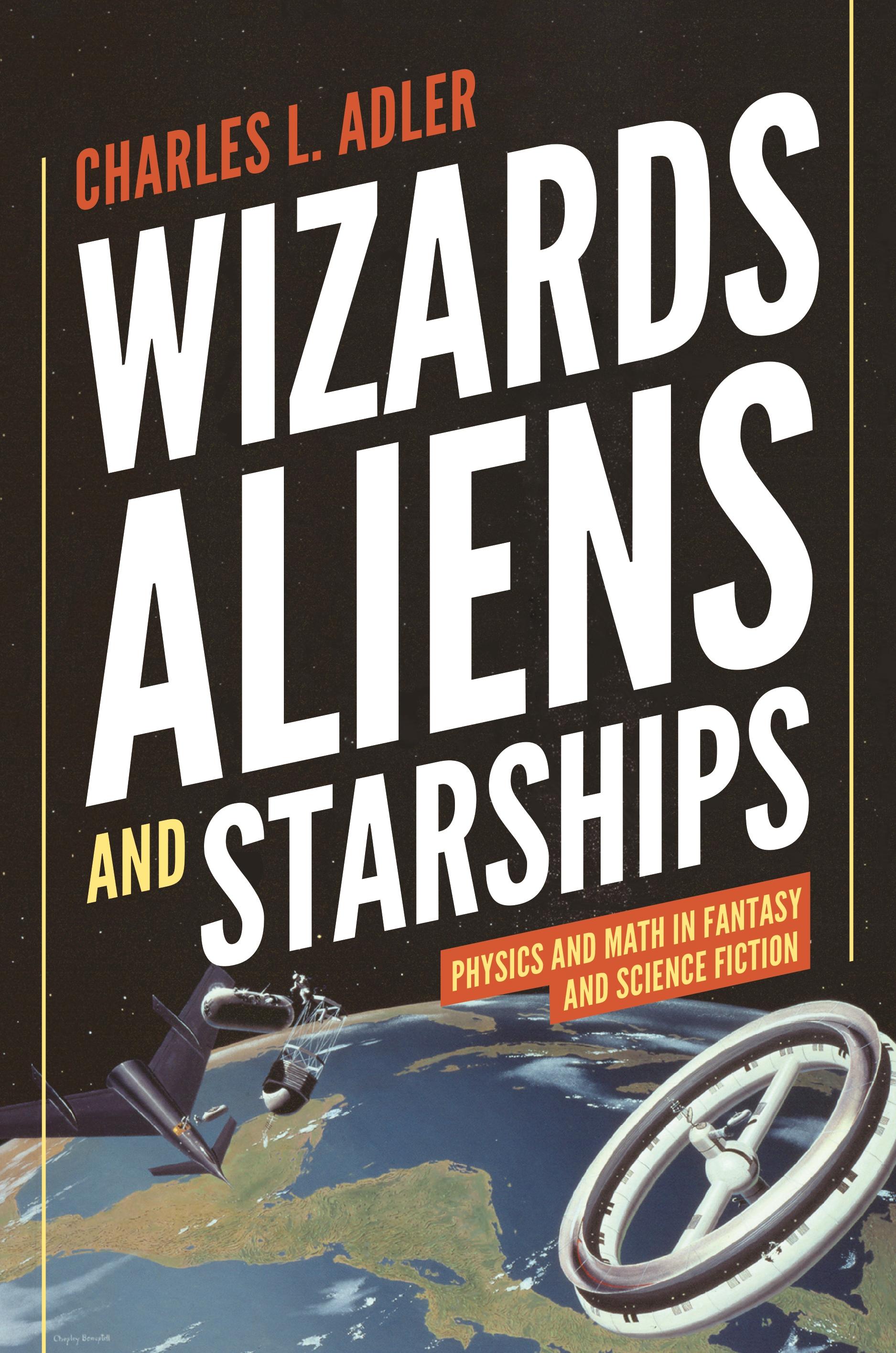
Explaining the science behind science fiction and fantasy—from the probable to the impossible
From teleportation and space elevators to alien contact and interstellar travel, science fiction and fantasy writers have come up with some brilliant and innovative ideas. Yet how plausible are these ideas--for instance, could Mr. Weasley's flying car in the Harry Potter books really exist? Which concepts might actually happen, and which ones wouldn’t work at all? Wizards, Aliens, and Starships delves into the most extraordinary details in science fiction and fantasy--such as time warps, shape changing, rocket launches, and illumination by floating candle--and shows readers the physics and math behind the phenomena.
With simple mathematical models, and in most cases using no more than high school algebra, Charles Adler ranges across a plethora of remarkable imaginings, from the works of Ursula K. Le Guin to Star Trek and Avatar, to explore what might become reality. Adler explains why fantasy in the Harry Potter and Dresden Files novels cannot adhere strictly to scientific laws, and when magic might make scientific sense in the muggle world. He examines space travel and wonders why it isn’t cheaper and more common today. Adler also discusses exoplanets and how the search for alien life has shifted from radio communications to space-based telescopes. He concludes by investigating the future survival of humanity and other intelligent races. Throughout, he cites an abundance of science fiction and fantasy authors, and includes concise descriptions of stories as well as an appendix on Newton's laws of motion.
Wizards, Aliens, and Starships will speak to anyone wanting to know about the correct--and incorrect--science of science fiction and fantasy.
Pay easily by card, Klarna, Apple Pay or Google Pay. Not happy? You always have a 14-day money-back guarantee. Read more in our terms. If you have any questions, email us at hello@memmo.org.
Memmo makes studying easier – wherever you are in the world. We bring your course books and smart study tools together in one place: summaries, quizzes, podcasts and flashcards. Plus Ted, your study buddy who answers anything you wonder. Over 50,000 students already study here – built to help you learn faster and stress less.