
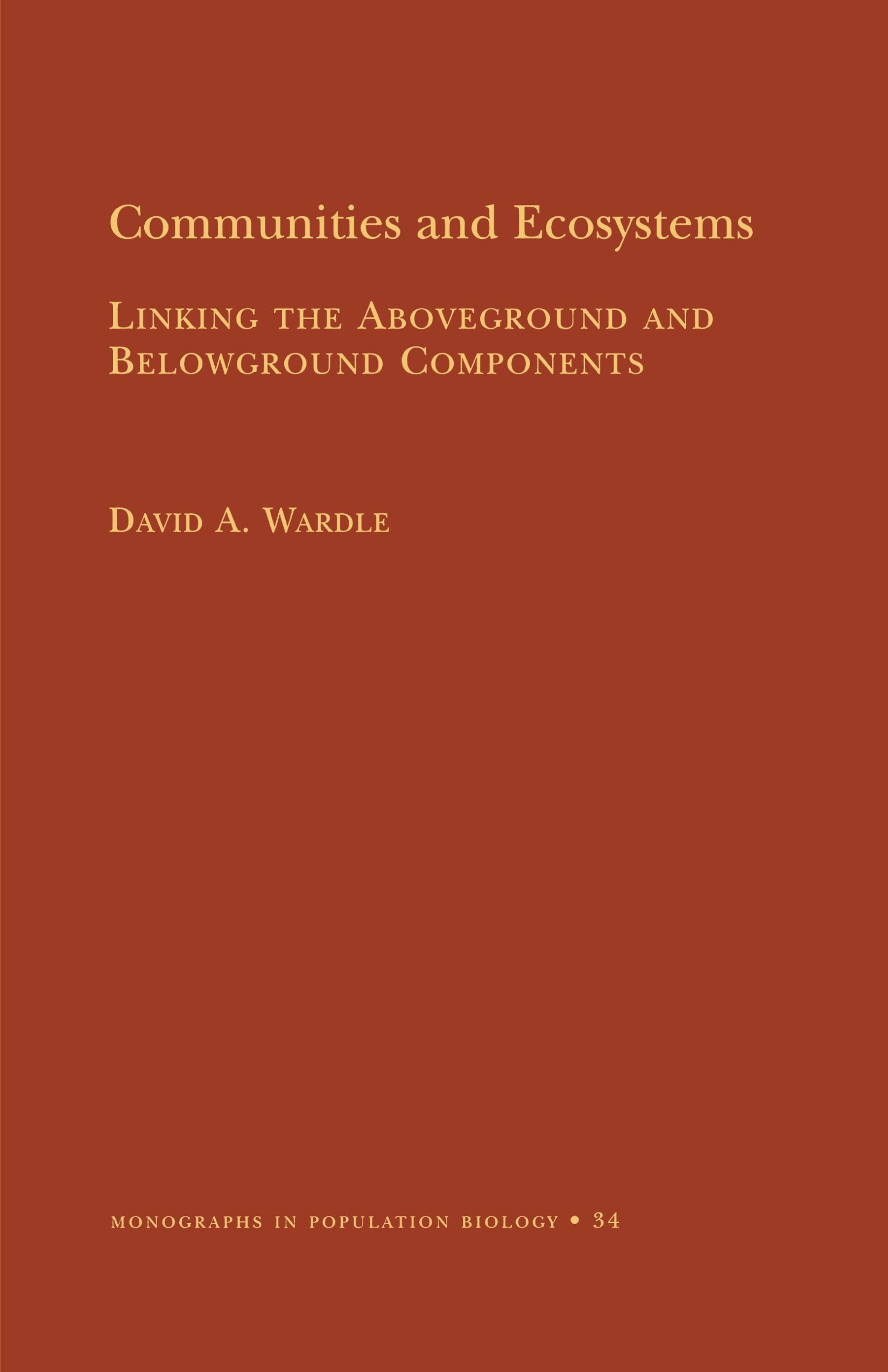
Most of the earth's terrestrial species live in the soil. These organisms, which include many thousands of species of fungi and nematodes, shape aboveground plant and animal life as well as our climate and atmosphere. Indeed, all terrestrial ecosystems consist of interdependent aboveground and belowground compartments. Despite this, aboveground and belowground ecology have been conducted largely in isolation. This book represents the first major synthesis to focus explicitly on the connections between aboveground and belowground subsystems--and their importance for community structure and ecosystem functioning.
David Wardle integrates a vast body of literature from numerous fields--including population ecology, ecosystem ecology, ecophysiology, ecological theory, soil science, and global-change biology--to explain the key conceptual issues relating to how aboveground and belowground communities affect one another and the processes that each component carries out. He then applies these concepts to a host of critical questions, including the regulation and function of biodiversity as well as the consequences of human-induced global change in the form of biological invasions, extinctions, atmospheric carbon-dioxide enrichment, nitrogen deposition, land-use change, and global warming.
Through ambitious theoretical synthesis and a tremendous range of examples, Wardle shows that the key biotic drivers of community and ecosystem properties involve linkages between aboveground and belowground food webs, biotic interaction, the spatial and temporal dynamics of component organisms, and, ultimately, the ecophysiological traits of those organisms that emerge as ecological drivers. His conclusions will propel theoretical and empirical work throughout ecology.
Pay easily by card, Klarna, Apple Pay or Google Pay. Not happy? You always have a 14-day money-back guarantee. Read more in our terms. If you have any questions, email us at hello@memmo.org.
Memmo makes studying easier – wherever you are in the world. We bring your course books and smart study tools together in one place: summaries, quizzes, podcasts and flashcards. Plus Ted, your study buddy who answers anything you wonder. Over 50,000 students already study here – built to help you learn faster and stress less.