
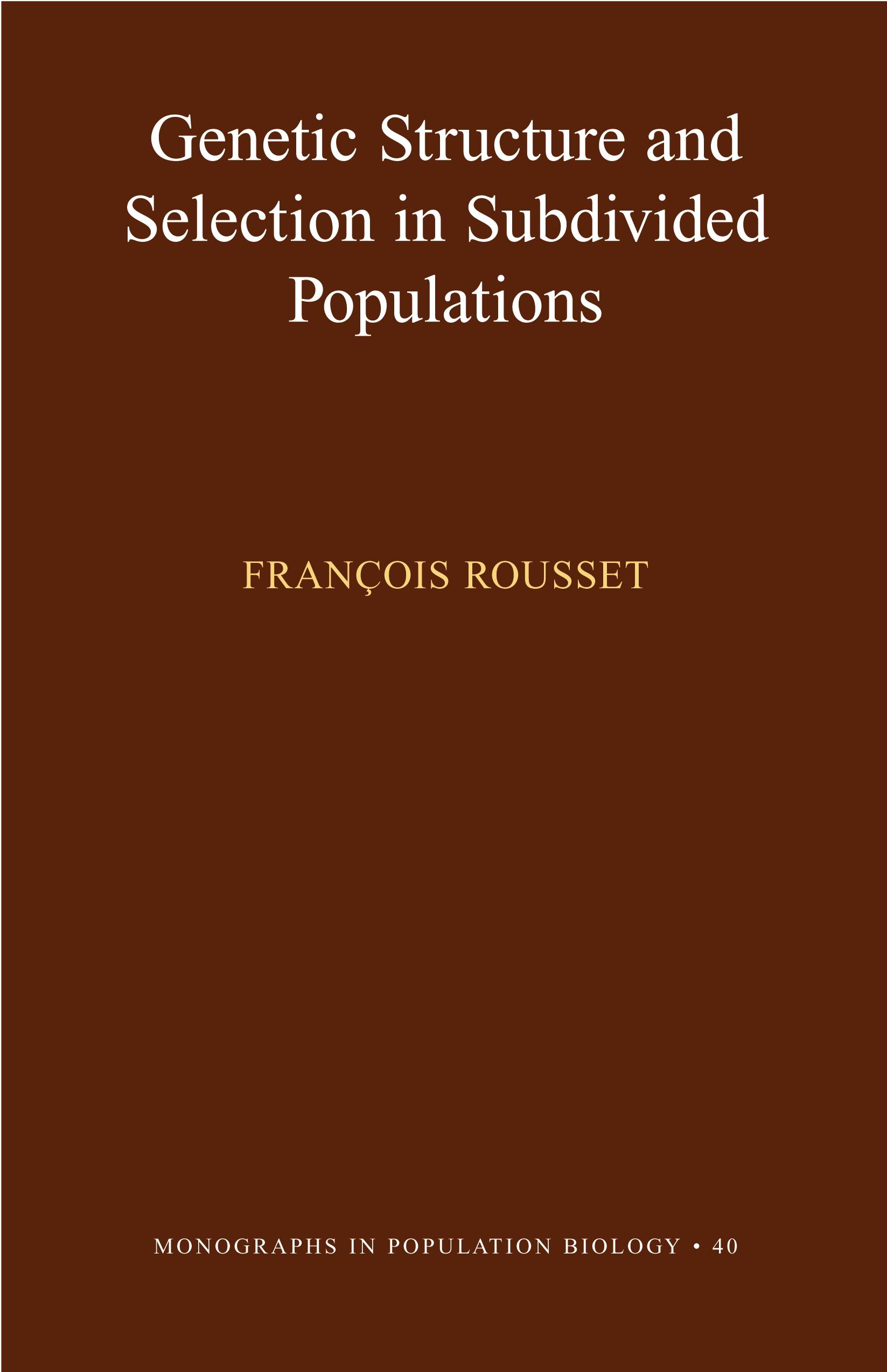
Various approaches have been developed to evaluate the consequences of spatial structure on evolution in subdivided populations. This book is both a review and new synthesis of several of these approaches, based on the theory of spatial genetic structure. François Rousset examines Sewall Wright's methods of analysis based on F-statistics, effective size, and diffusion approximation; coalescent arguments; William Hamilton's inclusive fitness theory; and approaches rooted in game theory and adaptive dynamics. Setting these in a framework that reveals their common features, he demonstrates how efficient tools developed within one approach can be applied to the others.
Rousset not only revisits classical models but also presents new analyses of more recent topics, such as effective size in metapopulations. The book, most of which does not require fluency in advanced mathematics, includes a self-contained exposition of less easily accessible results. It is intended for advanced graduate students and researchers in evolutionary ecology and population genetics, and will also interest applied mathematicians working in probability theory as well as statisticians.
Pay easily by card, Klarna, Apple Pay or Google Pay. Not happy? You always have a 14-day money-back guarantee. Read more in our terms. If you have any questions, email us at hello@memmo.org.
Memmo makes studying easier – wherever you are in the world. We bring your course books and smart study tools together in one place: summaries, quizzes, podcasts and flashcards. Plus Ted, your study buddy who answers anything you wonder. Over 50,000 students already study here – built to help you learn faster and stress less.