
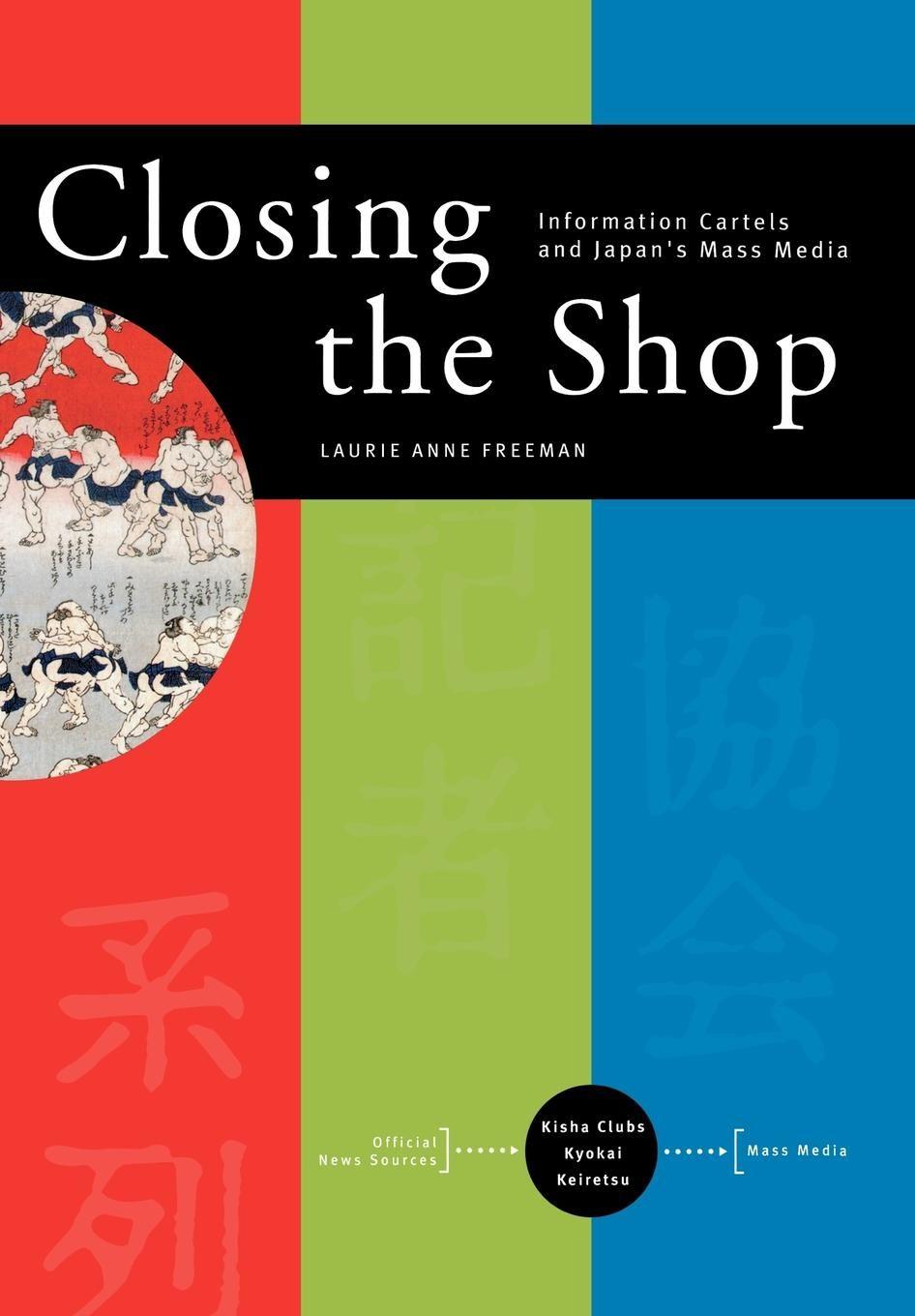
How is the relationship between the Japanese state and Japanese society mediated by the press? Does the pervasive system of press clubs, and the regulations underlying them, alter or even censor the way news is reported in Japan? Who benefits from the press club system? And who loses? Here Laurie Anne Freeman examines the subtle, highly interconnected relationship between journalists and news sources in Japan.
Beginning with a historical overview of the relationship between the press, politics, and the public, she describes how Japanese press clubs act as "information cartels," limiting competition among news organizations and rigidly structuring relations through strict rules and sanctions. She also shows how the web of interrelations extends into, and is reinforced by, media industry associations and business groups (keiretsu). Political news and information are conveyed to the public in Japan, but because of institutional constraints, they are conveyed in a highly delimited fashion that narrows the range of societal inquiry into the political process.
Closing the Shop shows us how the press system in Japan serves as neither a watchdog nor a lapdog. Nor does the state directly control the press in ways Westerners might think of as censorship. The level of interconnectedness, through both official and unofficial channels, helps set the agenda and terms of political debate in Japan's mass media to an extent that is unimaginable to many in the United States and other advanced industrial democracies. This fascinating look at Japan's information cartels provides a critical but often overlooked explanation for the overall power and autonomy enjoyed by the Japanese state.
Pay easily by card, Klarna, Apple Pay or Google Pay. Not happy? You always have a 14-day money-back guarantee. Read more in our terms. If you have any questions, email us at hello@memmo.org.
Memmo makes studying easier – wherever you are in the world. We bring your course books and smart study tools together in one place: summaries, quizzes, podcasts and flashcards. Plus Ted, your study buddy who answers anything you wonder. Over 75,000 students already study here – built to help you learn faster and stress less.