
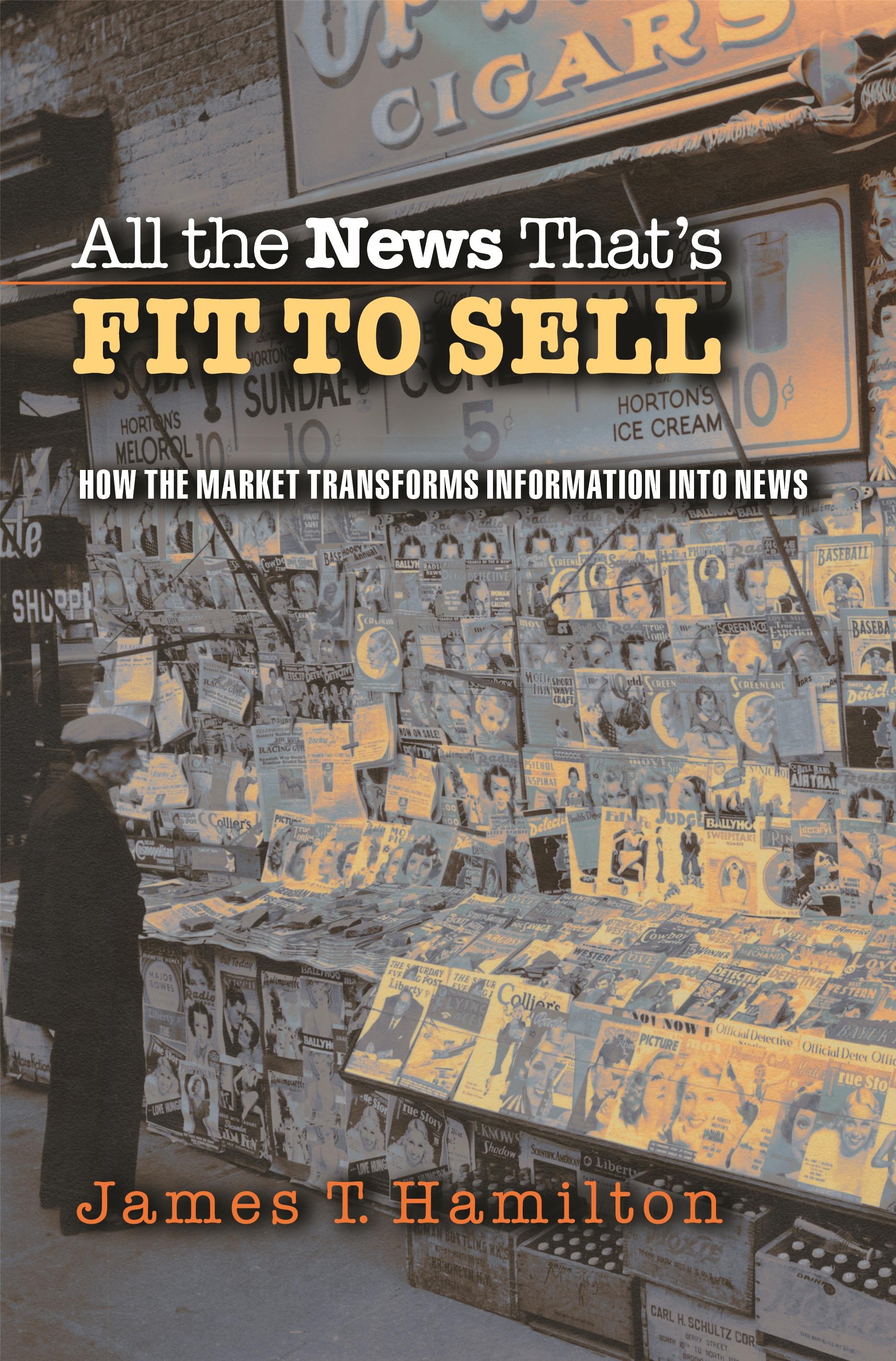
That market forces drive the news is not news. Whether a story appears in print, on television, or on the Internet depends on who is interested, its value to advertisers, the costs of assembling the details, and competitors' products. But in All the News That's Fit to Sell, economist James Hamilton shows just how this happens. Furthermore, many complaints about journalism--media bias, soft news, and pundits as celebrities--arise from the impact of this economic logic on news judgments.
This is the first book to develop an economic theory of news, analyze evidence across a wide range of media markets on how incentives affect news content, and offer policy conclusions. Media bias, for instance, was long a staple of the news. Hamilton's analysis of newspapers from 1870 to 1900 reveals how nonpartisan reporting became the norm. A hundred years later, some partisan elements reemerged as, for example, evening news broadcasts tried to retain young female viewers with stories aimed at their (Democratic) political interests. Examination of story selection on the network evening news programs from 1969 to 1998 shows how cable competition, deregulation, and ownership changes encouraged a shift from hard news about politics toward more soft news about entertainers.
Hamilton concludes by calling for lower costs of access to government information, a greater role for nonprofits in funding journalism, the development of norms that stress hard news reporting, and the defining of digital and Internet property rights to encourage the flow of news. Ultimately, this book shows that by more fully understanding the economics behind the news, we will be better positioned to ensure that the news serves the public good.
Pay easily by card, Klarna, Apple Pay or Google Pay. Not happy? You always have a 14-day money-back guarantee. Read more in our terms. If you have any questions, email us at hello@memmo.org.
Memmo makes studying easier – wherever you are in the world. We bring your course books and smart study tools together in one place: summaries, quizzes, podcasts and flashcards. Plus Ted, your study buddy who answers anything you wonder. Over 75,000 students already study here – built to help you learn faster and stress less.