
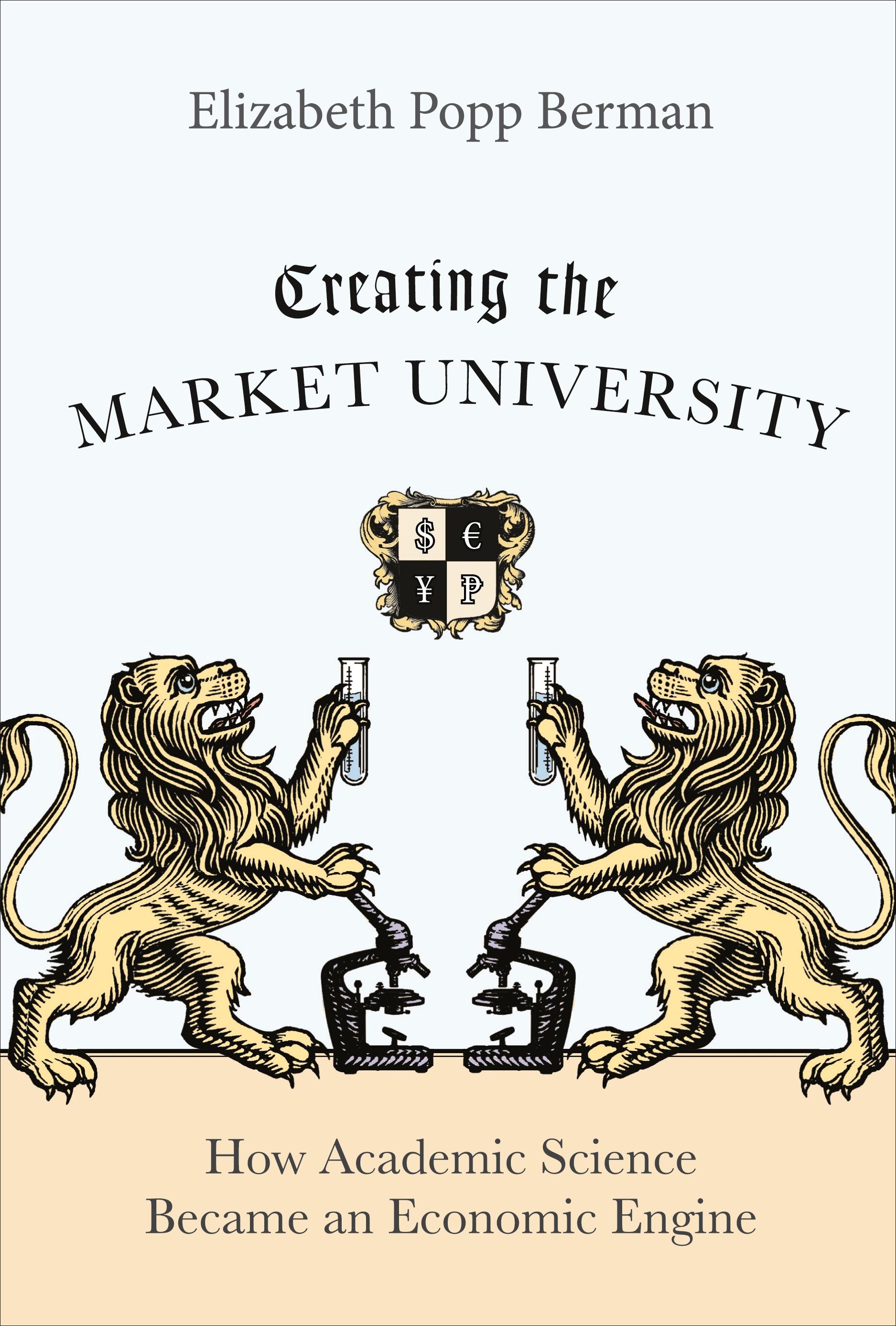
When science adopts the logic of the market
American universities today serve as economic engines, performing the scientific research that will create new industries, drive economic growth, and keep the United States globally competitive. But only a few decades ago, these same universities self-consciously held themselves apart from the world of commerce. Creating the Market University is the first book to systematically examine why academic science made such a dramatic move toward the market. Drawing on extensive historical research, Elizabeth Popp Berman shows how the government—influenced by the argument that innovation drives the economy—brought about this transformation.
Americans have a long tradition of making heroes out of their inventors. But before the 1960s and '70s neither policymakers nor economists paid much attention to the critical economic role played by innovation. However, during the late 1970s, a confluence of events—industry concern with the perceived deterioration of innovation in the United States, a growing body of economic research on innovation's importance, and the stagnation of the larger economy—led to a broad political interest in fostering invention. The policy decisions shaped by this change were diverse, influencing arenas from patents and taxes to pensions and science policy, and encouraged practices that would focus specifically on the economic value of academic science. By the early 1980s, universities were nurturing the rapid growth of areas such as biotech entrepreneurship, patenting, and university-industry research centers.
Contributing to debates about the relationship between universities, government, and industry, Creating the Market University sheds light on how knowledge and politics intersect to structure the economy.
Pay easily by card, Klarna, Apple Pay or Google Pay. Not happy? You always have a 14-day money-back guarantee. Read more in our terms. If you have any questions, email us at hello@memmo.org.
Memmo makes studying easier – wherever you are in the world. We bring your course books and smart study tools together in one place: summaries, quizzes, podcasts and flashcards. Plus Ted, your study buddy who answers anything you wonder. Over 50,000 students already study here – built to help you learn faster and stress less.