
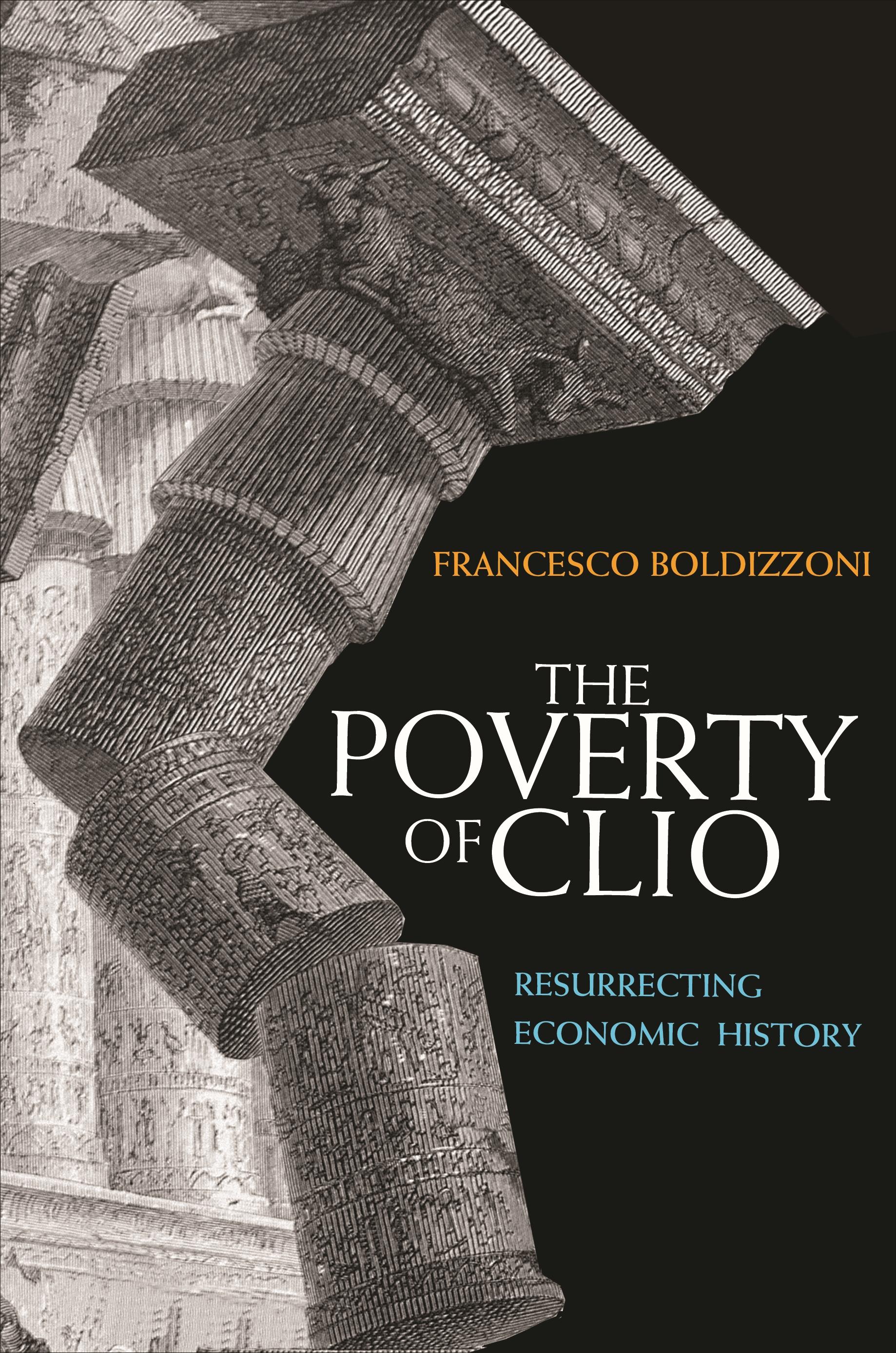
The Poverty of Clio challenges the hold that cliometrics--an approach to economic history that employs the analytical tools of economists--has exerted on the study of our economic past. In this provocative book, Francesco Boldizzoni calls for the reconstruction of economic history, one in which history and the social sciences are brought to bear on economics, and not the other way around.
Boldizzoni questions the appeal of economics over history--which he identifies as a distinctly American attitude--exposing its errors and hidden ideologies, and revealing how it fails to explain economic behavior itself. He shows how the misguided reliance on economic reasoning to interpret history has come at the expense of insights from the humanities and has led to a rejection of valuable past historical research. Developing a better alternative to new institutional economics and the rational choice approach, Boldizzoni builds on the extraordinary accomplishments of twentieth-century European historians and social thinkers to offer fresh ideas for the renewal of the field.
Economic history needs to rediscover the true relationship between economy and culture, and promote an authentic alliance with the social sciences, starting with sociology and anthropology. It must resume its dialogue with the humanities, but without shrinking away from theory when constructing its models. The Poverty of Clio demonstrates why history must exert its own creative power on economics.
Pay easily by card, Klarna, Apple Pay or Google Pay. Not happy? You always have a 14-day money-back guarantee. Read more in our terms. If you have any questions, email us at hello@memmo.org.
Memmo makes studying easier – wherever you are in the world. We bring your course books and smart study tools together in one place: summaries, quizzes, podcasts and flashcards. Plus Ted, your study buddy who answers anything you wonder. Over 50,000 students already study here – built to help you learn faster and stress less.