
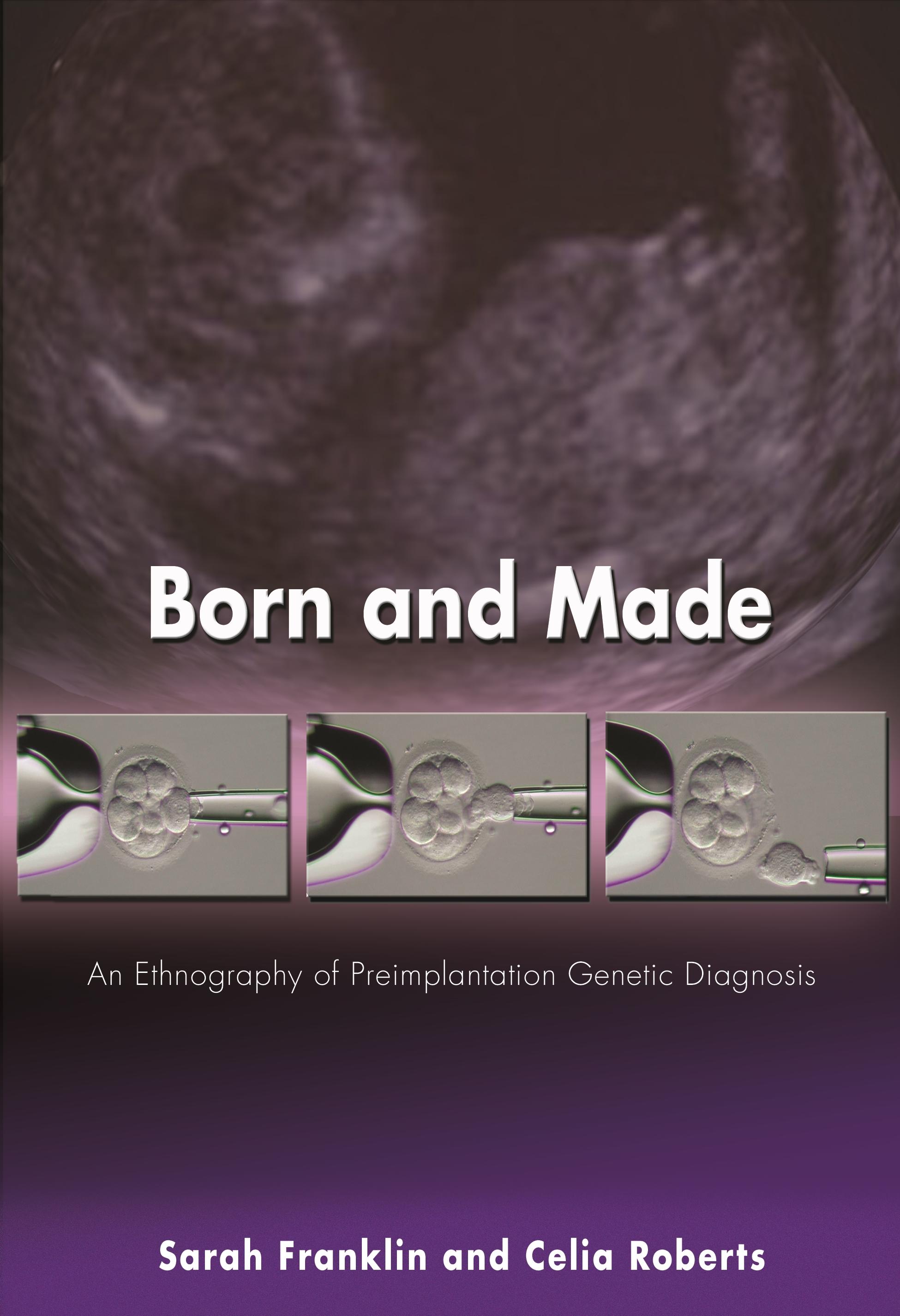
Are new reproductive and genetic technologies racing ahead of a society that is unable to establish limits to their use? Have the "new genetics" outpaced our ability to control their future applications? This book examines the case of preimplantation genetic diagnosis (PGD), the procedure used to prevent serious genetic disease by embryo selection, and the so-called "designer baby" method. Using detailed empirical evidence, the authors show that far from being a runaway technology, the regulation of PGD over the past fifteen years provides an example of precaution and restraint, as well as continual adaptation to changing social circumstances. Through interviews, media and policy analysis, and participant observation at two PGD centers in the United Kingdom, Born and Made provides an in-depth sociological examination of the competing moral obligations that define the experience of PGD.
Among the many novel findings of this pathbreaking ethnography of reproductive biomedicine is the prominence of uncertainty and ambivalence among PGD patients and professionals--a finding characteristic of the emerging "biosociety," in which scientific progress is inherently paradoxical and contradictory. In contrast to much of the speculative futurology that defines this field, Born and Made provides a timely and revealing case study of the on-the-ground decision-making that shapes technological assistance to human heredity.
Pay easily by card, Klarna, Apple Pay or Google Pay. Not happy? You always have a 14-day money-back guarantee. Read more in our terms. If you have any questions, email us at hello@memmo.org.
Memmo makes studying easier – wherever you are in the world. We bring your course books and smart study tools together in one place: summaries, quizzes, podcasts and flashcards. Plus Ted, your study buddy who answers anything you wonder. Over 50,000 students already study here – built to help you learn faster and stress less.