
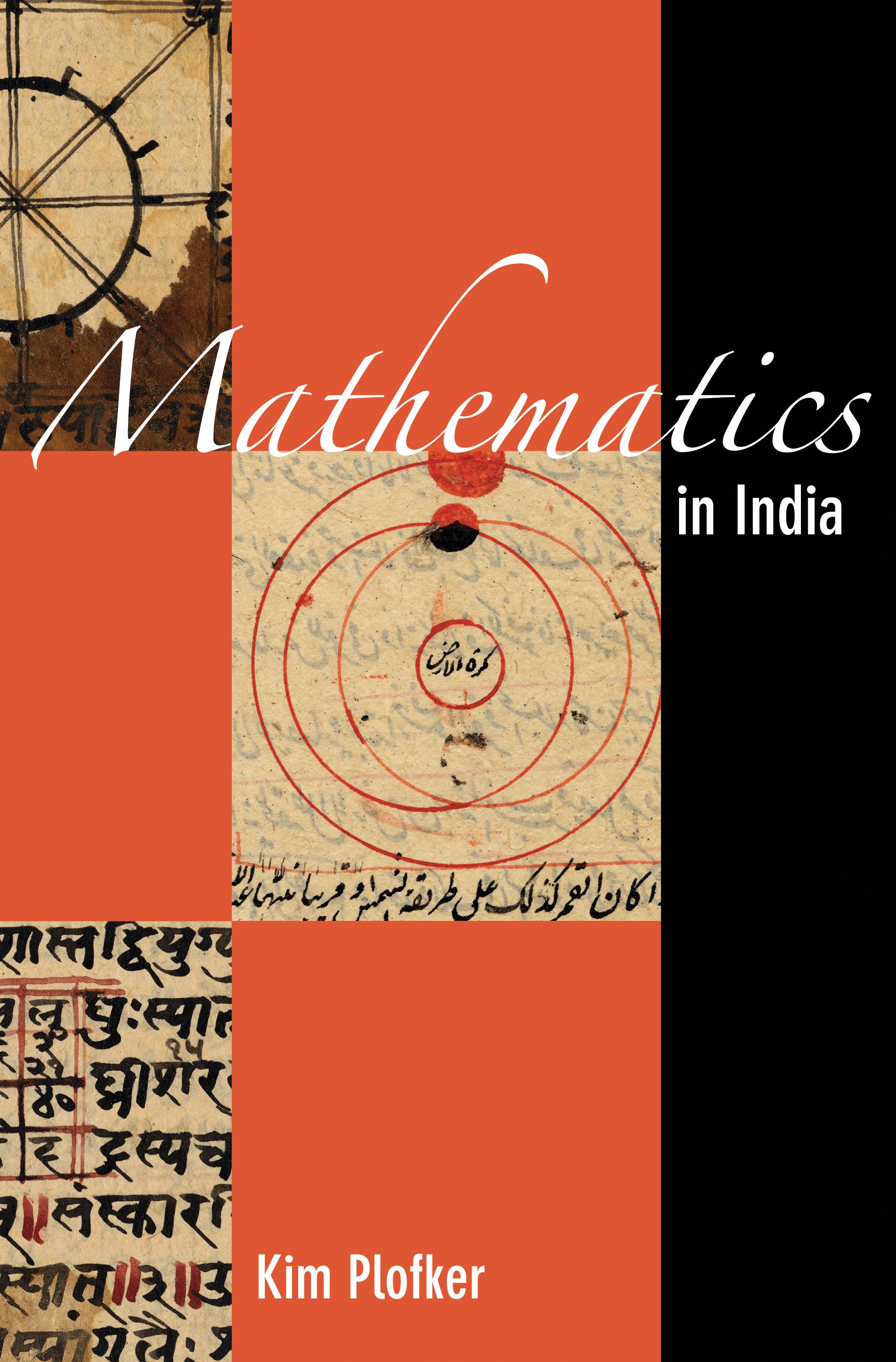
Based on extensive research in Sanskrit sources, Mathematics in India chronicles the development of mathematical techniques and texts in South Asia from antiquity to the early modern period. Kim Plofker reexamines the few facts about Indian mathematics that have become common knowledge--such as the Indian origin of Arabic numerals--and she sets them in a larger textual and cultural framework. The book details aspects of the subject that have been largely passed over in the past, including the relationships between Indian mathematics and astronomy, and their cross-fertilizations with Islamic scientific traditions. Plofker shows that Indian mathematics appears not as a disconnected set of discoveries, but as a lively, diverse, yet strongly unified discipline, intimately linked to other Indian forms of learning.
Far more than in other areas of the history of mathematics, the literature on Indian mathematics reveals huge discrepancies between what researchers generally agree on and what general readers pick up from popular ideas. This book explains with candor the chief controversies causing these discrepancies--both the flaws in many popular claims, and the uncertainties underlying many scholarly conclusions. Supplementing the main narrative are biographical resources for dozens of Indian mathematicians; a guide to key features of Sanskrit for the non-Indologist; and illustrations of manuscripts, inscriptions, and artifacts. Mathematics in India provides a rich and complex understanding of the Indian mathematical tradition.
**Author's note: The concept of "computational positivism" in Indian mathematical science, mentioned on p. 120, is due to Prof. Roddam Narasimha and is explored in more detail in some of his works, including "The Indian half of Needham's question: some thoughts on axioms, models, algorithms, and computational positivism" (Interdisciplinary Science Reviews 28, 2003, 1-13).
Pay easily by card, Klarna, Apple Pay or Google Pay. Not happy? You always have a 14-day money-back guarantee. Read more in our terms. If you have any questions, email us at hello@memmo.org.
Memmo makes studying easier – wherever you are in the world. We bring your course books and smart study tools together in one place: summaries, quizzes, podcasts and flashcards. Plus Ted, your study buddy who answers anything you wonder. Over 75,000 students already study here – built to help you learn faster and stress less.