
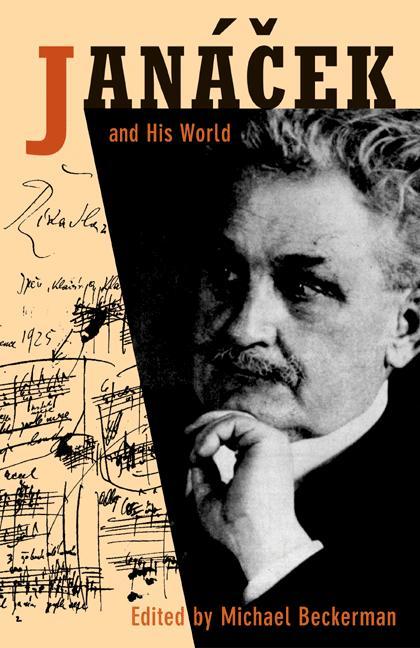
Once thought to be a provincial composer of only passing interest to eccentrics, Leos Janácek (1854-1928) is now widely acknowledged as one of the most powerful and original creative figures of his time. Banned for all purposes from the Prague stage until the age of 62, and unable to make it even out of the provincial capital of Brno, his operas are now performed in dynamic productions throughout the globe. This volume brings together some of the world's foremost Janácek scholars to look closely at a broad range of issues surrounding his life and work. Representing the latest in Janácek scholarship, the essays are accompanied by newly translated writings by the composer himself.
The collection opens with an essay by Leon Botstein who clarifies and amplifies how Max Brod contributed to Janácek 's international success by serving as "point man" between Czechs and Germans, Jews and non-Jews. John Tyrrell, the dean of Janácek scholars, distills more than thirty years of research in "How Janácek Composed Operas," while Diane Paige considers Janácek's liason with a married woman and the question of the artist's muse. Geoffrey Chew places the idea of the adulterous muse in the larger context of Czech fin de siècle decadence in his thoroughgoing consideration of Janácek's problematic opera Osud. Derek Katz examines the problems encountered by Janácek's satirically patriotic "Excursions of Mr. Broucek" in the post-World War I era of Czechoslovak nationalism, while Paul Wingfield mounts a defense of Janácek against allegations of cruelty in his wife's memoirs. In the final essay, Michael Beckerman asks how much true history can be culled from one of Janácek's business cards.
The book then turns to writings by Janácek previously unpublished in English. These not only include fascinating essays on Naturalism, opera direction, and Tristan and Isolde, but four impressionistic chronicles of the "speech melodies" of daily life. They provide insight into Janácek's revolutionary method of composition, and give us the closest thing we will ever have to the "heard" record of a Czech pre-war past-or any past, for that matter.
Pay easily by card, Klarna, Apple Pay or Google Pay. Not happy? You always have a 14-day money-back guarantee. Read more in our terms. If you have any questions, email us at hello@memmo.org.
Memmo makes studying easier – wherever you are in the world. We bring your course books and smart study tools together in one place: summaries, quizzes, podcasts and flashcards. Plus Ted, your study buddy who answers anything you wonder. Over 50,000 students already study here – built to help you learn faster and stress less.