
Cost-effective methods for improving crime control in America
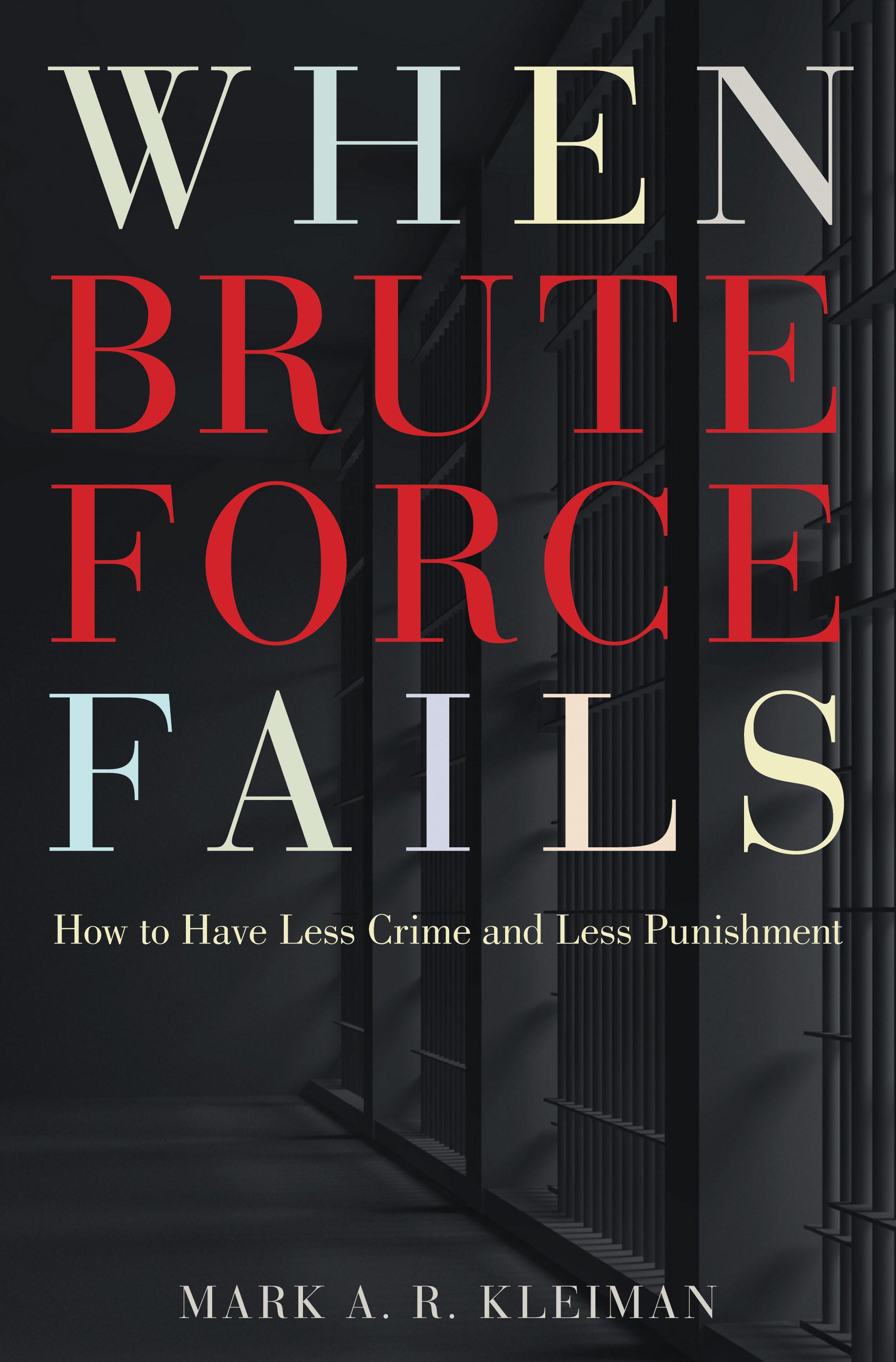
Since the crime explosion of the 1960s, the prison population in the United States has multiplied fivefold, to one prisoner for every hundred adults—a rate unprecedented in American history and unmatched anywhere in the world. Even as the prisoner head count continues to rise, crime has stopped falling, and poor people and minorities still bear the brunt of both crime and punishment. When Brute Force Fails explains how we got into the current trap and how we can get out of it: to cut both crime and the prison population in half within a decade.
Mark Kleiman demonstrates that simply locking up more people for lengthier terms is no longer a workable crime-control strategy. But, says Kleiman, there has been a revolution—largely unnoticed by the press—in controlling crime by means other than brute-force incarceration: substituting swiftness and certainty of punishment for randomized severity, concentrating enforcement resources rather than dispersing them, communicating specific threats of punishment to specific offenders, and enforcing probation and parole conditions to make community corrections a genuine alternative to incarceration. As Kleiman shows, "zero tolerance" is nonsense: there are always more offenses than there is punishment capacity. But, it is possible—and essential—to create focused zero tolerance, by clearly specifying the rules and then delivering the promised sanctions every time the rules are broken.
Brute-force crime control has been a costly mistake, both socially and financially. Now that we know how to do better, it would be immoral not to put that knowledge to work.
Pay easily by card, Klarna, Apple Pay or Google Pay. Not happy? You always have a 14-day money-back guarantee. Read more in our terms. If you have any questions, email us at hello@memmo.org.
Memmo makes studying easier – wherever you are in the world. We bring your course books and smart study tools together in one place: summaries, quizzes, podcasts and flashcards. Plus Ted, your study buddy who answers anything you wonder. Over 50,000 students already study here – built to help you learn faster and stress less.