
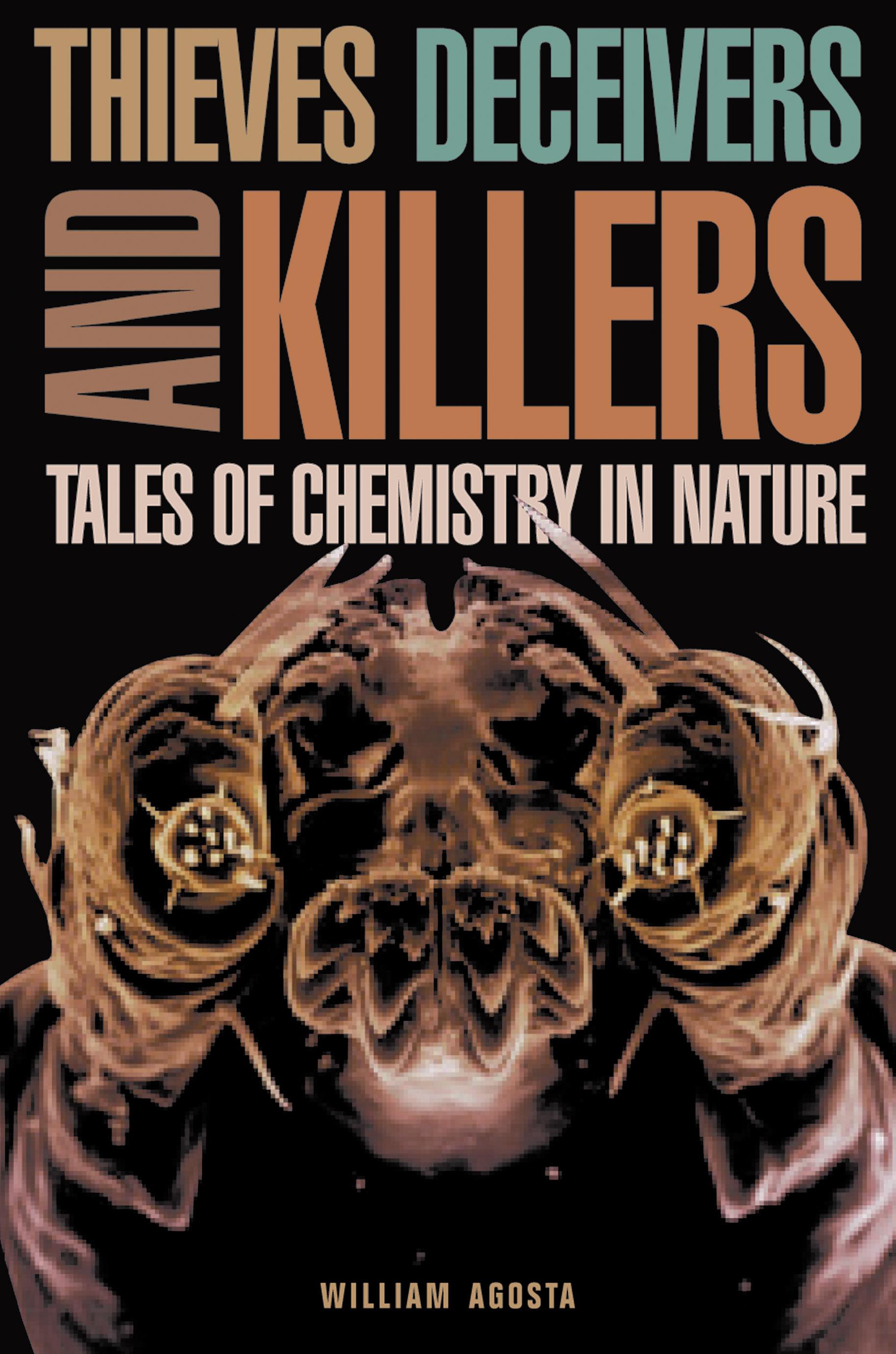
The tobacco plant synthesizes nicotine to protect itself from herbivores. The female moth broadcasts sex pheromones to attract a mate, while a soldier ant deploys an alarm pheromone to call for help. The carbon dioxide on a mammal's breath beckons hungry ticks and mosquitoes, while a flower's fragrance speaks to the honey bee. Indeed, much of the communication that occurs within and between various species of organisms is done not by sight, sound, or touch, but with chemicals. From mating to parenting, foraging to self-defense, plant and animal activities are accomplished largely by the secretion or exchange of organic chemicals. The fascinating and fast-developing science that encompasses these diverse phenomena is introduced here, by William Agosta, in a series of remarkable stories absolutely accessible to the general reader yet revelatory to chemists and biologists.
Among Agosta's characters are the organisms that steal, counterfeit, or interpret the chemical signals of other species for their own ends. We learn of seeds that mimic ant odors to facilitate their own dispersion and flies that follow the scent of truffles to lay their eggs. We read about pit vipers that react in terror when their flicking tongues detect a king snake, and slave-making ants incapable of finding their own food. And we meet ice-age people who ate birch fungus to relieve whipworms and early human hunters who used the urine of wolves to maneuver deer to favorable sites.
Agosta also chronicles the rapid development of the applied science that makes use of chemical ecology. As researchers deepen our understanding of the biological world, they are making economically significant discoveries (such as enzymes that remain stable in extreme heat), finding ways to reduce our reliance on manufactured pesticides, identifying new uses for traditional medicines, and developing sophisticated new pharmaceuticals effective in treating malaria and several cancers. On the horizon are antiviral agents derived from the chemical defenses of marine species.
From the exploits of flies to the high-stakes effort to cure human disease, Agosta's tour of chemical ecology grants any reader entrance to the invisible realm where chemistry determines life and death.
Pay easily by card, Klarna, Apple Pay or Google Pay. Not happy? You always have a 14-day money-back guarantee. Read more in our terms. If you have any questions, email us at hello@memmo.org.
Memmo makes studying easier – wherever you are in the world. We bring your course books and smart study tools together in one place: summaries, quizzes, podcasts and flashcards. Plus Ted, your study buddy who answers anything you wonder. Over 50,000 students already study here – built to help you learn faster and stress less.