
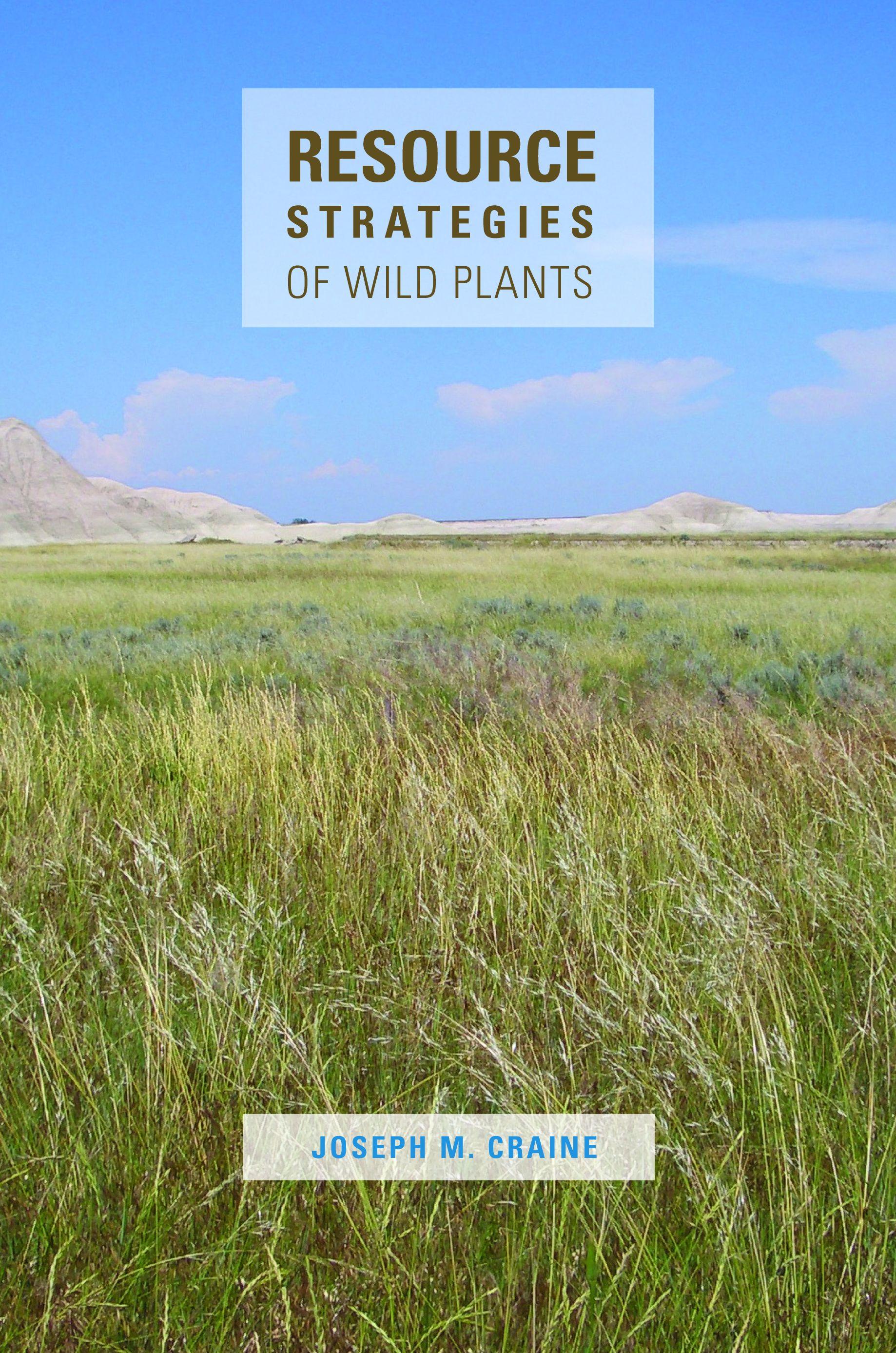
Over millions of years, terrestrial plants have competed for limited resources, defended themselves against herbivores, and resisted a myriad of environmental stresses. These struggles have helped generate more than a quarter million terrestrial plant species, each possessing a unique strategy for success. Yet, as Resource Strategies of Wild Plants demonstrates, the constraints on plant growth are universal enough that a few survival strategies hold true for all seed-producing plants. This book describes the five major strategies of growth for terrestrial plants, details how plants succeed when resources are scarce, delves into the history of research into plant strategies, and resets the foundational understanding of ecological processes.
Drawing from recent findings in plant-herbivore interactions, ecosystem ecology, and evolutionary ecology, Joseph Craine explains how plants attain available nutrients, withstand the immense stresses of drying soils, and flourish in the race for light. He shows that the competition for resources has shaped plant evolution in newly discovered ways, while the scarcity of such resources has affected how plants interact with herbivores, wind, fire, and frost. An understanding of the major resource strategies of wild plants remains central to learning about the ecology of plant communities, global changes in the biosphere, methods for species conservation, and the evolution of life on earth.
Pay easily by card, Klarna, Apple Pay or Google Pay. Not happy? You always have a 14-day money-back guarantee. Read more in our terms. If you have any questions, email us at hello@memmo.org.
Memmo makes studying easier – wherever you are in the world. We bring your course books and smart study tools together in one place: summaries, quizzes, podcasts and flashcards. Plus Ted, your study buddy who answers anything you wonder. Over 50,000 students already study here – built to help you learn faster and stress less.