
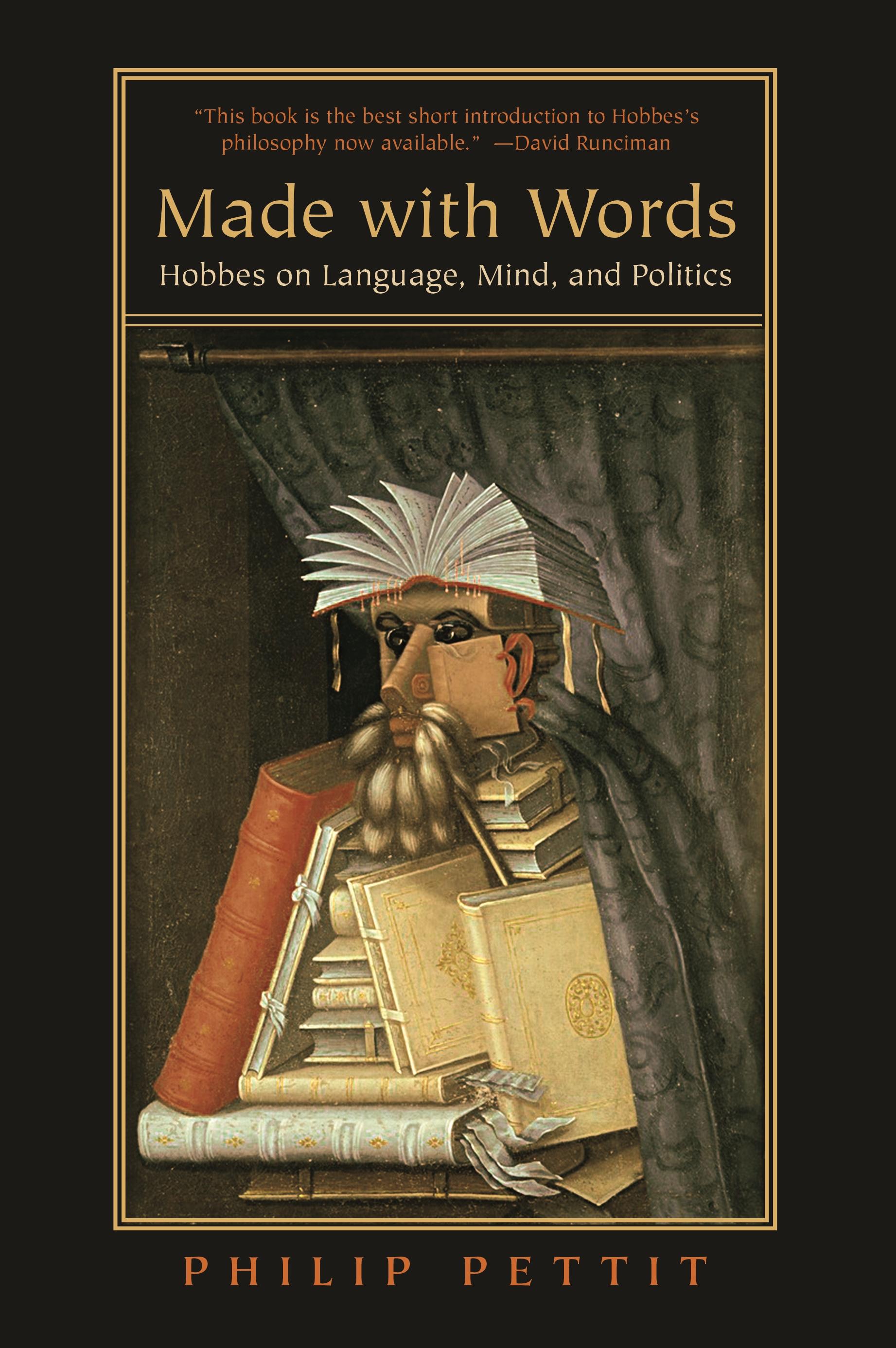
Hobbes's extreme political views have commanded so much attention that they have eclipsed his work on language and mind, and on reasoning, personhood, and group formation. But this work is of immense interest in itself, as Philip Pettit shows in Made with Words, and it critically shapes Hobbes's political philosophy.
Pettit argues that it was Hobbes, not later thinkers like Rousseau, who invented the invention of language thesis--the idea that language is a cultural innovation that transformed the human mind. The invention, in Hobbes's story, is a double-edged sword. It enables human beings to reason, commit themselves as persons, and incorporate in groups. But it also allows them to agonize about the future and about their standing relative to one another; it takes them out of the Eden of animal silence and into a life of inescapable conflict--the state of nature. Still, if language leads into this wasteland, according to Hobbes, it can also lead out. It can enable people to establish a commonwealth where the words of law and morality have a common, enforceable sense, and where people can invoke the sanctions of an absolute sovereign to give their words to one another in credible commitment and contract.
Written by one of today's leading philosophers, Made with Words is both an original reinterpretation and a clear and lively introduction to Hobbes's thought.
Pay easily by card, Klarna, Apple Pay or Google Pay. Not happy? You always have a 14-day money-back guarantee. Read more in our terms. If you have any questions, email us at hello@memmo.org.
Memmo makes studying easier – wherever you are in the world. We bring your course books and smart study tools together in one place: summaries, quizzes, podcasts and flashcards. Plus Ted, your study buddy who answers anything you wonder. Over 50,000 students already study here – built to help you learn faster and stress less.