
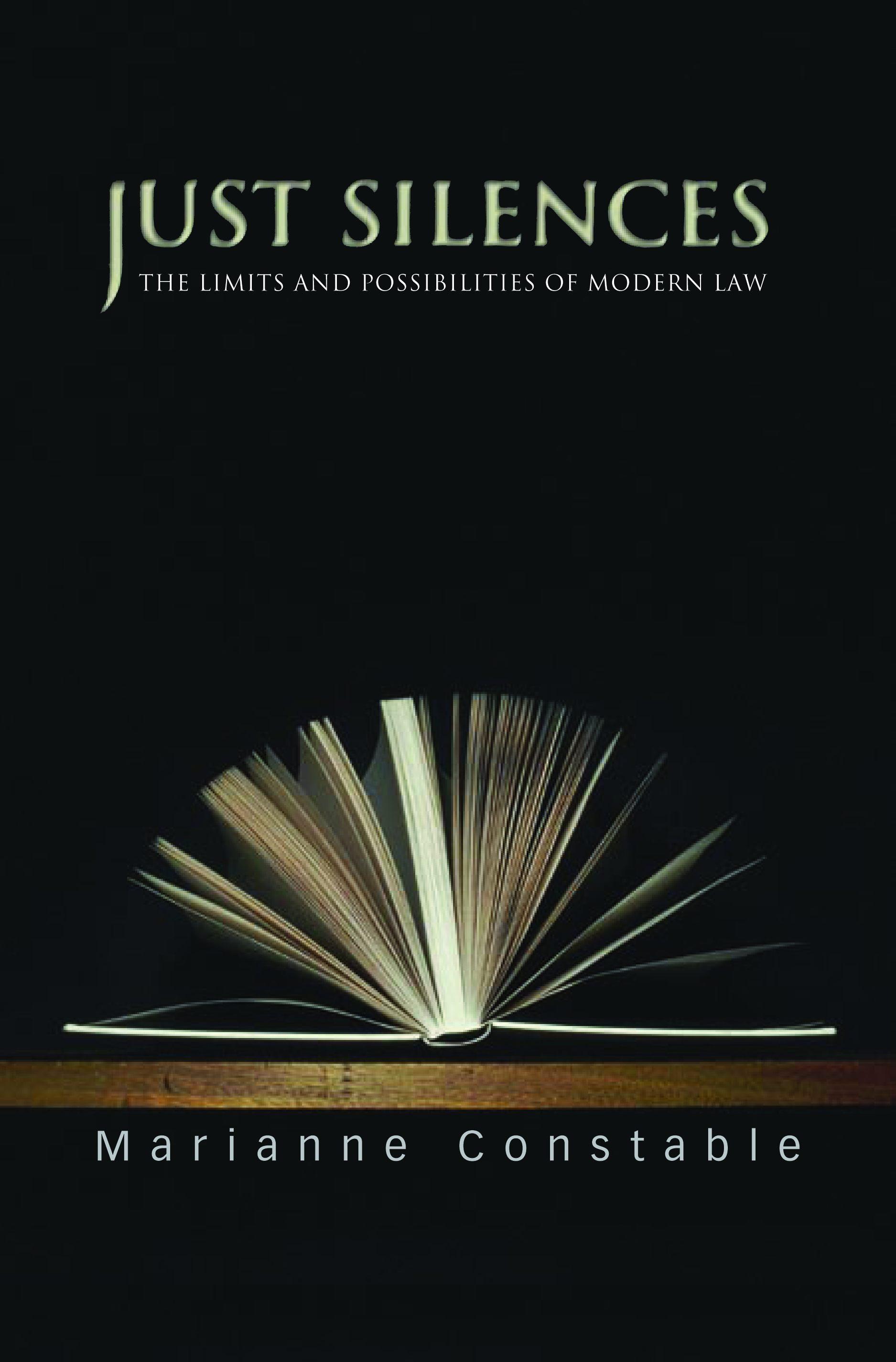
Is the Miranda warning, which lets an accused know of the right to remain silent, more about procedural fairness or about the conventions of speech acts and silences? Do U.S. laws about Native Americans violate the preferred or traditional "silence" of the peoples whose religions and languages they aim to "protect" and "preserve"? In Just Silences, Marianne Constable draws on such examples to explore what is at stake in modern law: a potentially new silence as to justice.
Grounding her claims about modern law in rhetorical analyses of U.S. law and legal texts and locating those claims within the tradition of Nietzsche, Heidegger, and Foucault, Constable asks what we are to make of silences in modern law and justice. She shows how what she calls "sociolegal positivism" is more important than the natural law/positive law distinction for understanding modern law. Modern law is a social and sociological phenomenon, whose instrumental, power-oriented, sometimes violent nature raises serious doubts about the continued possibility of justice. She shows how particular views of language and speech are implicated in such law.
But law--like language--has not always been positivist, empirical, or sociological, nor need it be. Constable examines possibilities of silence and proposes an alternative understanding of law--one that emerges in the calling, however silently, of words to justice. Profoundly insightful and fluently written, Just Silences suggests that justice today lies precariously in the silences of modern positive law.
Pay easily by card, Klarna, Apple Pay or Google Pay. Not happy? You always have a 14-day money-back guarantee. Read more in our terms. If you have any questions, email us at hello@memmo.org.
Memmo makes studying easier – wherever you are in the world. We bring your course books and smart study tools together in one place: summaries, quizzes, podcasts and flashcards. Plus Ted, your study buddy who answers anything you wonder. Over 50,000 students already study here – built to help you learn faster and stress less.