
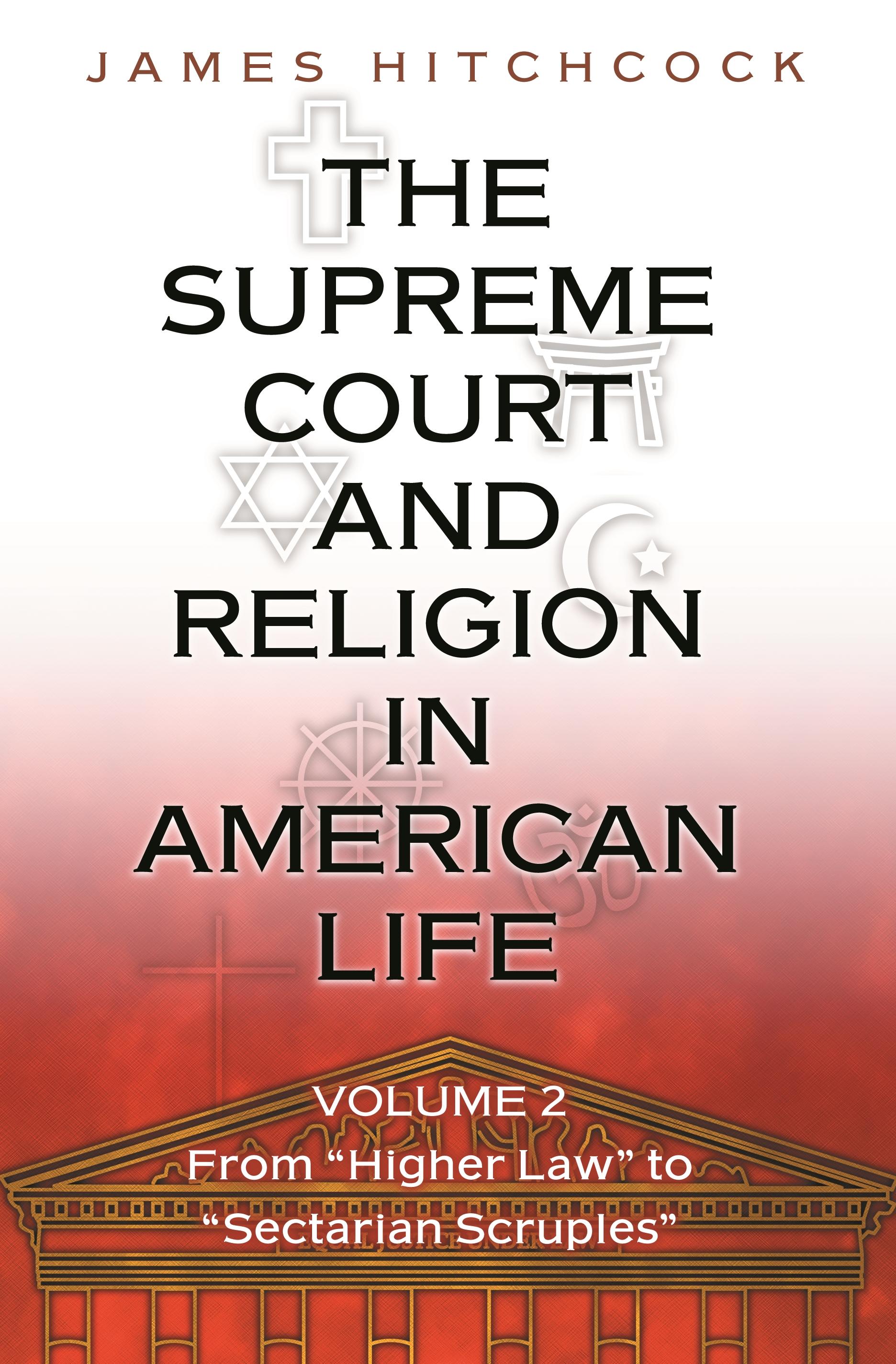
School vouchers. The Pledge of Allegiance. The ban on government grants for theology students. The abundance of church and state issues brought before the Supreme Court in recent years underscores an incontrovertible truth in the American legal system: the relationship between the state and religion in this country is still fluid and changing.
This, the second of two volumes by historian and legal scholar James Hitchcock, offers a complete analysis and interpretation of the Court's historical understanding of religion, explaining the revolutionary change that occurred in the 1940s. In Volume I: The Odyssey of the Religion Clauses (Princeton), Hitchcock provides the first comprehensive survey of the court cases involving the Religion Clauses, including a number that scholars have ignored.
Here, Hitchcock examines how, in the early history of our country, a strict separation of church and state was sustained through the opinions of Jefferson and Madison, even though their views were those of the minority. Despite the Founding Fathers' ideas, the American polity evolved on the assumption that religion was necessary to a healthy society, and cooperation between religion and government was assumed.
This view was seldom questioned until the 1940s, notes Hitchcock. Then, with the beginning of the New Deal and the appointment of justices who believed they had the freedom to apply the Constitution in new ways, the judicial climate changed.
Hitchcock reveals the personal histories of these justices and describes how the nucleus of the Court after World War II was composed of men who were alienated from their own faiths and who looked at religious belief as irrational, divisive, and potentially dangerous, assumptions that became enshrined in the modern jurisprudence of the Religion Clauses. He goes on to offer a fascinating look at how the modern Court continues to grapple with the question of whether traditional religious liberty is to be upheld.
Pay easily by card, Klarna, Apple Pay or Google Pay. Not happy? You always have a 14-day money-back guarantee. Read more in our terms. If you have any questions, email us at hello@memmo.org.
Memmo makes studying easier – wherever you are in the world. We bring your course books and smart study tools together in one place: summaries, quizzes, podcasts and flashcards. Plus Ted, your study buddy who answers anything you wonder. Over 50,000 students already study here – built to help you learn faster and stress less.