
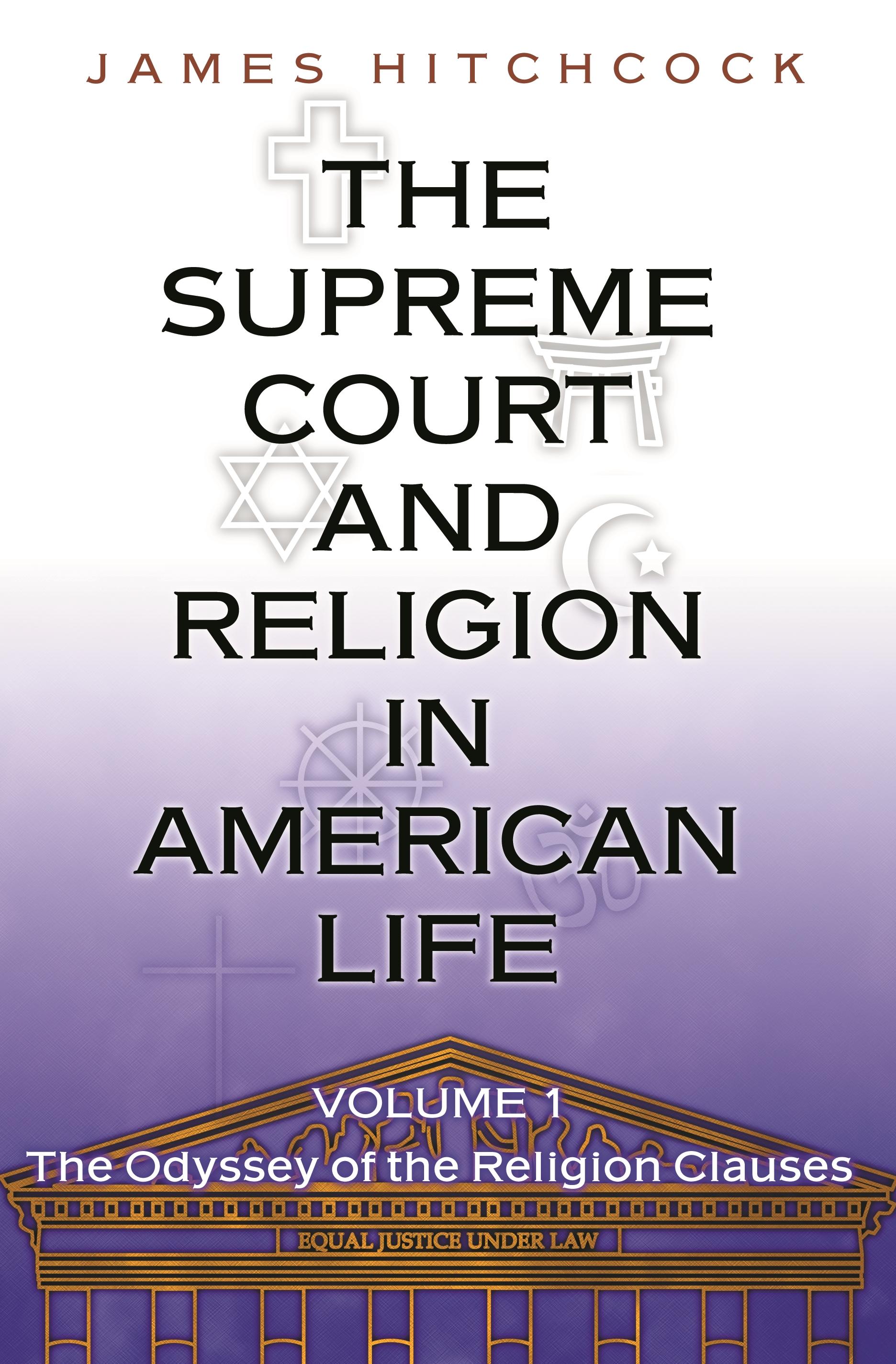
School vouchers. The Pledge of Allegiance. The ban on government grants for theology students. The abundance of church and state issues brought before the Supreme Court in recent years underscores an incontrovertible truth in the American legal system: the relationship between the state and religion in this country is still fluid and changing.
This, the first of two volumes by historian and legal scholar James Hitchcock, provides the first comprehensive exploration of the Supreme Court's approach to religion, offering a close look at every case, including some that scholars have ignored.
Hitchcock traces the history of the way the Court has rendered important decisions involving religious liberty. Prior to World War II it issued relatively few decisions interpreting the Religious Clauses of the Constitution. Nonetheless, it addressed some very important ideas, including the 1819 Dartmouth College case, which protected private religious education from state control, and the Mormon polygamy cases, which established the principle that religious liberty was restricted by the perceived good of society.
It was not until the 1940s that a revolutionary change occurred in the way the Supreme Court viewed religion. During that era, the Court steadily expanded the scope of religious liberty to include many things that were probably not intended by the framers of the Constitution, and it narrowed the permissible scope of religion in public life, barring most kinds of public aid to religious schools and forbidding almost all forms of religious expression in the public schools. This book, along with its companion volume, From "Higher Law" to "Sectarian Scruples," offers a fresh analysis of the Court's most important decisions in constitutional doctrine. Sweeping in range, it paints a detailed picture of the changing relationship between religion and the state in American history.
Pay easily by card, Klarna, Apple Pay or Google Pay. Not happy? You always have a 14-day money-back guarantee. Read more in our terms. If you have any questions, email us at hello@memmo.org.
Memmo makes studying easier – wherever you are in the world. We bring your course books and smart study tools together in one place: summaries, quizzes, podcasts and flashcards. Plus Ted, your study buddy who answers anything you wonder. Over 50,000 students already study here – built to help you learn faster and stress less.