
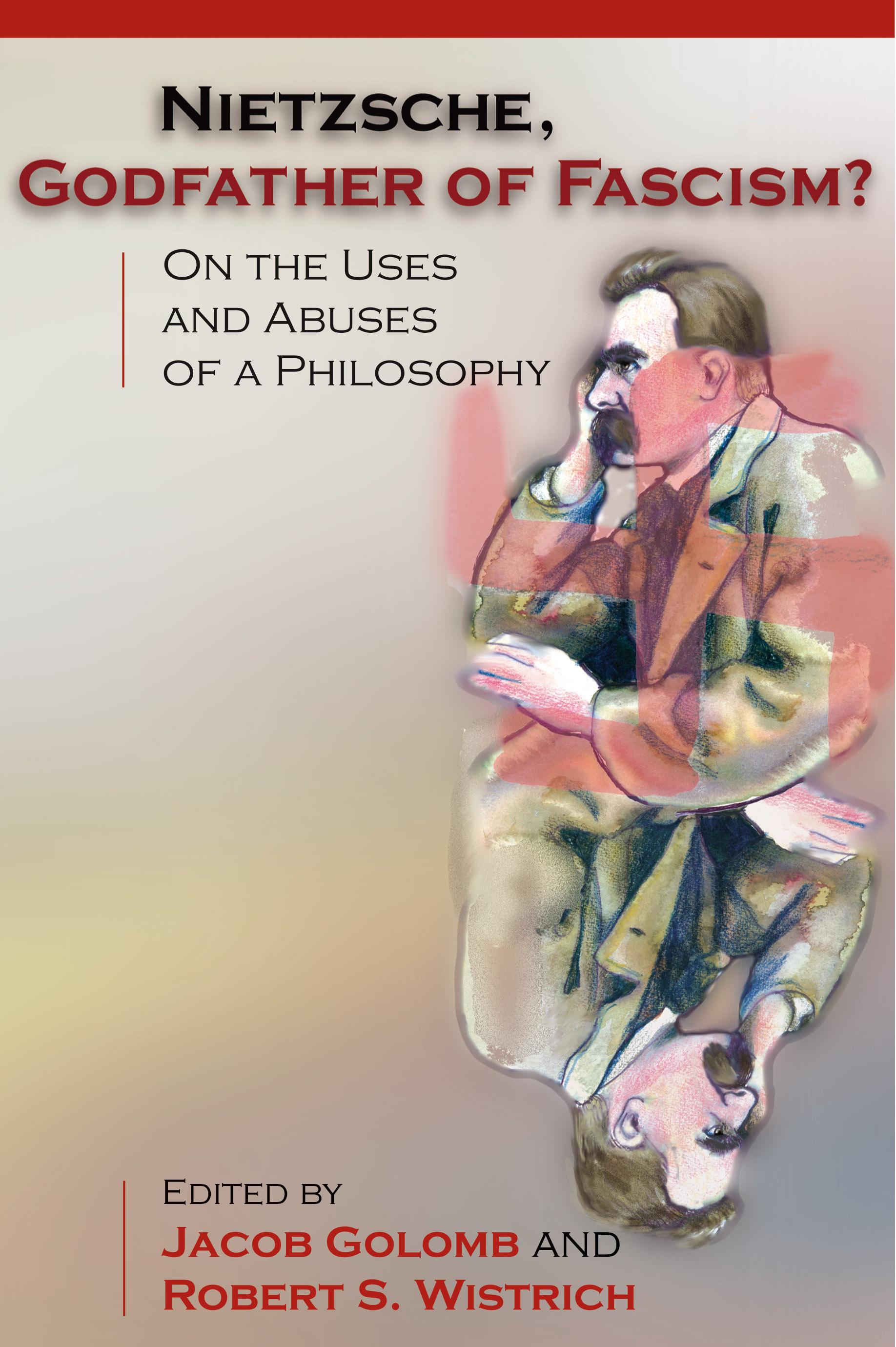
Nietzsche, the Godfather of Fascism? What can Nietzsche have in common with this murderous ideology? Frequently described as the "radical aristocrat" of the spirit, Nietzsche abhorred mass culture and strove to cultivate an Übermensch endowed with exceptional mental qualities. What can such a thinker have in common with the fascistic manipulation of the masses for chauvinistic goals that crushed the autonomy of the individual?
The question that lies at the heart of this collection is how Nietzsche came to acquire the deadly "honor" of being considered the philosopher of the Third Reich and whether such claims had any justification. Does it make any sense to hold him in some way responsible for the horrors of Auschwitz?
The editors present a range of views that attempt to do justice to the ambiguity and richness of Nietzsche's thought. First-rate contributions by a variety of distinguished philosophers and historians explore in depth Nietzsche's attitudes toward Jews, Judaism, Christianity, anti-Semitism, and National Socialism. They interrogate Nietzsche's writings for fascist and anti-Semitic proclivities and consider how they were read by fascists who claimed Nietzsche as their intellectual godfather.
There is much that is disturbingly antiegalitarian and antidemocratic in Nietzsche, and his writings on Jews are open to differing interpretations. Yet his emphasis on individualism and contempt for German nationalism and anti-Semitism put him at stark odds with Nazi ideology.
The Nietzsche that emerges here is a tragic prophet of the spiritual vacuum that produced the twentieth century's totalitarian movements, the thinker who best diagnosed the pathologies of fin-de-siècle European culture. Nietzsche dared to look into the abyss of modern nihilism. This book tells us what he found.
The contributors are Menahem Brinker, Daniel W. Conway, Stanley Corngold, Kurt Rudolf Fischer, Jacob Golomb, Robert C. Holub, Berel Lang, Wolfgang Müller-Lauter, Alexander Nehamas, David Ohana, Roderick Stackelberg, Mario Sznajder, Geoffrey Waite, Robert S. Wistrich, and Yirmiyahu Yovel.
Pay easily by card, Klarna, Apple Pay or Google Pay. Not happy? You always have a 14-day money-back guarantee. Read more in our terms. If you have any questions, email us at hello@memmo.org.
Memmo makes studying easier – wherever you are in the world. We bring your course books and smart study tools together in one place: summaries, quizzes, podcasts and flashcards. Plus Ted, your study buddy who answers anything you wonder. Over 50,000 students already study here – built to help you learn faster and stress less.