
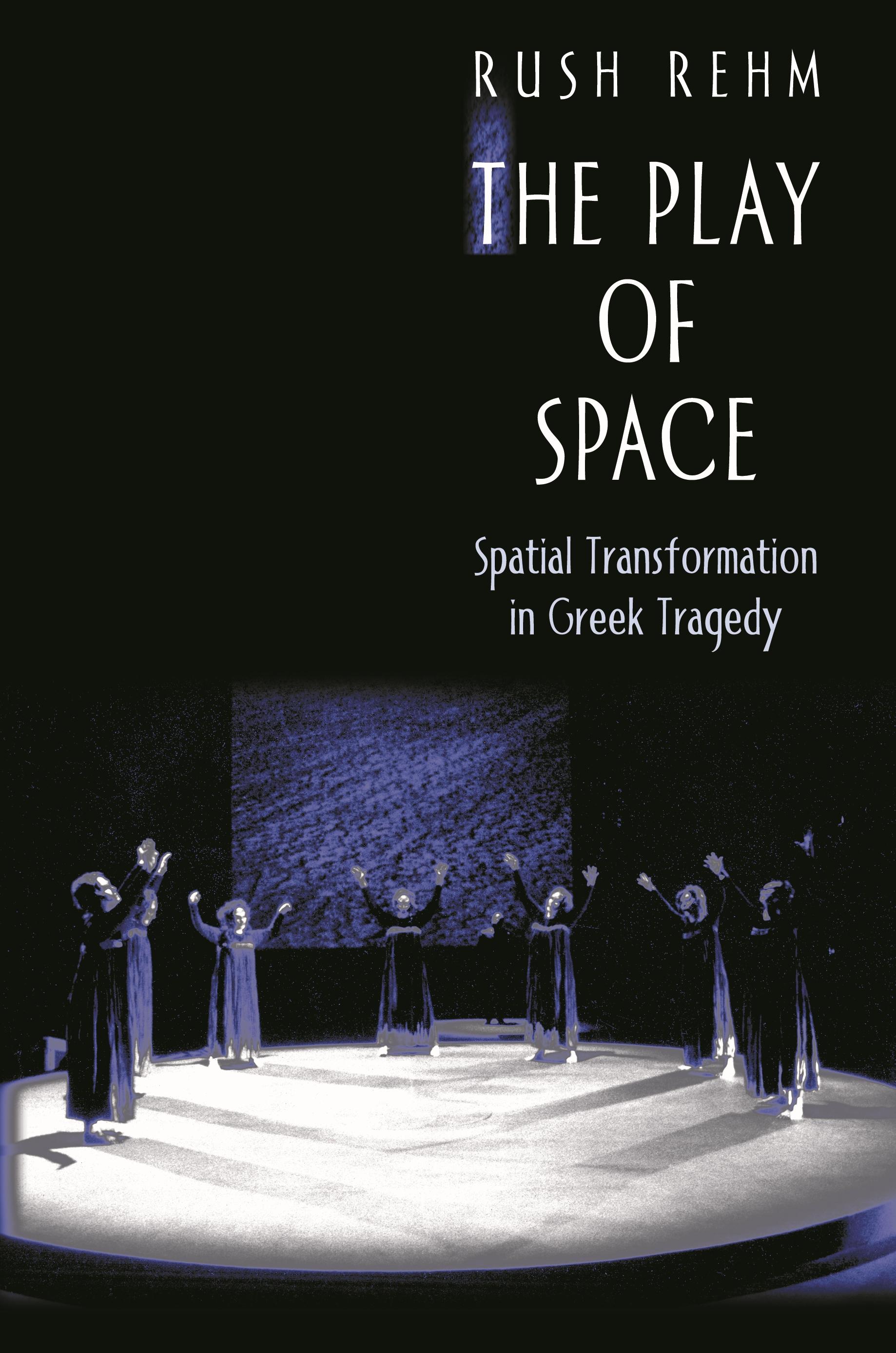
Is "space" a thing, a container, an abstraction, a metaphor, or a social construct? This much is certain: space is part and parcel of the theater, of what it is and how it works. In The Play of Space, noted classicist-director Rush Rehm offers a strikingly original approach to the spatial parameters of Greek tragedy as performed in the open-air theater of Dionysus. Emphasizing the interplay between natural place and fictional setting, between the world visible to the audience and that evoked by individual tragedies, Rehm argues for an ecology of the ancient theater, one that "nests" fifth-century theatrical space within other significant social, political, and religious spaces of Athens.
Drawing on the work of James J. Gibson, Kurt Lewin, and Michel Foucault, Rehm crosses a range of disciplines--classics, theater studies, cognitive psychology, archaeology and architectural history, cultural studies, and performance theory--to analyze the phenomenology of space and its transformations in the plays of Aeschylus, Sophocles, and Euripides. His discussion of Athenian theatrical and spatial practice challenges the contemporary view that space represents a "text" to be read, or constitutes a site of structural dualities (e.g., outside-inside, public-private, nature-culture). Chapters on specific tragedies explore the spatial dynamics of homecoming ("space for returns"); the opposed constraints of exile ("eremetic space" devoid of normal community); the power of bodies in extremis to transform their theatrical environment ("space and the body"); the portrayal of characters on the margin ("space and the other"); and the tragic interactions of space and temporality ("space, time, and memory"). An appendix surveys pre-Socratic thought on space and motion, related ideas of Plato and Aristotle, and, as pertinent, later views on space developed by Newton, Leibniz, Descartes, Kant, and Einstein. Eloquently written and with Greek texts deftly translated, this book yields rich new insights into our oldest surviving drama.
Pay easily by card, Klarna, Apple Pay or Google Pay. Not happy? You always have a 14-day money-back guarantee. Read more in our terms. If you have any questions, email us at hello@memmo.org.
Memmo makes studying easier – wherever you are in the world. We bring your course books and smart study tools together in one place: summaries, quizzes, podcasts and flashcards. Plus Ted, your study buddy who answers anything you wonder. Over 75,000 students already study here – built to help you learn faster and stress less.