
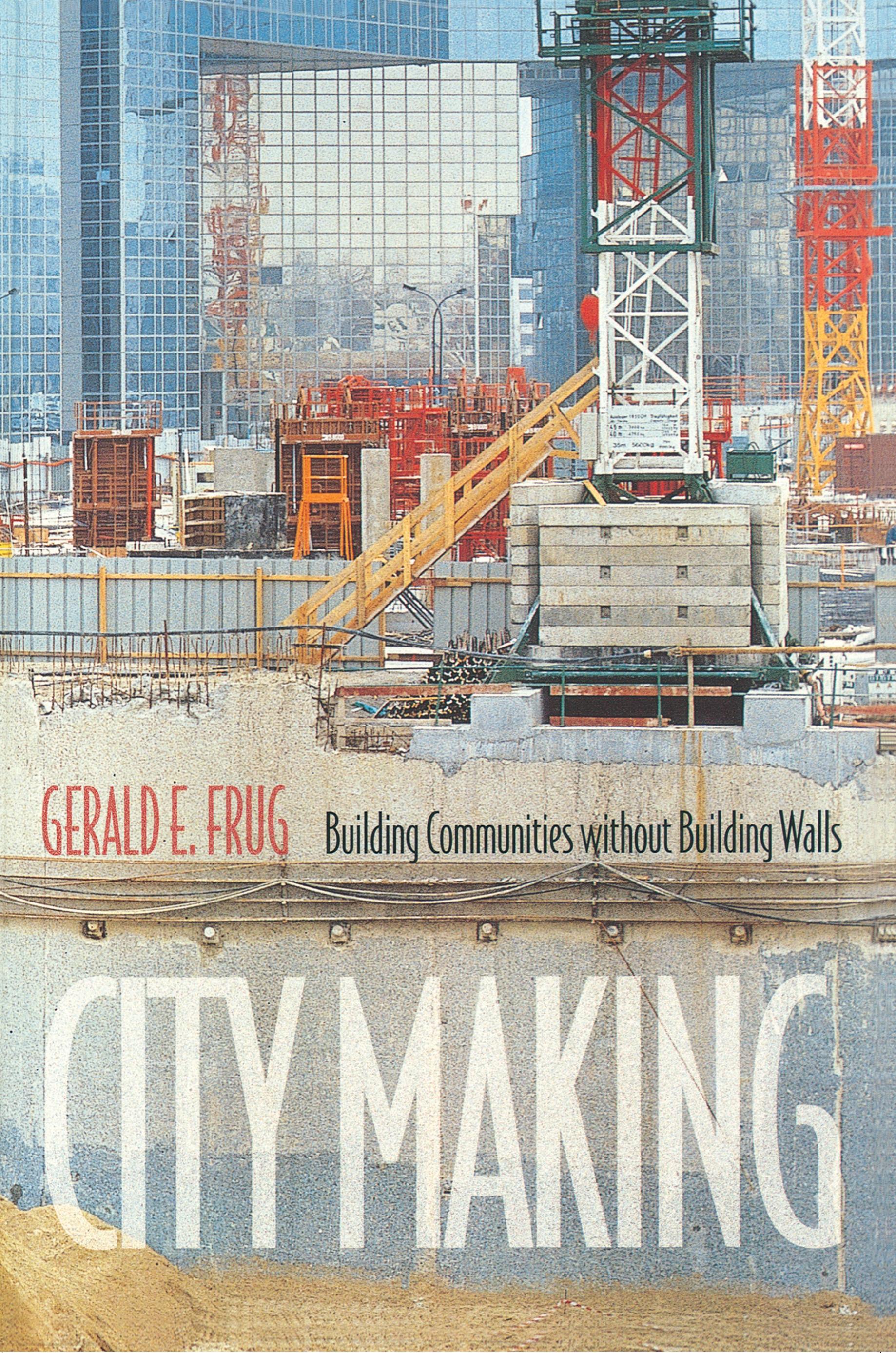
American metropolitan areas today are divided into neighborhoods of privilege and poverty, often along lines of ethnicity and race. City residents traveling through these neighborhoods move from feeling at home to feeling like tourists to feeling so out of place they fear for their security. As Gerald Frug shows, this divided and inhospitable urban landscape is not simply the result of individual choices about where to live or start a business. It is the product of government policies--and, in particular, the policies embedded in legal rules. A Harvard law professor and leading expert on urban affairs, Frug presents the first-ever analysis of how legal rules shape modern cities and outlines a set of alternatives to bring down the walls that now keep city dwellers apart.
Frug begins by describing how American law treats cities as subdivisions of states and shows how this arrangement has encouraged the separation of metropolitan residents into different, sometimes hostile groups. He explains in clear, accessible language the divisive impact of rules about zoning, redevelopment, land use, and the organization of such city services as education and policing. He pays special attention to the underlying role of anxiety about strangers, the widespread desire for good schools, and the pervasive fear of crime. Ultimately, Frug calls for replacing the current legal definition of cities with an alternative based on what he calls "community building"--an alternative that gives cities within the same metropolitan region incentives to forge closer links with each other.
An incisive study of the legal roots of today's urban problems, City Making is also an optimistic and compelling blueprint for enabling American cities once again to embrace their historic role of helping people reach an accommodation with those who live in the same geographic area, no matter how dissimilar they are.
Pay easily by card, Klarna, Apple Pay or Google Pay. Not happy? You always have a 14-day money-back guarantee. Read more in our terms. If you have any questions, email us at hello@memmo.org.
Memmo makes studying easier – wherever you are in the world. We bring your course books and smart study tools together in one place: summaries, quizzes, podcasts and flashcards. Plus Ted, your study buddy who answers anything you wonder. Over 75,000 students already study here – built to help you learn faster and stress less.