
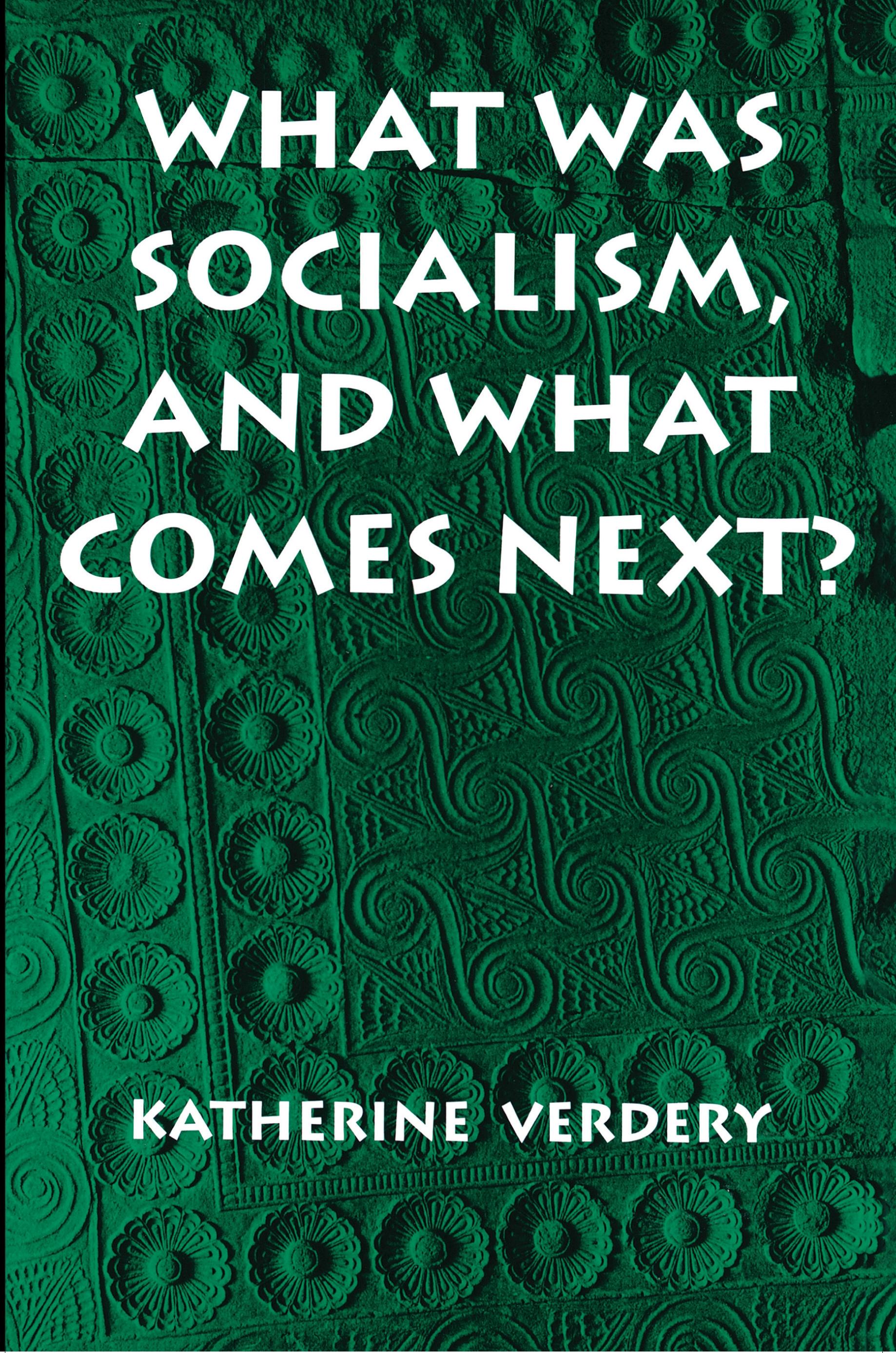
Among the first anthropologists to work in Eastern Europe, Katherine Verdery had built up a significant base of ethnographic and historical expertise when the major political transformations in the region began to take place. In this collection of essays dealing with the aftermath of Soviet-style socialism and the different forms that may replace it, she explores the nature of socialism in order to understand more fully its consequences. By analyzing her primary data from Romania and Transylvania and synthesizing information from other sources, Verdery lends a distinctive anthropological perspective to a variety of themes common to political and economic studies on the end of socialism: themes such as "civil society," the creation of market economies, privatization, national and ethnic conflict, and changing gender relations.
Under Verdery's examination, privatization and civil society appear not only as social processes, for example, but as symbols in political rhetoric. The classic pyramid scheme is not just a means of enrichment but a site for reconceptualizing the meaning of money and an unusual form of post-Marxist millenarianism. Land being redistributed as private property stretches and shrinks, as in the imaginings of the farmers struggling to tame it. Infused by this kind of ethnographic sensibility, the essays reject the assumption of a transition to capitalism in favor of investigating local processes in their own terms.
Pay easily by card, Klarna, Apple Pay or Google Pay. Not happy? You always have a 14-day money-back guarantee. Read more in our terms. If you have any questions, email us at hello@memmo.org.
Memmo makes studying easier – wherever you are in the world. We bring your course books and smart study tools together in one place: summaries, quizzes, podcasts and flashcards. Plus Ted, your study buddy who answers anything you wonder. Over 50,000 students already study here – built to help you learn faster and stress less.