
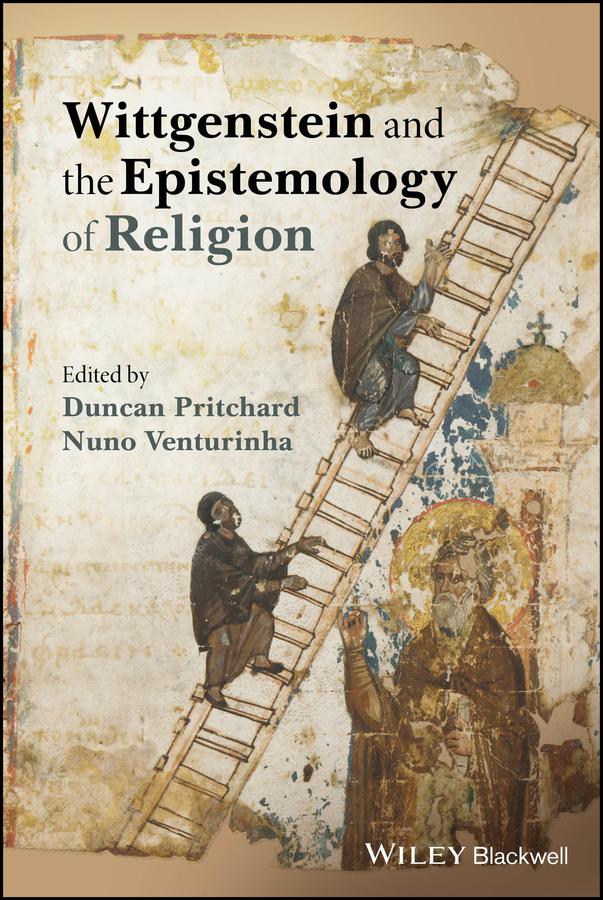
Illuminates Wittgenstein’s religious epistemology—bridging faith, reason, and cultural understanding across disciplines
Wittgenstein and the Epistemology of Religion offers the first comprehensive exploration of Ludwig Wittgenstein’s philosophy of religion through an explicitly epistemological lens. Fourteen newly commissioned essays from leading and emerging scholars examine how Wittgenstein’s later thought, especially his descriptive and grammatical methods, provides tools for understanding religious belief, practice, and diversity. This singular volume situates Wittgenstein within debates over cognitivism, non-cognitivism, and fideism, while also considering his subtle anthropological and ethnological insights into religion as a form of life.
Structured in five parts, Wittgenstein and the Epistemology of Religion traces key themes that range from the tension between faith and reason to the role of evidence in religious life. Contributors engage with seminal figures such as Locke, Kierkegaard, James, and Malinowski to illuminate how Wittgenstein challenges scientific reductionism and opens new ways of understanding the lived experience of belief. The essays reveal how questions of meaning, context, and practice underpin the epistemic evaluation of religious commitments, as well as how Wittgenstein’s approach helps clarify conflicts that lack a shared evidential framework.
Combining historical sensitivity, conceptual rigor, and contemporary application, this landmark collection:
- Systematically explores Wittgenstein’s religious epistemology across multiple thematic dimensions
- Challenges scientistic frameworks by emphasizing context and meaning in religious discourse
- Highlights the relevance of Wittgenstein’s thought for contemporary debates on faith, reason, and evidence
- Introduces the concept of quasi-fideism as a nuanced position between full rationalism and fideism
- Expands Wittgenstein’s philosophical reach by applying anthropological and ethnological perspectives to religious belief
- Addresses current teaching and research needs in epistemology and the philosophy of religion
Encouraging cross-disciplinary dialogue between disciplines, Wittgenstein and the Epistemology of Religion is essential reading for scholars, researchers, and advanced students in philosophy, religious studies, anthropology, and sociology. It serves as a core or supplemental text in upper-level undergraduate or graduate courses such as Philosophy of Religion, Religious Epistemology, Wittgenstein Studies, as well as courses examining belief formation, ritual, and the social dynamics of religion.
Pay easily by card, Klarna, Apple Pay or Google Pay. Not happy? You always have a 14-day money-back guarantee. Read more in our terms. If you have any questions, email us at hello@memmo.org.
Memmo makes studying easier – wherever you are in the world. We bring your course books and smart study tools together in one place: summaries, quizzes, podcasts and flashcards. Plus Ted, your study buddy who answers anything you wonder. Over 50,000 students already study here – built to help you learn faster and stress less.