
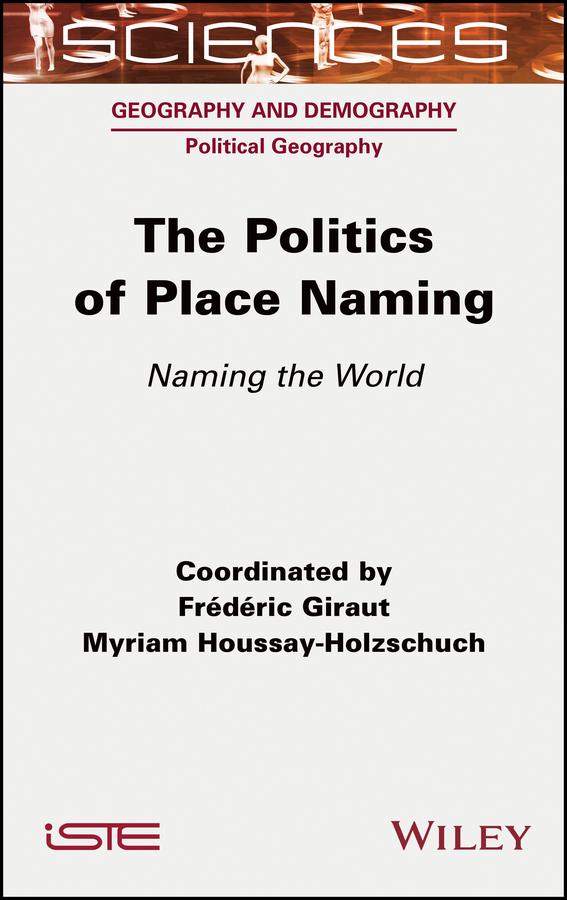
Naming the places of the world is an essential human act of territorialization. As the subject of conflict or dispute, naming plays out in numerous ways that involve collective and individual relationships to space, whether functional or imaginary, as well as the identities related to them. Name traces also differ together with their inscription within landscapes and history.
Names constitute a heritage, they bear witness, they mark places and thus contribute to the foundation of territories. Beyond place names, place naming reveals the functions and uses of names, but also the contradictory meanings that society bestows on them.
With this framework in mind, that of critical toponymy, The Politics of Place Naming considers different points of view when studying place naming. These vary from linguistics to political and cultural geography, via history, anthropology, cartography, urban planning, digital humanities, subaltern studies and many other disciplines. This book honors this transversality by taking such studies into account in its examination of place naming.
Pay easily by card, Klarna, Apple Pay or Google Pay. Not happy? You always have a 14-day money-back guarantee. Read more in our terms. If you have any questions, email us at hello@memmo.org.
Memmo makes studying easier – wherever you are in the world. We bring your course books and smart study tools together in one place: summaries, quizzes, podcasts and flashcards. Plus Ted, your study buddy who answers anything you wonder. Over 50,000 students already study here – built to help you learn faster and stress less.