
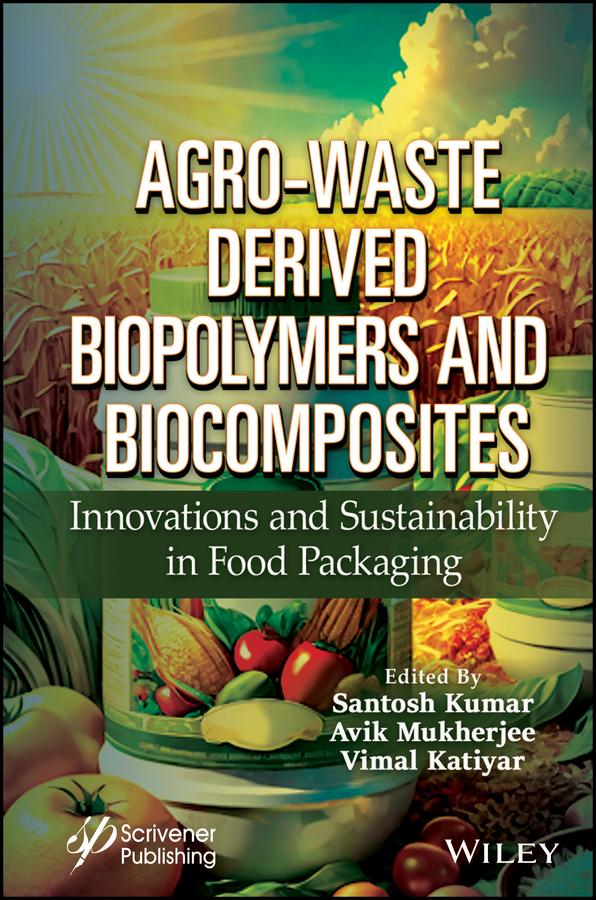
This comprehensive book describes the fundamental principles and major advancements in the utilization of agro-waste for deriving biopolymers, and their applications to fabricate composite, nanocomposite, and hybrid food packaging films and coatings.
The book serves as a complete, systematic, comprehensive account of the contemporary developments in the area of novel and environment-friendly valorization of agro- and food wastes into value-added products like biodegradable polymer and active functional agents for food packaging applications. It also describes the hurdles and challenges in the commercialization of these novel biopolymer-based materials, including their composites, their applications, safety, and legal ramifications.
This book consists of fifteen chapters covering different aspects of agro- and food waste utilization, the development of biodegradable polymers, and their composites for sustainable food packaging applications. The first thirteen chapters detail the processing of various agro- and food wastes of plant and animal origin to synthesize different biopolymers, such as starch, cellulose, chitosan, silk proteins, pectin, etc., and their applications for the fabrication of sustainable food packaging materials and composites that are attractive alternatives to synthetic plastic packaging. These chapters also summarize the effectiveness of these biopolymers and their composites in developing active films and edible coatings for shelf-life extension and preservation of perishable foods.
A chapter is devoted to issues of biodegradability, including analyses of various biodegradation reactions, such as depolymerization, mineralization, biochemical, and abiotic degradation both in soil and aquatic environments. The book concludes with a chapter addressing the concerns associated with the possible migration of components or additives from these biodegradable packaging into packaged food items.
Audience
The primary audience for this book is researchers, scientists, and engineers working in food science and technology, food engineering and technology, food biotechnology, sustainable food packaging, etc. Additionally, food entrepreneurs and associated businesses, such as the packaging and coatings industries, will also have a keen interest in the book.
Pay easily by card, Klarna, Apple Pay or Google Pay. Not happy? You always have a 14-day money-back guarantee. Read more in our terms. If you have any questions, email us at hello@memmo.org.
Memmo makes studying easier – wherever you are in the world. We bring your course books and smart study tools together in one place: summaries, quizzes, podcasts and flashcards. Plus Ted, your study buddy who answers anything you wonder. Over 50,000 students already study here – built to help you learn faster and stress less.