
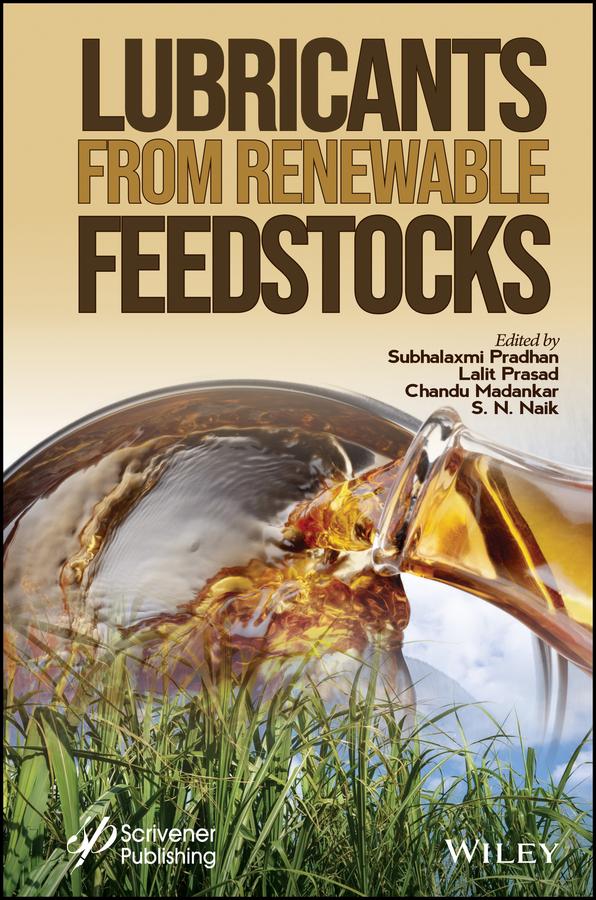
Written and edited by a team of industry experts, this exciting new volume covers the field of renewable lubricants, their processing, optimization, end-use application, and their future potential.
Biolubricants are a viable alternative to synthetic lubricants because they are produced from organic materials such as plant oils, waste oils and by-products. Renewable biolubricants are the subject of research because of their biodegradability, eco-friendliness, and favorable socioeconomic consequences to counteract imitations of synthetic lubricants. Biolubricants have thus emerged as an ideal substitute for mineral oil-based lubricants, as significant economic and environmental acceptability has been received over the last few decades and it has been estimated that there would be a further steady growth in its demand over the next few decades. Furthermore, biolubricants’ high-quality lubricating properties, high load carrying ability, long service life, and fast biodegradability have expanded the recent interest. These lubricants can be derived from different sources of vegetable oils, non-edible oils, waste cooking oils (WCO) and microbe-derived oils. Among all these sources, the use of WCOs and microbe-derived oils have received immense interest and provide superior quality biolubricants.
This outstanding new volume covers the prospects and processing of feedstocks for biolubricants, extraction techniques, new advancements in the field of bio-based lubricants, epoxide lubricants, hydrogenated lubricants, microbial-based biolubricants, nano-biolubricants, polyester-based biolubricants, lubricants from waste oils and waste materials, its economic and environmental acceptability and biorefinery approaches. The book will be helpful to industry professionals and engineers of all types, students, and other stakeholders working in the field of lubricant, chemical engineering, mechanical engineering and material science, tribological sectors and biorefinery industries. It will also be of great interest to new start-up companies working in the area of processing feedstocks for biolubricant production and end use application, biorefineries, valorization of biolubricant waste, and in the recycling industries.
Pay easily by card, Klarna, Apple Pay or Google Pay. Not happy? You always have a 14-day money-back guarantee. Read more in our terms. If you have any questions, email us at hello@memmo.org.
Memmo makes studying easier – wherever you are in the world. We bring your course books and smart study tools together in one place: summaries, quizzes, podcasts and flashcards. Plus Ted, your study buddy who answers anything you wonder. Over 50,000 students already study here – built to help you learn faster and stress less.