
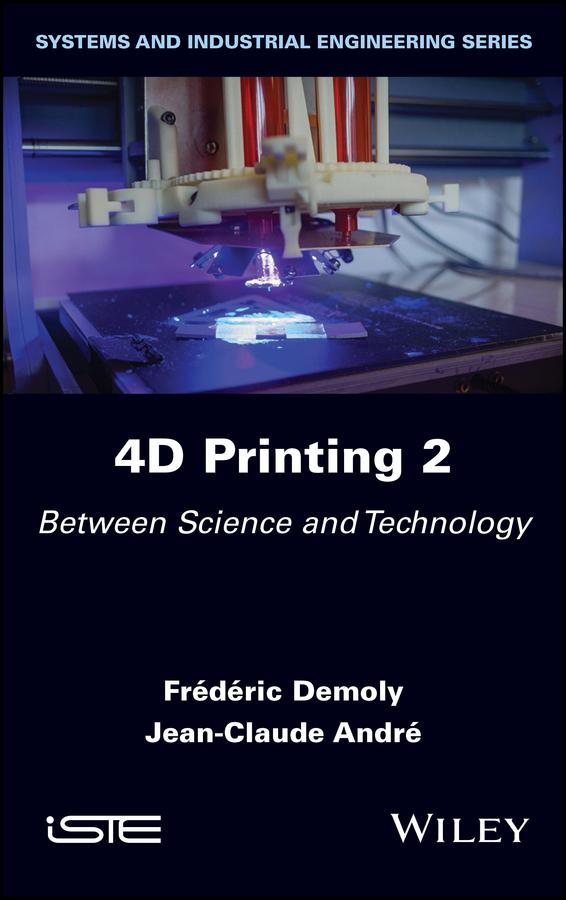
Who hasn’t dreamed of seeing matter transformed in a way that suits you? This is the goal of 4D printing, using materials that can change in terms of shape and property under the effect of energy stimulation. From the description of the actions and actuators, the authors show the weaknesses that limit the industrialization of 4D printing processes; these are the modes of energy stimulation.
To prepare for the future, two chapters are introduced: “Material-Process Duality in Industrial 4D Printing” and “How to Approach 4D Printing in Design”. If the capture and reuse of 4D printing knowledge is necessary for this objective, the conclusion leaves the existing myth around the 4D printing theme and proposes a “draft” roadmap that should be the subject of reflection and scientific debate on a concept that is still immature, but full of promise.
To prepare for the future, two chapters are introduced: “Material-Process Duality in Industrial 4D Printing” and “How to Approach 4D Printing in Design”. If the capture and reuse of 4D printing knowledge is necessary for this objective, the conclusion leaves the existing myth around the 4D printing theme and proposes a “draft” roadmap that should be the subject of reflection and scientific debate on a concept that is still immature, but full of promise.
Pages: 320
Category: Ingenjörsvetenskap
e-ISBN: 9781394171514
Shipping weight: 1.2 kg
Ships in: 1-2 days
Pay easily by card, Klarna, Apple Pay or Google Pay. Not happy? You always have a 14-day money-back guarantee. Read more in our terms. If you have any questions, email us at hello@memmo.org.
Memmo makes studying easier – wherever you are in the world. We bring your course books and smart study tools together in one place: summaries, quizzes, podcasts and flashcards. Plus Ted, your study buddy who answers anything you wonder. Over 50,000 students already study here – built to help you learn faster and stress less.