
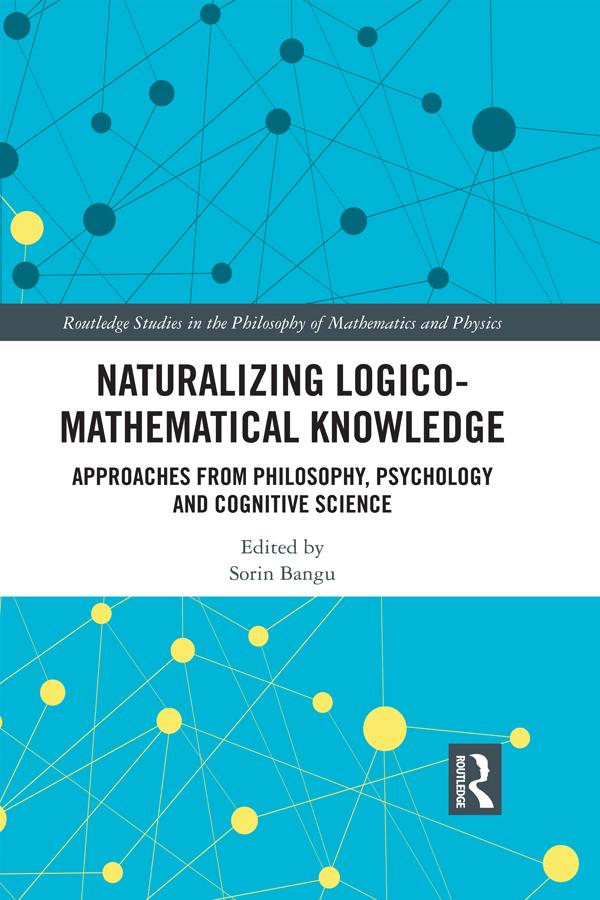
This book is meant as a part of the larger contemporary philosophical project of naturalizing logico-mathematical knowledge, and addresses the key question that motivates most of the work in this field: What is philosophically relevant about the nature of logico-mathematical knowledge in recent research in psychology and cognitive science? The question about this distinctive kind of knowledge is rooted in Plato’s dialogues, and virtually all major philosophers have expressed interest in it. The essays in this collection tackle this important philosophical query from the perspective of the modern sciences of cognition, namely cognitive psychology and neuroscience. Naturalizing Logico-Mathematical Knowledge contributes to consolidating a new, emerging direction in the philosophy of mathematics, which, while keeping the traditional concerns of this sub-discipline in sight, aims to engage with them in a scientifically-informed manner. A subsequent aim is to signal the philosophers’ willingness to enter into a fruitful dialogue with the community of cognitive scientists and psychologists by examining their methods and interpretive strategies.
Pay easily by card, Klarna, Apple Pay or Google Pay. Not happy? You always have a 14-day money-back guarantee. Read more in our terms. If you have any questions, email us at hello@memmo.org.
Memmo makes studying easier – wherever you are in the world. We bring your course books and smart study tools together in one place: summaries, quizzes, podcasts and flashcards. Plus Ted, your study buddy who answers anything you wonder. Over 50,000 students already study here – built to help you learn faster and stress less.