
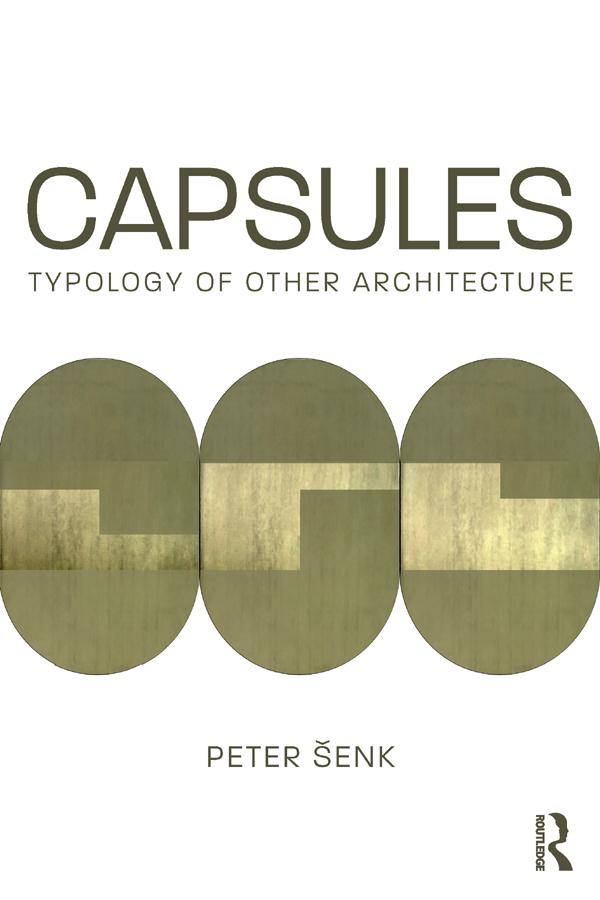
This book investigates the architectural, product design, and urban typology of the capsule which, beginning in the 1960s, broadened the concept of the basic building blocks of architecture to include a minimal living unit, called the "capsule." Here it is presented with regard to the continuity of the development of the Modern Movement, its revisionist criticism, pioneering examples, as well as contemporary examples and uses. The typology of the capsule allows us to consider this theme in terms of the architecture of resistance, with the potential to search for an "other" architecture that is embedded in our contemporaneity (manifested in small dwellings, composite structures, and container units; shelters and mobile homes in nature and the urban environment; technology transfer in high-tech designs; devices, additions, and extensions etc.). The concept of the capsule as a building element of architecture, as well as a spatial element, can therefore be regarded as having a generative potential for an architecture of personal space for the individual, forcing us to reflect on our existing living and dwelling conditions.
Pay easily by card, Klarna, Apple Pay or Google Pay. Not happy? You always have a 14-day money-back guarantee. Read more in our terms. If you have any questions, email us at hello@memmo.org.
Memmo makes studying easier – wherever you are in the world. We bring your course books and smart study tools together in one place: summaries, quizzes, podcasts and flashcards. Plus Ted, your study buddy who answers anything you wonder. Over 75,000 students already study here – built to help you learn faster and stress less.