
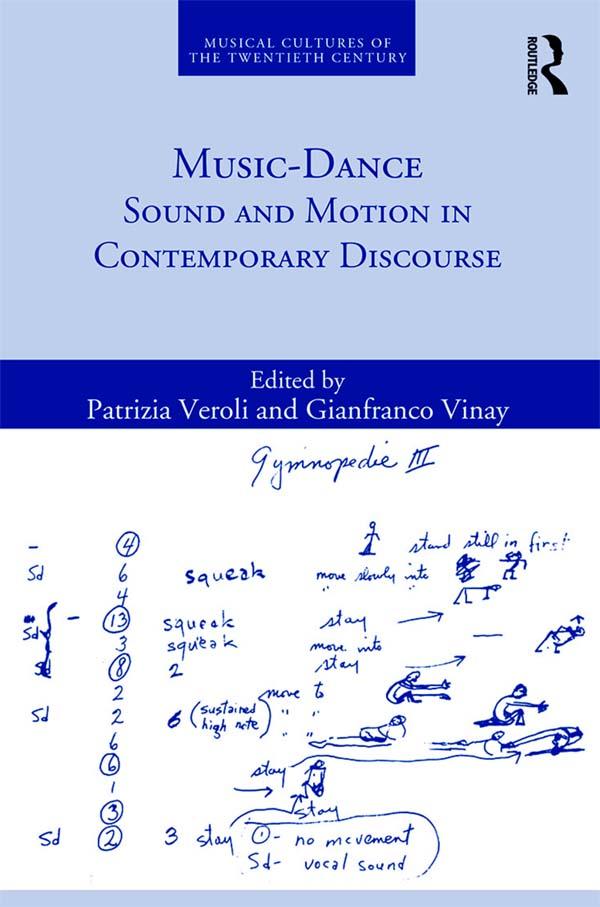
Music-Dance explores the identity of choreomusical work, its complex authorship and its modes of reception as well as the cognitive processes involved in the reception of dance performance. Scholars of dance and music analyse the ways in which a musical score changes its prescriptive status when it becomes part of a choreographic project, the encounter between sound and motion on stage, and the intersection of listening and seeing. As well as being of interest to musicologists and choreologists considering issues such as notation, multimedia and the analysis of performance, this volume will appeal to scholars interested in applied research in the fields of cognition and neuroscience. The line-up of authors comprises representative figures of today’s choreomusicology, dance historians, scholars of twentieth-century composition and specialists in cognitive science and performance studies. Among the topics covered are multimedia and the analysis of performance; the notational practice of choreographers and the parallel attempts of composers to find a graphic representation for musical gestures; and the experience of dance as a paradigm for a multimodal perception, which is investigated in terms of how the association of sound and movement triggers emotions and specific forms of cognition.
Pay easily by card, Klarna, Apple Pay or Google Pay. Not happy? You always have a 14-day money-back guarantee. Read more in our terms. If you have any questions, email us at hello@memmo.org.
Memmo makes studying easier – wherever you are in the world. We bring your course books and smart study tools together in one place: summaries, quizzes, podcasts and flashcards. Plus Ted, your study buddy who answers anything you wonder. Over 75,000 students already study here – built to help you learn faster and stress less.