
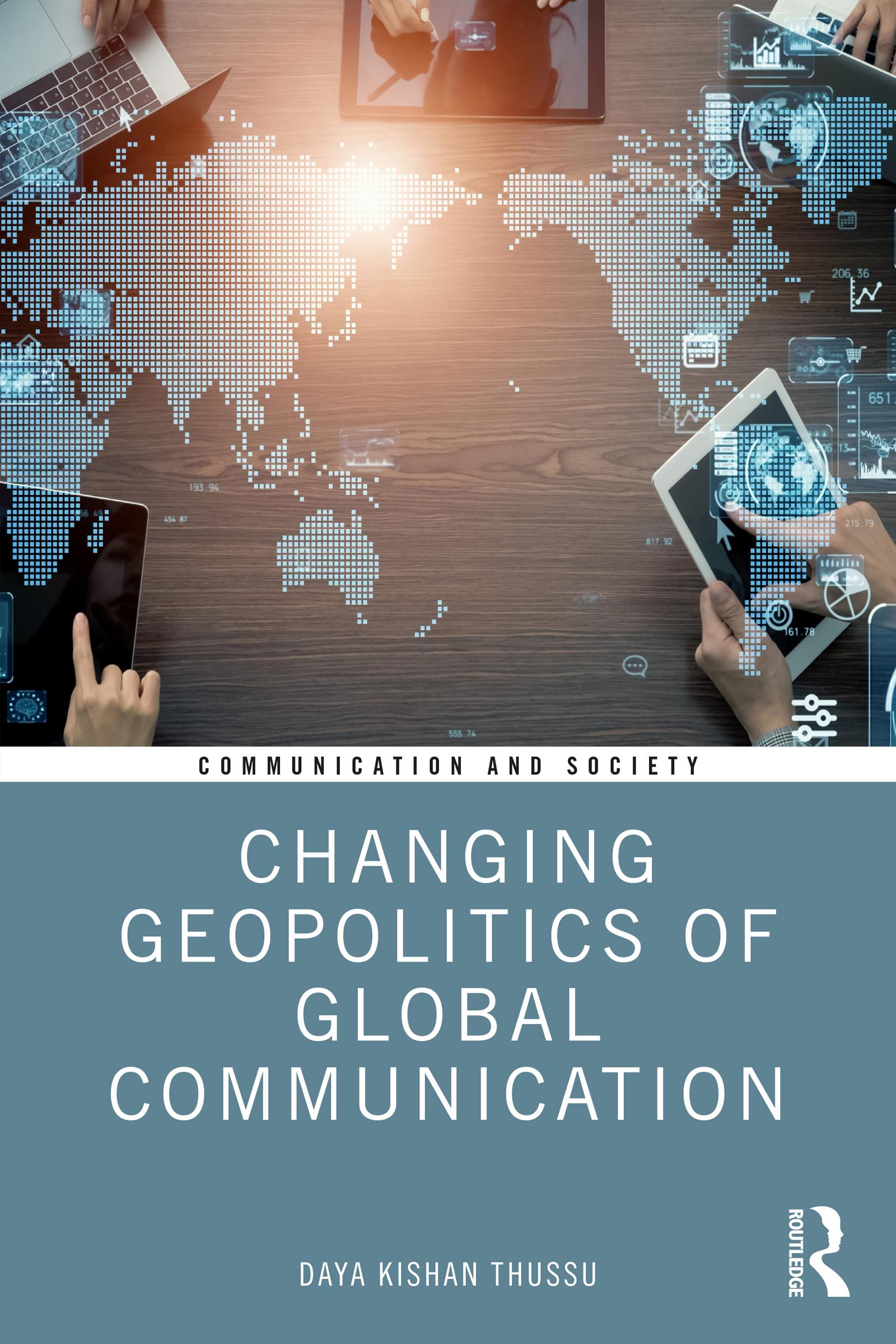
Changing Geopolitics of Global Communication examines the rapidly evolving dynamics between global communication and geopolitics.
As an intersection between communication and international relations, it bridges the existing gap in scholarship and highlights the growing importance of digital communication in legitimizing and promoting the geopolitical and economic goals of leading powers. One central theme that emerges in the book is the continuity of asymmetries in power relations that can be traced back to 19th-century European imperialism, manifested in its various incarnations from ‘liberal’ to ‘neo-liberal’, to ‘digital’ imperialism. The book includes a discussion of the post–Cold War US-led transformation of the hardware and software of global communication and how it has been challenged by the ‘rise of the rest’, especially China. Other key issues covered include the geopolitics of image wars, weaponization of information and the visibility of discourses emanating from outside the Euro-Atlantic zone.
The ideas and arguments advanced here privilege a reading of geopolitical processes and examples from the perspective of the global South. Written by a leading scholar of global communication, this comprehensive and transdisciplinary study adopts a holistic approach and will be of interest to the global community of scholars, researchers and commentators in communication and international relations, among other fields.
Pay easily by card, Klarna, Apple Pay or Google Pay. Not happy? You always have a 14-day money-back guarantee. Read more in our terms. If you have any questions, email us at hello@memmo.org.
Memmo makes studying easier – wherever you are in the world. We bring your course books and smart study tools together in one place: summaries, quizzes, podcasts and flashcards. Plus Ted, your study buddy who answers anything you wonder. Over 75,000 students already study here – built to help you learn faster and stress less.