
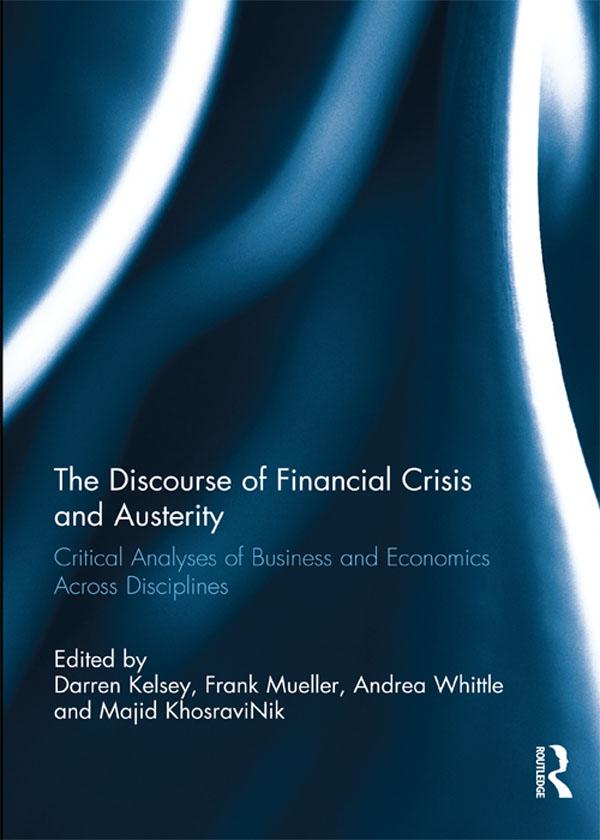
This book demonstrates the importance of understanding how political rhetoric, financial reporting and media coverage of austerity in transnational contexts is significant to the communicative, social and economic environments in which we live. It considers how aspects of moral storytelling, language, representation and ideology operate through societies in financial crisis and through governments that impose austerity programmes on public spending. Whilst many of the debates covered here are concerned with UK economic policy and British social contexts, the contributions also consider examples from other countries that reflect similar concerns on the ideological operations of austerity and financial discourse. The multiple discursive contexts of austerity demonstrate the breadth of social concerns and conflicts that have developed in societies and institutions following the global economic crisis of 2008. Through its interdisciplinary focus on this topic, this book provides an important contribution across multiple subject areas, with shared interests in critical and analytical approaches to discourse, power and language in social contexts reflecting the healthy collaborative scope of critical discourse studies as a field of research. This book was originally published as a special issue of Critical Discourse Studies.
Pay easily by card, Klarna, Apple Pay or Google Pay. Not happy? You always have a 14-day money-back guarantee. Read more in our terms. If you have any questions, email us at hello@memmo.org.
Memmo makes studying easier – wherever you are in the world. We bring your course books and smart study tools together in one place: summaries, quizzes, podcasts and flashcards. Plus Ted, your study buddy who answers anything you wonder. Over 50,000 students already study here – built to help you learn faster and stress less.