
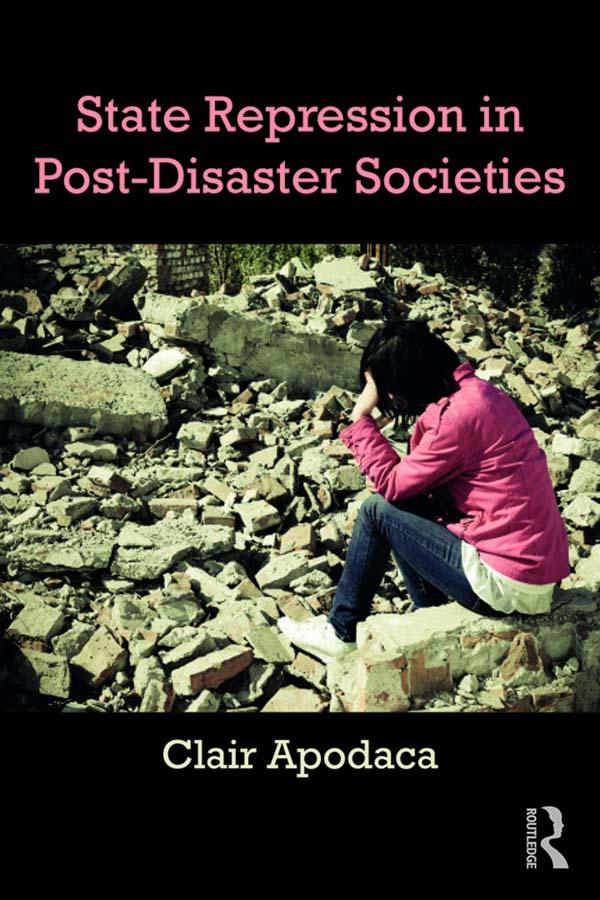
A natural hazard is a physical event but a disaster is a social and political phenomenon. Natural hazards are, for the most part, unavoidable and apolitical. However, they carry with them serious political, economic, and social consequences. Disasters also have adverse consequences on human rights standards. An understanding of the relationship between disasters and human rights outcomes requires knowledge of how disasters increase grievance and frustration, and impact the probability of contentious political behavior. To date, there has been little empirical or theoretical research on the specific circumstances under which disasters impact antigovernment political behavior, and even less is known of the causal chain between a natural disaster, protest activity, and human rights violations. In this book, Clair Apodaca maps a comprehensive causal model of the complex interactions between disasters and human rights violations. She claims that pre-existing inequalities and societal grievances turn a natural hazard into a disaster.
A grievance-based theory of protests suggests that the underlying structural causes are social and economic group disparities, political exclusion, along with population pressures. To turn these all too common conditions into active political behavior requires a triggering event. When a damage–loss is the primary consequence of a disaster, the government and international community can compensate victims by providing rebuilding and reconstruction aid. However, when the disaster results in high numbers of fatalities, the government and international community cannot adequately compensate survivors for their losses. Grievances cannot be easily or effectively eliminated, and survivors and their supporters mobilize for change even if they are likely to face state repression.
Clair Apodaca offers a unique contribution to our understanding of human rights violations. She effectively shows that there is a causal process between hazard events, protest activities, and government repression, a finding that is key to scholars, practitioners, and policy-makers working in this field.
Pay easily by card, Klarna, Apple Pay or Google Pay. Not happy? You always have a 14-day money-back guarantee. Read more in our terms. If you have any questions, email us at hello@memmo.org.
Memmo makes studying easier – wherever you are in the world. We bring your course books and smart study tools together in one place: summaries, quizzes, podcasts and flashcards. Plus Ted, your study buddy who answers anything you wonder. Over 50,000 students already study here – built to help you learn faster and stress less.