
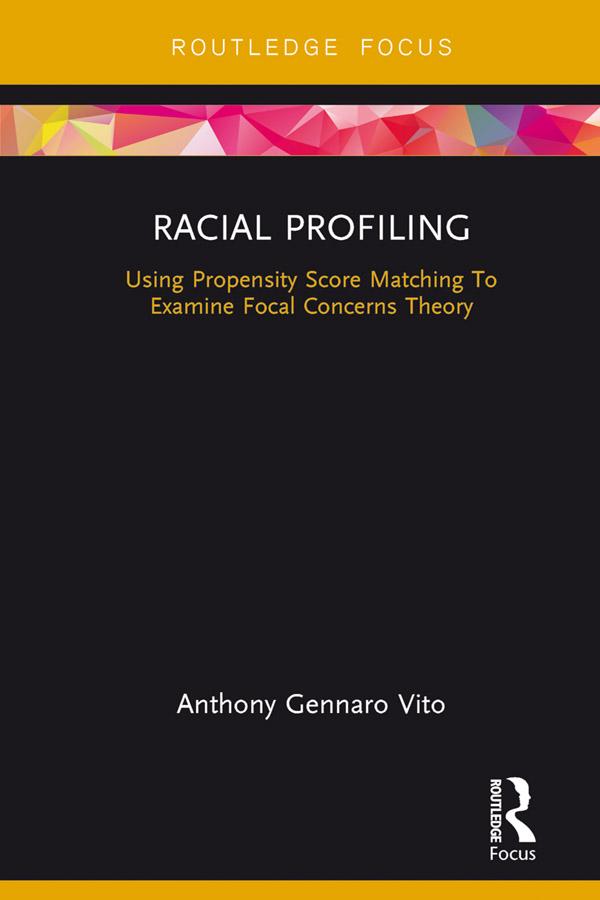
Racial Profiling: Using Propensity Score Matching to Examine Focal Concerns Theory combines theory and propensity score matching to offer readers a better understanding of racial profiling through traffic stop data concerning the race and gender of the driver. The book examines the likelihood of a citation, search, or consent search for similarly situated African-American and Caucasian drivers in general, similarly situated African-American and Caucasian male drivers, and similarly situated African-American and Caucasian female drivers.
Whether and why police exercise racial profiling in their decisionmaking is one of the most hotly debated topics in criminal justice. In this work, Anthony Vito uses Focal Concerns Theory to explain police officer decisionmaking in traffic stop outcomes via propensity score matching, revealing the intersectional dynamics of racial profiling and gender bias by the Louisville Police Department. The unique approach of looking at the Focal Concerns Theory components of blameworthiness, protection of the community, and practical constraints and consequences together with propensity score matching provides a theoretical lens for analysis and a model for future studies. This book is an original and timely resource for researchers, scholars, practitioners, and other stakeholders focusing on the problem of racial profiling in policing.
Pay easily by card, Klarna, Apple Pay or Google Pay. Not happy? You always have a 14-day money-back guarantee. Read more in our terms. If you have any questions, email us at hello@memmo.org.
Memmo makes studying easier – wherever you are in the world. We bring your course books and smart study tools together in one place: summaries, quizzes, podcasts and flashcards. Plus Ted, your study buddy who answers anything you wonder. Over 50,000 students already study here – built to help you learn faster and stress less.