
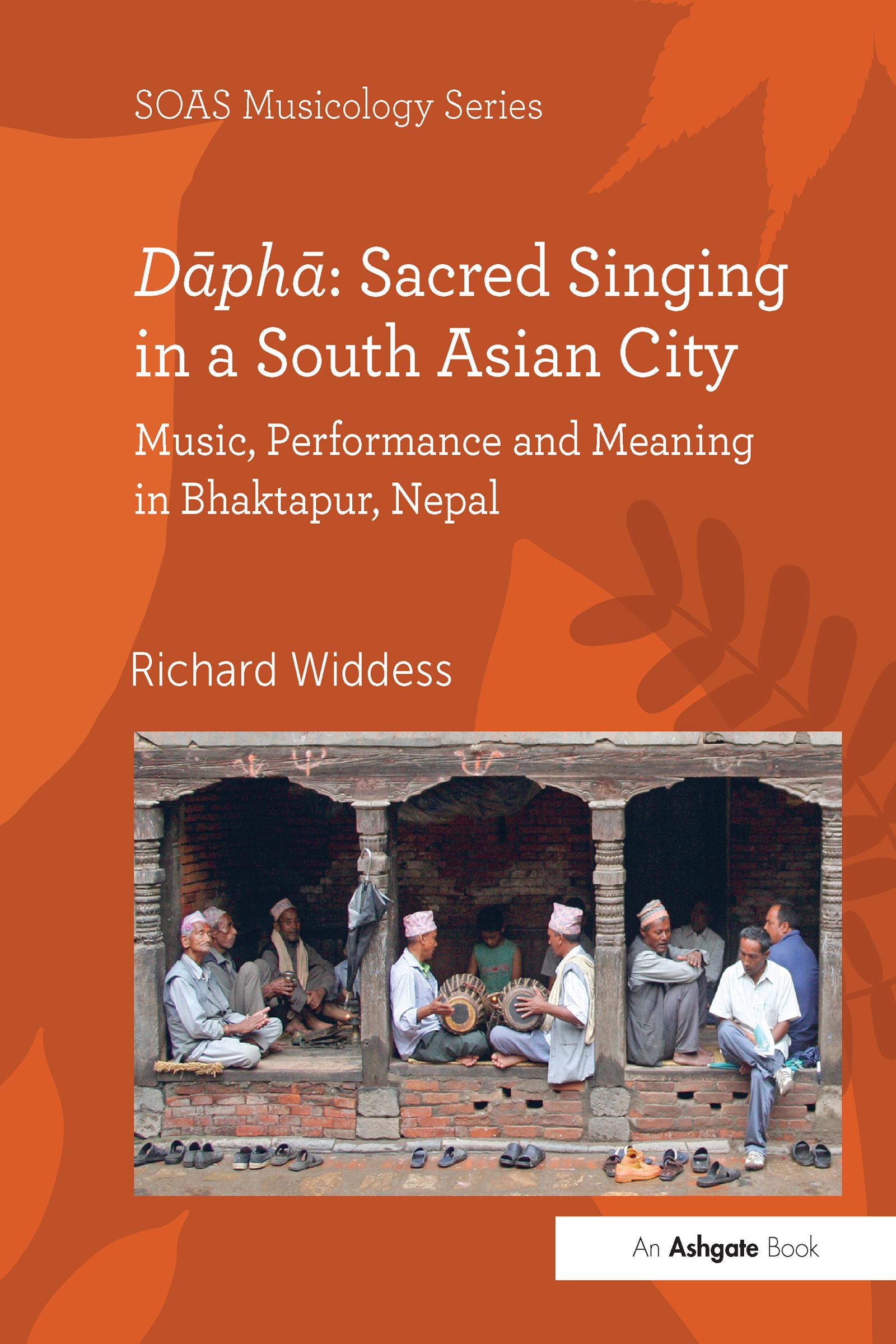
Dāphā, or dāphā bhajan, is a genre of Hindu-Buddhist devotional singing, performed by male, non-professional musicians of the farmer and other castes belonging to the Newar ethnic group, in the towns and villages of the Kathmandu Valley, Nepal. The songs, their texts, and their characteristic responsorial performance-style represent an extension of pan-South Asian traditions of rāga- and tāla-based devotional song, but at the same time embody distinctive characteristics of Newar culture. This culture is of unique importance as an urban South Asian society in which many traditional models survive into the modern age.
There are few book-length studies of non-classical vocal music in South Asia, and none of dāphā. Richard Widdess describes the music and musical practices of dāphā, accounts for their historical origins and later transformations, investigates links with other South Asian traditions, and describes a cultural world in which music is an integral part of everyday social and religious life. The book focusses particularly on the musical system and structures of dāphā, but aims to integrate their analysis with that of the cultural and historical context of the music, in order to address the question of what music means in a traditional South Asian society.
Pay easily by card, Klarna, Apple Pay or Google Pay. Not happy? You always have a 14-day money-back guarantee. Read more in our terms. If you have any questions, email us at hello@memmo.org.
Memmo makes studying easier – wherever you are in the world. We bring your course books and smart study tools together in one place: summaries, quizzes, podcasts and flashcards. Plus Ted, your study buddy who answers anything you wonder. Over 50,000 students already study here – built to help you learn faster and stress less.