
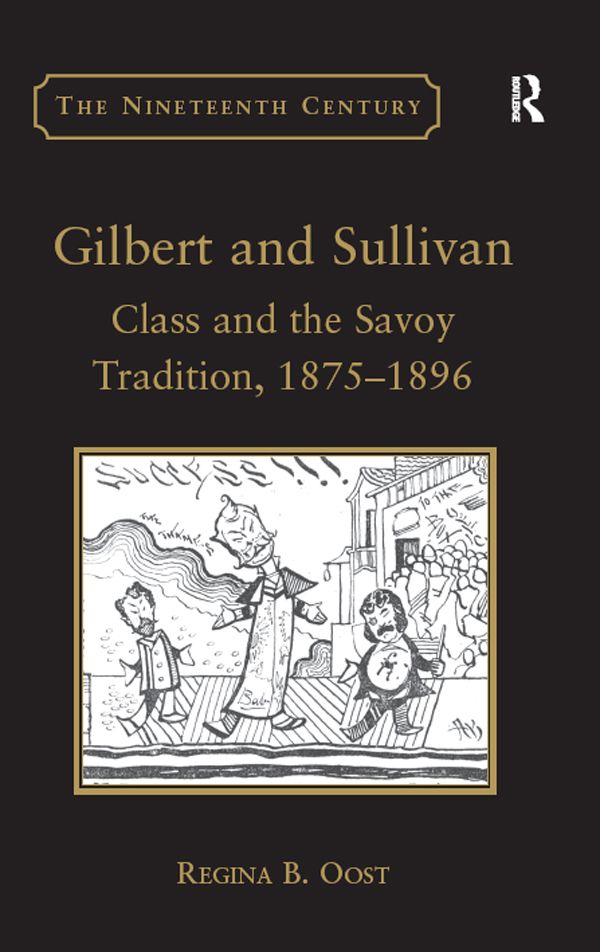
Making use of archival resources in the United Kingdom and the United States, Regina B. Oost examines advertisements, promotional materials, and programs, as well as letters, diaries, and account books, to reconstruct the ways in which Richard D'Oyly Carte, W.S. Gilbert, and Arthur Sullivan attracted and shaped the expectations of theatergoers. Her findings place the Savoy operas in the context of other West End productions, considering similarities between Carte's promotional methods and those of managers Henry Irving, John Hollingshead, and Marie and Squire Bancroft. While all of these managers astutely understood patronage of a middle-class audience to be key to their success, the Savoy collaborators made strategic use of circumstances unique to their situation to distinguish Gilbert and Sullivan operas from contemporary theatrical fare. From Trial by Jury (1875) through The Grand Duke (1896), the Savoy operas celebrated the commodity culture beloved of the urban middle classes, validated a moral code that secured the social privileges audience members cherished, and ultimately provided a new model of British national identity that replaced the agrarian ideal espoused by earlier generations. Written in admirably accessible and jargon-free prose, Oost's book will appeal to scholars of theater history, literature, music, and popular culture, as well as general readers interested in Gilbert and Sullivan and the history of the D'Oyly Carte Opera Company.
Pay easily by card, Klarna, Apple Pay or Google Pay. Not happy? You always have a 14-day money-back guarantee. Read more in our terms. If you have any questions, email us at hello@memmo.org.
Memmo makes studying easier – wherever you are in the world. We bring your course books and smart study tools together in one place: summaries, quizzes, podcasts and flashcards. Plus Ted, your study buddy who answers anything you wonder. Over 75,000 students already study here – built to help you learn faster and stress less.
You might also like
Buy the book0