
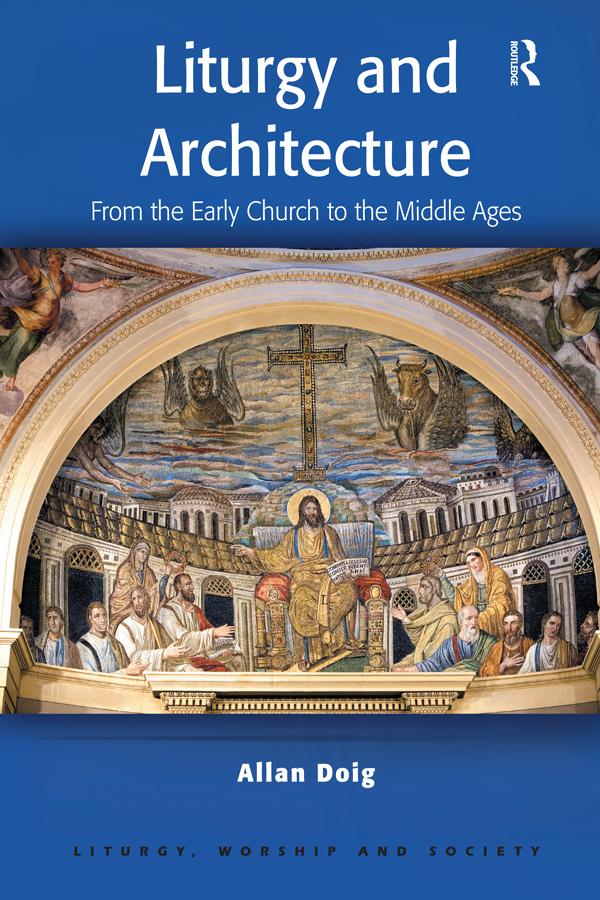
In this book Allan Doig explores the interrelationship of liturgy and architecture from the Early Church to the close of the Middle Ages, taking into account social, economic, technical, theological and artistic factors. These are crucial to a proper understanding of ecclesiastical architecture of all periods, and together their study illuminates the study of liturgy. Buildings and their archaeology are standing indices of human activity, and the whole matrix of meaning they present is highly revealing of the larger meaning of ritual performance within, and movement through, their space. The excavation of the mid-third-century church at Dura Europos in the Syrian desert, the grandeur of Constantine's Imperial basilicas, the influence of the great pilgrimage sites, and the marvels of soaring Gothic cathedrals, all come alive in a new way when the space is animated by the liturgy for which they were built. Reviewing the most recent research in the area, and moving the debate forward, this study will be useful to liturgists, clergy, theologians, art and architectural historians, and those interested in the conservation of ecclesiastical structures built for the liturgy.
Pay easily by card, Klarna, Apple Pay or Google Pay. Not happy? You always have a 14-day money-back guarantee. Read more in our terms. If you have any questions, email us at hello@memmo.org.
Memmo makes studying easier – wherever you are in the world. We bring your course books and smart study tools together in one place: summaries, quizzes, podcasts and flashcards. Plus Ted, your study buddy who answers anything you wonder. Over 50,000 students already study here – built to help you learn faster and stress less.
You might also like
Buy the book0