
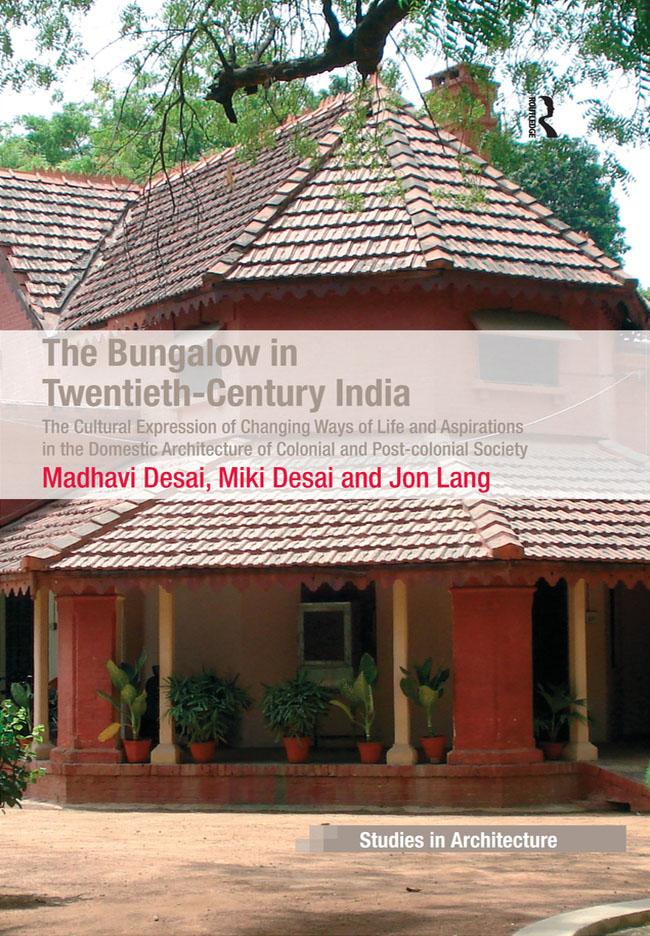
The primary era of this study - the twentieth century - symbolizes the peak of the colonial rule and its total decline, as well as the rise of the new nation state of India. The processes that have been labeled 'westernization' and 'modernization' radically changed middle-class Indian life during the century. This book describes and explains the various technological, political and social developments that shaped one building type - the bungalow - contemporaneous to the development of modern Indian history during the period of British rule and its subsequent aftermath. Drawing on their own physical and photographic documentation, and building on previous work by Anthony King and the Desais, the authors show the evolution of the bungalow's architecture from a one storey building with a verandah to the assortment of house-forms and their regional variants that are derived from the bungalow. Moreover, the study correlates changes in society with architectural consequences in the plans and aesthetics of the bungalow. It also examines more generally what it meant to be modern in Indian society as the twentieth century evolved.
Pay easily by card, Klarna, Apple Pay or Google Pay. Not happy? You always have a 14-day money-back guarantee. Read more in our terms. If you have any questions, email us at hello@memmo.org.
Memmo makes studying easier – wherever you are in the world. We bring your course books and smart study tools together in one place: summaries, quizzes, podcasts and flashcards. Plus Ted, your study buddy who answers anything you wonder. Over 75,000 students already study here – built to help you learn faster and stress less.
You might also like
Buy the book0