
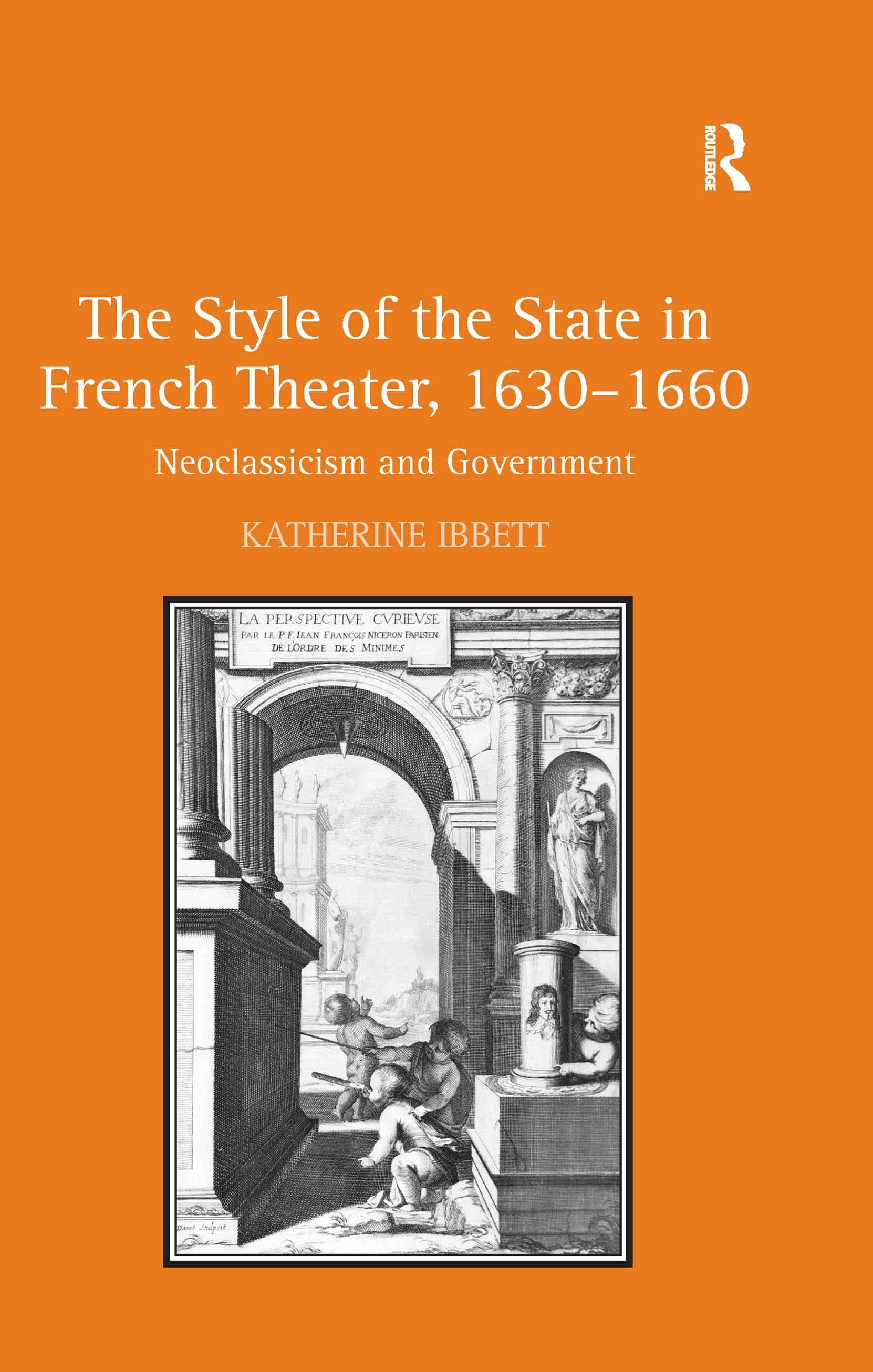
Engaging with recent thinking about performance, political theory and canon formation, this study addresses the significance of the formal changes in seventeenth-century French theater. Each chapter takes up a particularity of seventeenth-century theatrical style and staging”for example, the clearing of violence from the stage”and shows how the conceptualization of these French stylistic shifts appropriates a rich body of Italian political writing on questions of action, temporality, and law. The theater's appropriation of political concerns and vocabularies, the author argues, proffers an astute reflection on the practices of government that draws attention to questions obscured in reason of state, such as the instrumentalization of women's bodies. In a new reading of tragedies about government, the author shows how the canonical figure of Pierre Corneille is formally engaged with the political strategizing he often appears to repudiate, and in so doing challenges a literary history that has read neoclassicism largely as a display of pure French style.
Pay easily by card, Klarna, Apple Pay or Google Pay. Not happy? You always have a 14-day money-back guarantee. Read more in our terms. If you have any questions, email us at hello@memmo.org.
Memmo makes studying easier – wherever you are in the world. We bring your course books and smart study tools together in one place: summaries, quizzes, podcasts and flashcards. Plus Ted, your study buddy who answers anything you wonder. Over 75,000 students already study here – built to help you learn faster and stress less.
You might also like
Buy the book0