
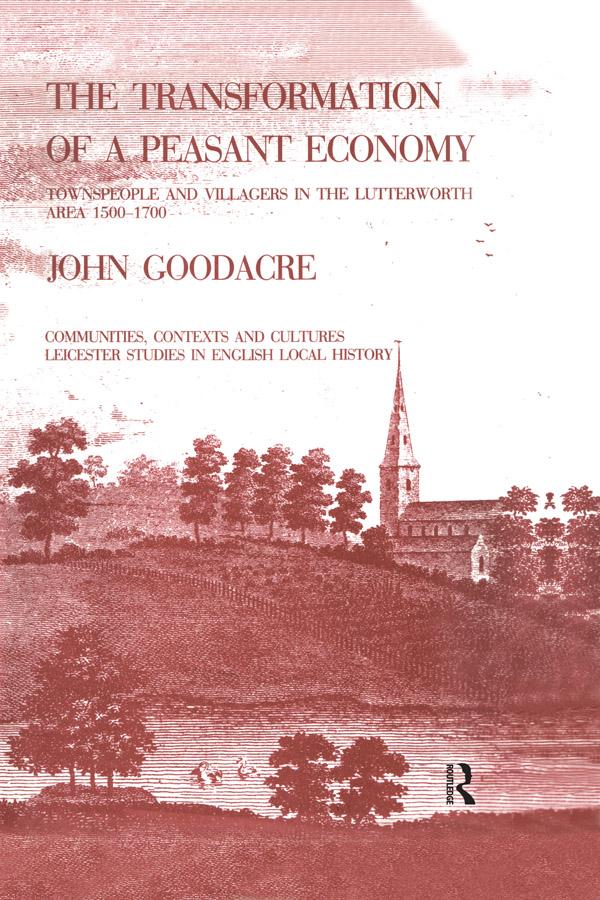
The market town has been dismissed as an incompletely formed urban community; in fact it was the primary urban unit in pre-industrial England. This study places the market town at the centre of the transformation of early-modern England, both catalysing changes in agriculture and experiencing, in a distinctive fashion, the urbanisation that was to occur a century or more later in the great industrial and commercial centres of Europe. In the two centuries after 1500 the rural economy changed from a pattern of subsistence to 'improved' farming. The first great enclosures took place during this time, but the economic base for this revolution was the growth of local trading, centred on markets and local communications networks. This redistribution of produce, provisions and information was the motor of specialisation and hence modernisation. The strength of this study is in its detailed research into this process in one representative locality, and the sensitive extrapolation of local experiences on to the national and European scale. By integrating in one book the themes of rural transformation and early urbanisation this account of one typical midland market town demonstrates the continuing vigour of the discipline of local history.
Pay easily by card, Klarna, Apple Pay or Google Pay. Not happy? You always have a 14-day money-back guarantee. Read more in our terms. If you have any questions, email us at hello@memmo.org.
Memmo makes studying easier – wherever you are in the world. We bring your course books and smart study tools together in one place: summaries, quizzes, podcasts and flashcards. Plus Ted, your study buddy who answers anything you wonder. Over 50,000 students already study here – built to help you learn faster and stress less.
You might also like
Buy the book0