
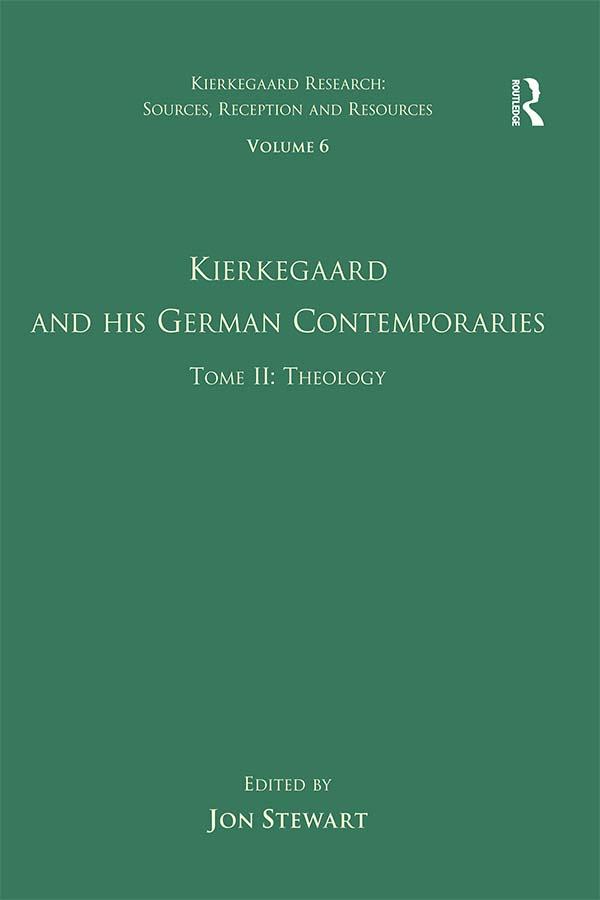
This volume explores in detail Kierkegaard's various relations to his German contemporaries. Kierkegaard read German fluently and made extensive use of the writings of German-speaking authors. Apart from his contemporary Danish sources, the German sources were probably the most important in the development of his thought generally. This volume represents source-work research dedicated to tracing Kierkegaard's readings and use of the various German-speaking authors in the different fields in a way that is as clearly documented as possible. The volume has been divided into three tomes reflecting Kierkegaard's main areas of interest with regard to the German-speaking sources, namely, philosophy, theology and a more loosely conceived category, which has here been designated "literature and aesthetics." This second tome of the present volume is dedicated to Kierkegaard's main theological influences. In theology the German and the Danish traditions had long been closely connected via their common source: Luther. In Kierkegaard's time the main influence on theology was probably German philosophy and specifically Hegelianism. Most of the German theologians were in some way in a critical dialogue with this movement. Another important influence was Schleiermacher, who visited Copenhagen in 1833 and was important for several Golden Age thinkers. From his student days Kierkegaard kept abreast of the German theological literature, from which he drew much inspiration.
Pay easily by card, Klarna, Apple Pay or Google Pay. Not happy? You always have a 14-day money-back guarantee. Read more in our terms. If you have any questions, email us at hello@memmo.org.
Memmo makes studying easier – wherever you are in the world. We bring your course books and smart study tools together in one place: summaries, quizzes, podcasts and flashcards. Plus Ted, your study buddy who answers anything you wonder. Over 50,000 students already study here – built to help you learn faster and stress less.
You might also like
Buy the book0