
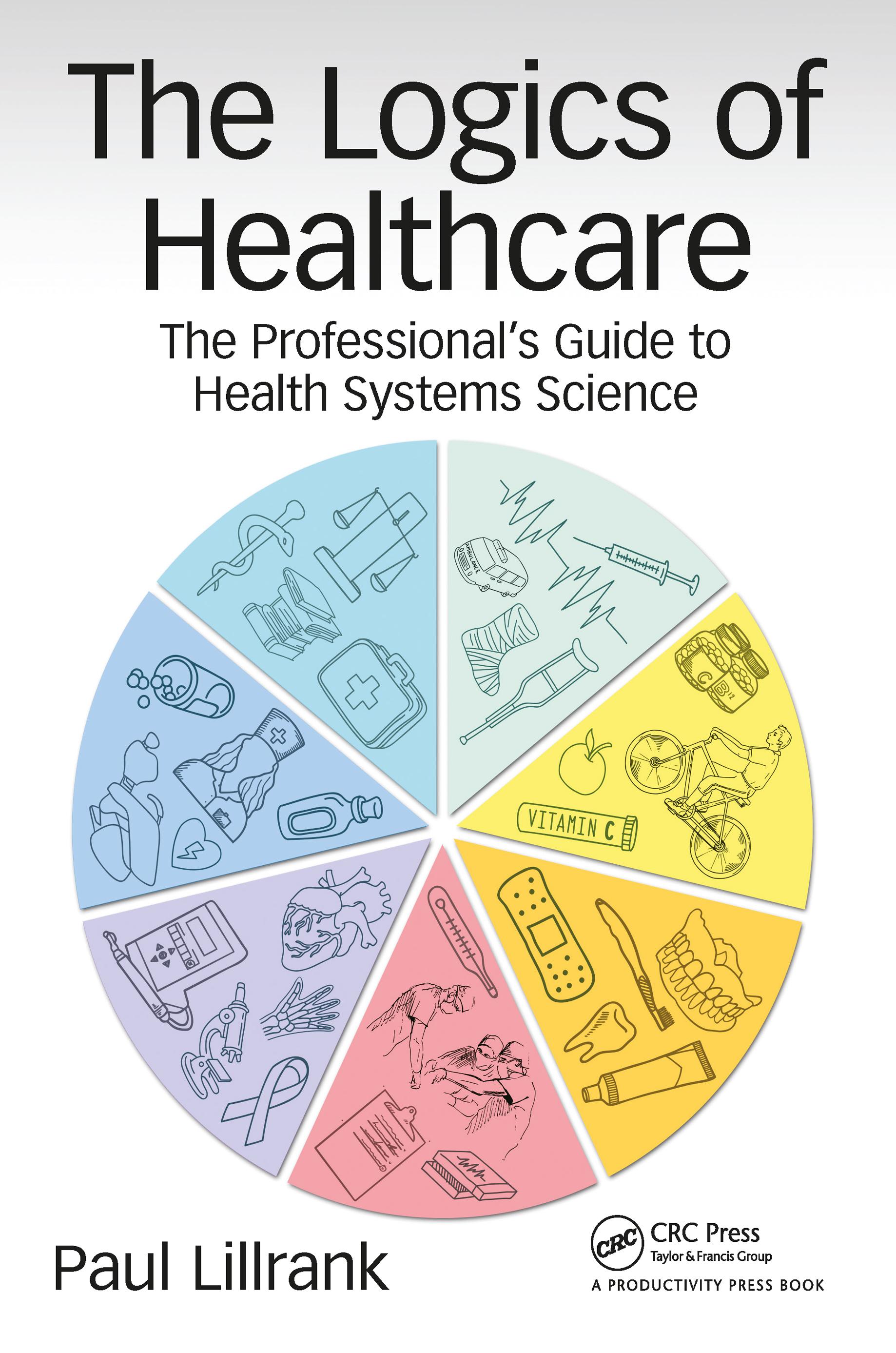
Most of the current literature on healthcare operations management is focused on importing principles and methods from manufacturing. The evidence of success is scattered and nowhere near what has been achieved in other industries. This book develops the idea that the logic of production, and production systems in healthcare is significantly different. A line of thing that acknowledges the ingenious characteristics of health service production is developed.
This book builds on a managerial segmentation of healthcare based on fundamental demand-supply constellations. Demand can be classified with the variables urgency, severity, and randomness. Supply is constrained by medical technology (accuracy of diagnostics, efficacy of therapies), patient health behavior (co-creation of health), and resource availability. Out of this emerge seven demand-supply-based operational types (DSO): prevention, emergencies, one-visit, electives, cure, care, and projects. Each of these have distinct managerial characteristics, such as time-perspective, level of co-creation, value proposition, revenue structure, productivity and other key performance indicators (KPI).
The DSOs can be envisioned as platforms upon which clinical modules are attached. For example, any Emergency Department (ED) must be managed to deal with prioritization, time-windows, agitated patients, the necessity to save and stabilize, and variability in demand. Specific clinical assets and skill-sets are required for, say, massive trauma, strokes, cardiac events, or poisoning. While representing different specialties of clinical medicine they, when applied in the emergency – context, must conform to the demand-supply-based operating logic.
A basic assumption in this book is that the perceived complexity of healthcare arises from the conflicting demands of the DSO and the clinical realms. The seven DSOs can neatly be juxtaposed on the much-used Business Model Canvas (BMC), which postulates the business model elements as value proposition; customer segments, channels and relations; key activities, resources and partners; the cost structure; and the revenue model.
Pay easily by card, Klarna, Apple Pay or Google Pay. Not happy? You always have a 14-day money-back guarantee. Read more in our terms. If you have any questions, email us at hello@memmo.org.
Memmo makes studying easier – wherever you are in the world. We bring your course books and smart study tools together in one place: summaries, quizzes, podcasts and flashcards. Plus Ted, your study buddy who answers anything you wonder. Over 50,000 students already study here – built to help you learn faster and stress less.