
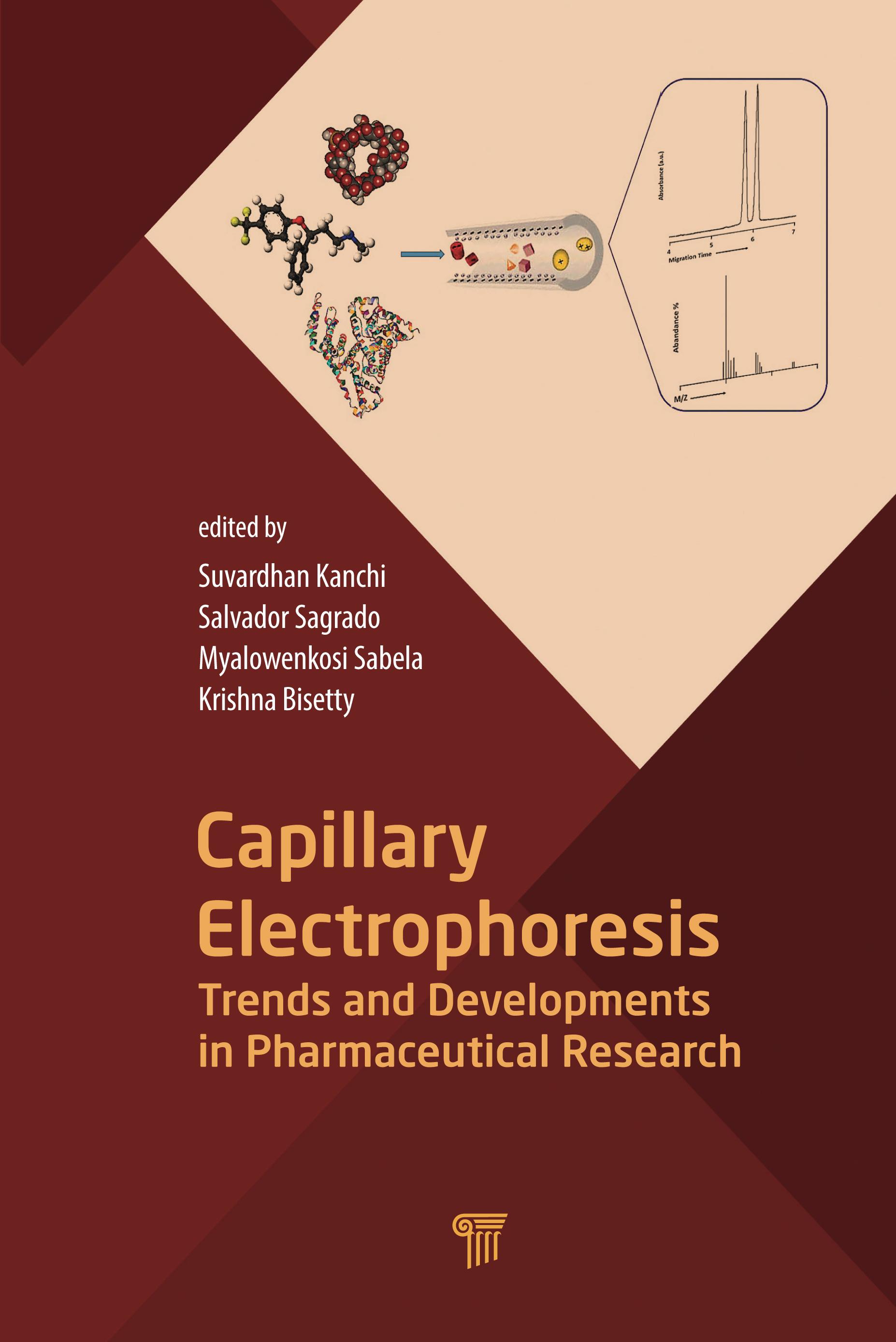
Capillary electrophoresis (CE) has become an established method with widespread recognition as an analytical technique of choice in numerous analytical laboratories, including industrial and academic sectors. Pharmaceutical and biochemical research and quality control are the most important CE applications. This book provides a comparative assessment of related techniques on mode selection, method development, detection, and quantitative analysis and estimation of pharmacokinetic parameters and broadens the understanding of modern CE applications, developments, and prospects. It introduces the fundamentals of CE and clearly outlines the procedures used to mitigate several barriers, such as detection limits, signal detection, changing capillary environment, resolution separation of analytes, and hyphenation of mass spectrometry with CE, for a range of analytical problems. Each chapter outlines a specific electrophoretic variant with detailed instructions and some standard operating procedures. In this respect, the book meets its desired goal of rendering assistance to lovers of electrophoresis.
Pay easily by card, Klarna, Apple Pay or Google Pay. Not happy? You always have a 14-day money-back guarantee. Read more in our terms. If you have any questions, email us at hello@memmo.org.
Memmo makes studying easier – wherever you are in the world. We bring your course books and smart study tools together in one place: summaries, quizzes, podcasts and flashcards. Plus Ted, your study buddy who answers anything you wonder. Over 75,000 students already study here – built to help you learn faster and stress less.