
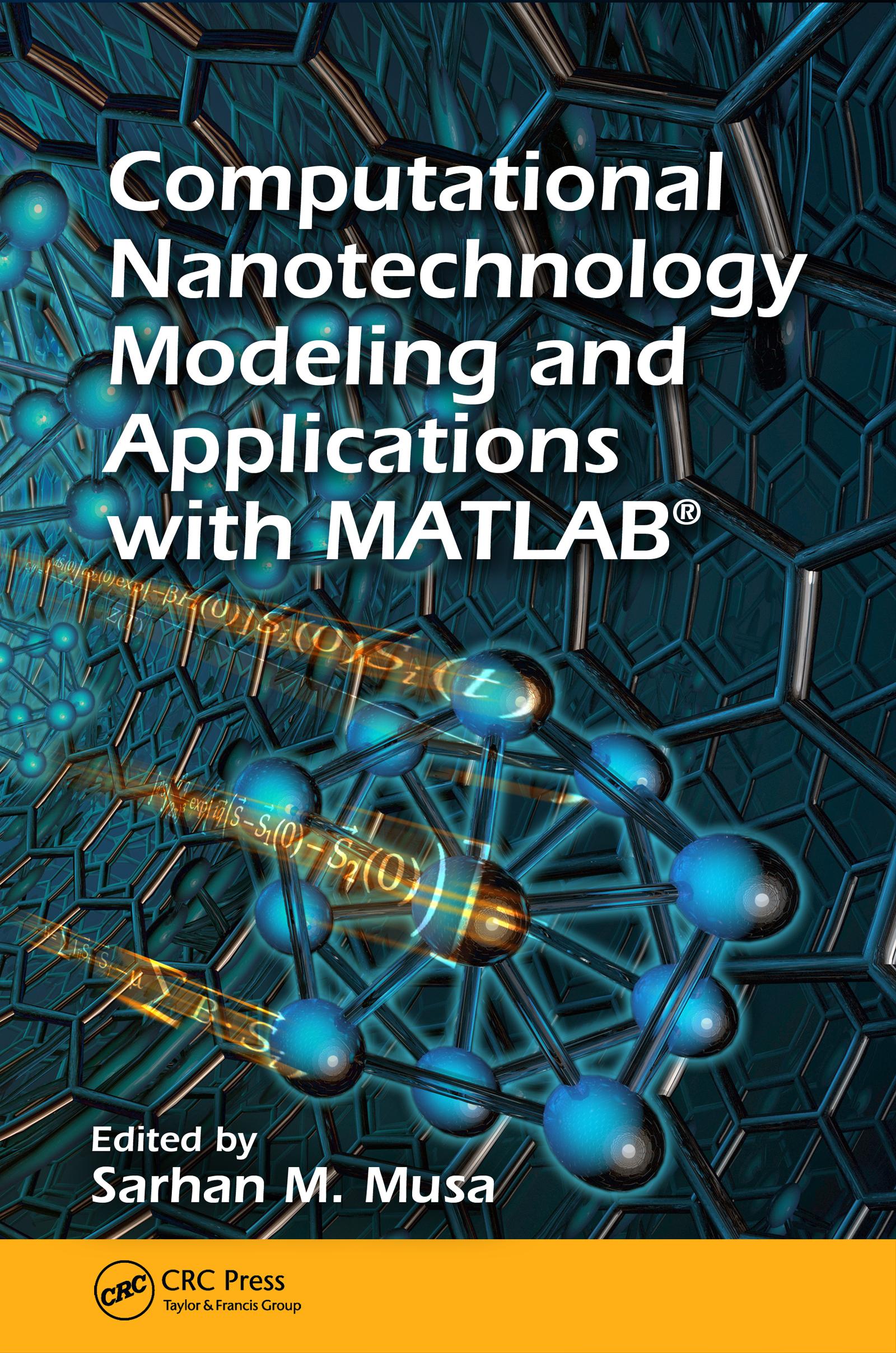
Applications of nanotechnology continue to fuel significant innovations in areas ranging from electronics, microcomputing, and biotechnology to medicine, consumer supplies, aerospace, and energy production. As progress in nanoscale science and engineering leads to the continued development of advanced materials and new devices, improved methods of modeling and simulation are required to achieve a more robust quantitative understanding of matter at the nanoscale.
Computational Nanotechnology: Modeling and Applications with MATLAB® provides expert insights into current and emerging methods, opportunities, and challenges associated with the computational techniques involved in nanoscale research. Written by, and for, those working in the interdisciplinary fields that comprise nanotechnology—including engineering, physics, chemistry, biology, and medicine—this book covers a broad spectrum of technical information, research ideas, and practical knowledge. It presents an introduction to computational methods in nanotechnology, including a closer look at the theory and modeling of two important nanoscale systems: molecular magnets and semiconductor quantum dots.
Topics covered include:
- Modeling of nanoparticles and complex nano and MEMS systems
- Theory associated with micromagnetics
- Surface modeling of thin films
- Computational techniques used to validate hypotheses that may not be accessible through traditional experimentation
- Simulation methods for various nanotubes and modeling of carbon nanotube and silicon nanowire transistors
In regard to applications of computational nanotechnology in biology, contributors describe tracking of nanoscale structures in cells, effects of various forces on cellular behavior, and use of protein-coated gold nanoparticles to better understand protein-associated nanomaterials. Emphasizing the importance of MATLAB for biological simulations in nanomedicine, this wide-ranging survey of computational nanotechnology concludes by discussing future directions in the field, highlighting the importance of the algorithms, modeling software, and computational tools in the development of efficient nanoscale systems.
Pay easily by card, Klarna, Apple Pay or Google Pay. Not happy? You always have a 14-day money-back guarantee. Read more in our terms. If you have any questions, email us at hello@memmo.org.
Memmo makes studying easier – wherever you are in the world. We bring your course books and smart study tools together in one place: summaries, quizzes, podcasts and flashcards. Plus Ted, your study buddy who answers anything you wonder. Over 50,000 students already study here – built to help you learn faster and stress less.