
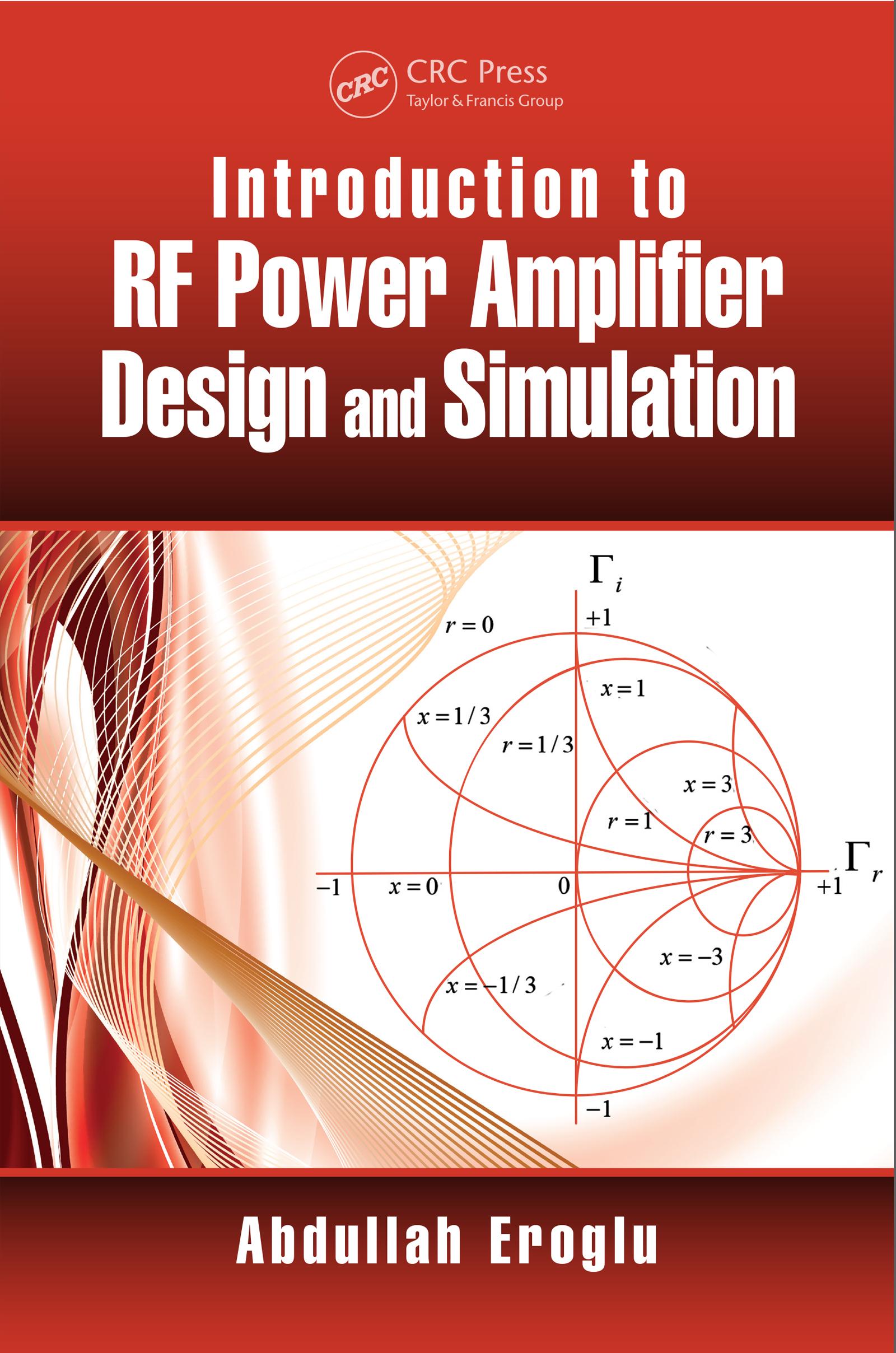
Introduction to RF Power Amplifier Design and Simulation fills a gap in the existing literature by providing step-by-step guidance for the design of radio frequency (RF) power amplifiers, from analytical formulation to simulation, implementation, and measurement. Featuring numerous illustrations and examples of real-world engineering applications, this book:
- Gives an overview of intermodulation and elaborates on the difference between linear and nonlinear amplifiers
- Describes the high-frequency model and transient characteristics of metal–oxide–semiconductor field-effect transistors
- Details active device modeling techniques for transistors and parasitic extraction methods for active devices
- Explores network and scattering parameters, resonators, matching networks, and tools such as the Smith chart
- Covers power-sensing devices including four-port directional couplers and new types of reflectometers
- Presents RF filter designs for power amplifiers as well as application examples of special filter types
- Demonstrates the use of computer-aided design (CAD) tools, implementing systematic design techniques
Blending theory with practice, Introduction to RF Power Amplifier Design and Simulation supplies engineers, researchers, and RF/microwave engineering students with a valuable resource for the creation of efficient, better-performing, low-profile, high-power RF amplifiers.
Pay easily by card, Klarna, Apple Pay or Google Pay. Not happy? You always have a 14-day money-back guarantee. Read more in our terms. If you have any questions, email us at hello@memmo.org.
Memmo makes studying easier – wherever you are in the world. We bring your course books and smart study tools together in one place: summaries, quizzes, podcasts and flashcards. Plus Ted, your study buddy who answers anything you wonder. Over 50,000 students already study here – built to help you learn faster and stress less.