
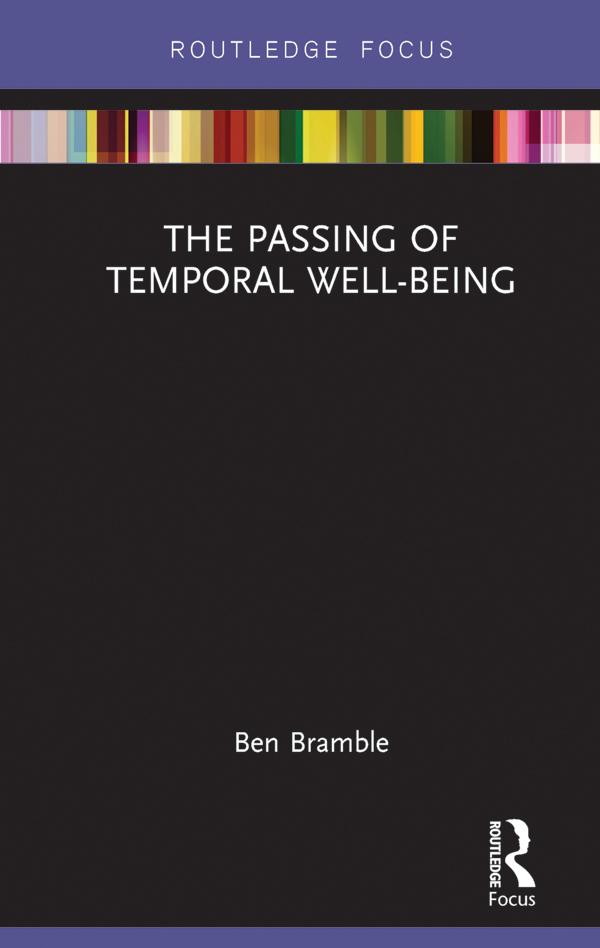
The philosophical study of well-being concerns what makes lives good for their subjects. It is now standard among philosophers to distinguish between two kinds of well-being:
· lifetime well-being, i.e., how good a person’s life was for him or her considered as a whole, and
· temporal well-being, i.e., how well off someone was, or how they fared, at a particular moment in time (momentary well-being) or over a period of time longer than a moment but shorter than a whole life, say, a day, month, year, or chapter of a life (periodic well-being).
Many theories have been offered of each of these kinds of well-being. A common view is that lifetime well-being is in some way constructed out of temporal well-being. This book argues that much of this literature is premised on a mistake. Lifetime well-being cannot be constructed out of temporal well-being, because there is no such thing as temporal well-being. The only genuine kind of well-being is lifetime well-being.
The Passing of Temporal Well-Being will prove essential reading for professional philosophers, especially in moral and political philosophy. It will also be of interest to welfare economists and policy-makers who appeal to well-being
Pay easily by card, Klarna, Apple Pay or Google Pay. Not happy? You always have a 14-day money-back guarantee. Read more in our terms. If you have any questions, email us at hello@memmo.org.
Memmo makes studying easier – wherever you are in the world. We bring your course books and smart study tools together in one place: summaries, quizzes, podcasts and flashcards. Plus Ted, your study buddy who answers anything you wonder. Over 50,000 students already study here – built to help you learn faster and stress less.