
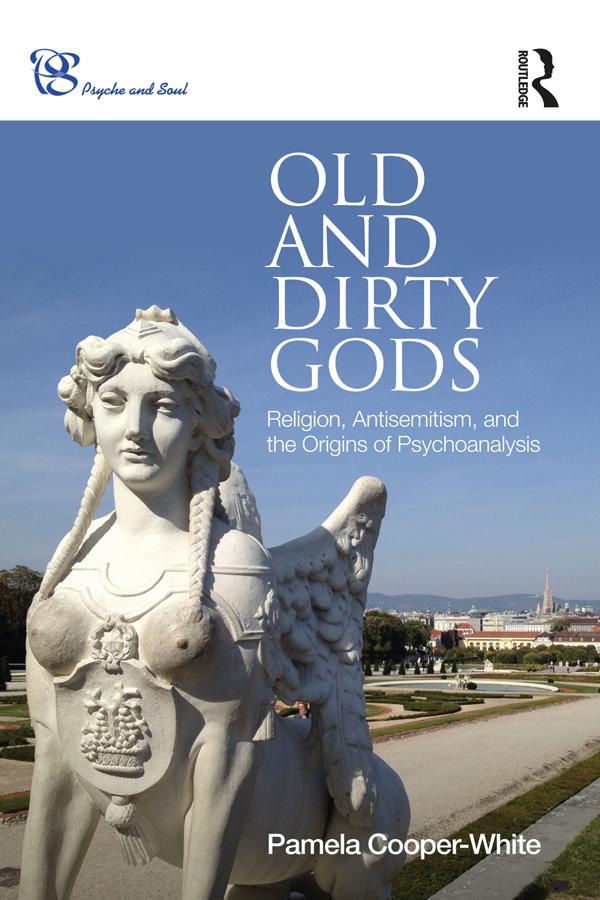
Freud’s collection of antiquities—his "old and dirty gods"—stood as silent witnesses to the early analysts’ paradoxical fascination and hostility toward religion. Pamela Cooper-White argues that antisemitism, reaching back centuries before the Holocaust, and the acute perspective from the margins that it engendered among the first analysts, stands at the very origins of psychoanalytic theory and practice.
The core insight of psychoanalytic thought— that there is always more beneath the surface appearances of reality, and that this "more" is among other things affective, memory-laden and psychological—cannot fail to have had something to do with the experiences of the first Jewish analysts in their position of marginality and oppression in Habsburg-Catholic Vienna of the 20th century. The book concludes with some parallels between the decades leading to the Holocaust and the current political situation in the U.S. and Europe, and their implications for psychoanalytic practice today.
Covering Pfister, Reik, Rank, and Spielrein as well as Freud, Cooper-White sets out how the first analysts’ position as Europe’s religious and racial "Other" shaped the development of psychoanalysis, and how these tensions continue to affect psychoanalysis today. Old and Dirty Gods will be of great interest to psychoanalysts as well as religious studies scholars.
Pay easily by card, Klarna, Apple Pay or Google Pay. Not happy? You always have a 14-day money-back guarantee. Read more in our terms. If you have any questions, email us at hello@memmo.org.
Memmo makes studying easier – wherever you are in the world. We bring your course books and smart study tools together in one place: summaries, quizzes, podcasts and flashcards. Plus Ted, your study buddy who answers anything you wonder. Over 50,000 students already study here – built to help you learn faster and stress less.