
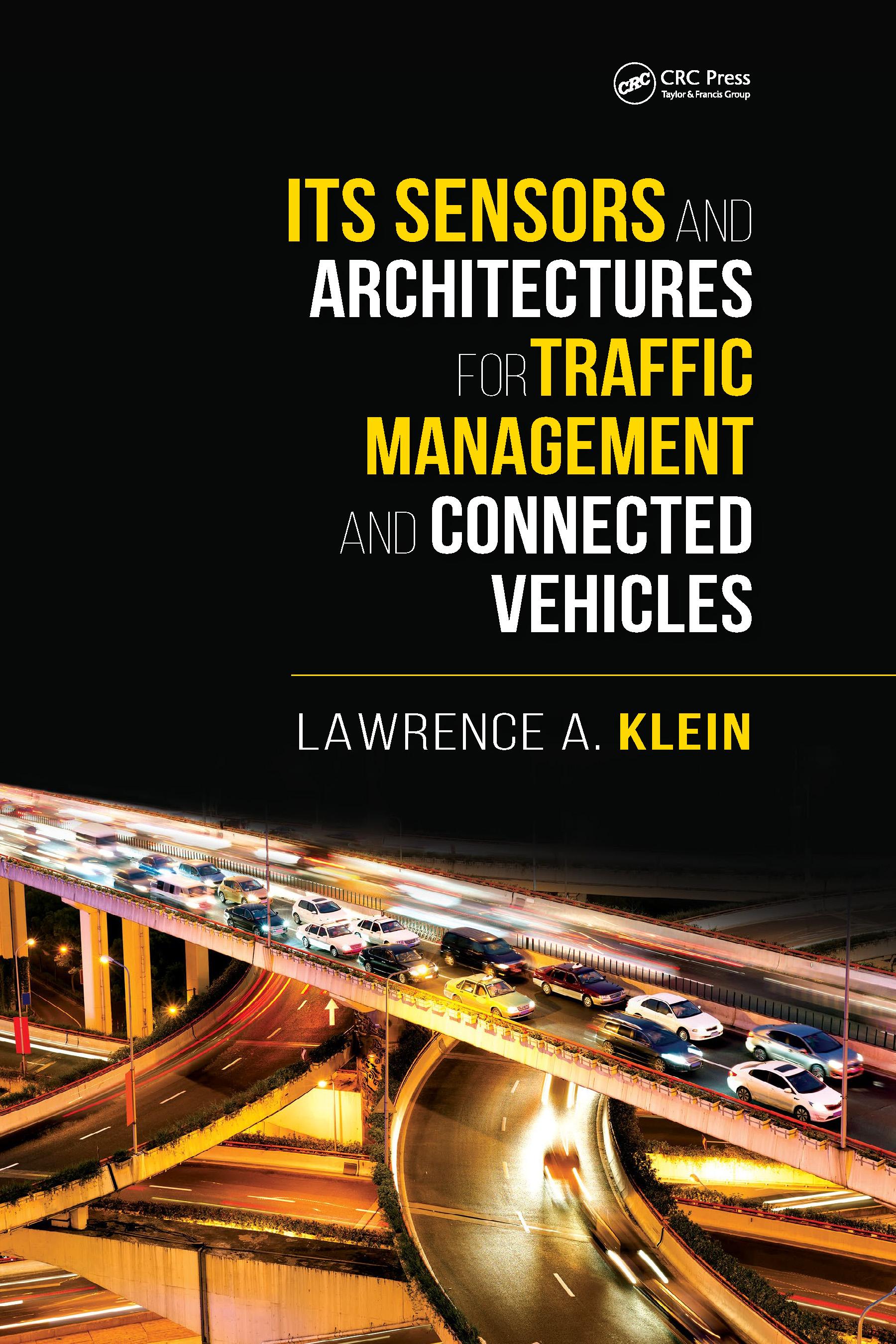
An intelligent transportation system (ITS) offers considerable opportunities for increasing the safety, efficiency, and predictability of traffic flow and reducing vehicle emissions. Sensors (or detectors) enable the effective gathering of arterial and controlled-access highway information in support of automatic incident detection, active transportation and demand management, traffic-adaptive signal control, and ramp and freeway metering and dispatching of emergency response providers. As traffic flow sensors are integrated with big data sources such as connected and cooperative vehicles, and cell phones and other Bluetooth-enabled devices, more accurate and timely traffic flow information can be obtained.
The book examines the roles of traffic management centers that serve cities, counties, and other regions, and the collocation issues that ensue when multiple agencies share the same space. It describes sensor applications and data requirements for several ITS strategies; sensor technologies; sensor installation, initialization, and field-testing procedures; and alternate sources of traffic flow data. The book addresses concerns related to the introduction of automated and connected vehicles, and the benefits that systems engineering and national ITS architectures in the US, Europe, Japan, and elsewhere bring to ITS. Sensor and data fusion benefits to traffic management are described, while the Bayesian and Dempster–Shafer approaches to data fusion are discussed in more detail.
ITS Sensors and Architectures for Traffic Management and Connected Vehicles suits the needs of personnel in transportation institutes and highway agencies, and students in undergraduate or graduate transportation engineering courses.
Pay easily by card, Klarna, Apple Pay or Google Pay. Not happy? You always have a 14-day money-back guarantee. Read more in our terms. If you have any questions, email us at hello@memmo.org.
Memmo makes studying easier – wherever you are in the world. We bring your course books and smart study tools together in one place: summaries, quizzes, podcasts and flashcards. Plus Ted, your study buddy who answers anything you wonder. Over 75,000 students already study here – built to help you learn faster and stress less.